

When your business buys heavy-duty hardware, picking the right option among various ball valve end connection types is vital. Choosing incorrectly can twist the casing and ruin the interior sealing rings. True system safety depends on matching external pipe connections with your internal performance targets to keep the fluid moving smoothly.
Industrial setups do not rely on a single connection style. Engineers choose from several valve end connection types depending on pipeline size, pressure ratings, and fluid traits.
Threaded Connections: These feature female or male tapered threads machined into the valve ports, screwing directly onto the pipe ends.
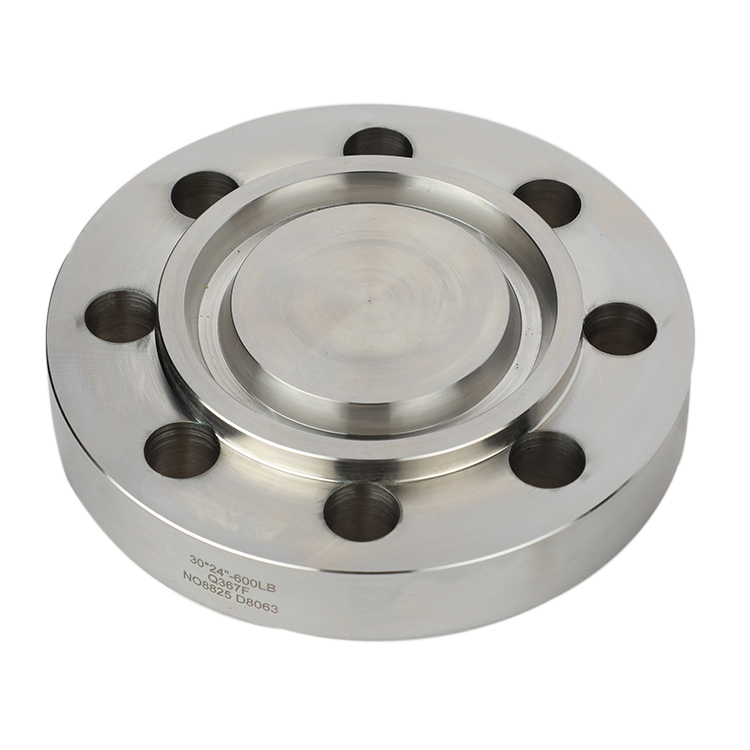
Flanged Connections: These utilize an external circular lip with bolt holes, clamping flat against a matching pipe rim.
Welded Connections: These involve fusing the valve body directly to the pipeline using socket or butt-welding techniques for zero-leak security.
Flanged Superiority: A heavy-duty flange valve configuration acts as a solid mechanical anchor that isolates the valve center from pipeline twisting forces.
The ongoing debate between flanged vs threaded configurations centers on how mechanical stress travels through the metal casing during installation.
The Threaded Crushing Hazard: Installing a standard threaded ball valve involves screwing it tightly onto a tapered pipe end.
Warping the Cavity: If an assembly worker over-tightens this joint, the wedging force deforms the valve body cavity.
Squeezing the Seats: This micro-distortion pinches the plastic seat rings too hard against the central sphere, resulting in sticky operation, fast wear, and early internal leaks.
Flanged Structural Relief: Flanged configurations avoid this twisting stress entirely by keeping the assembly forces on the external bolt holes rather than inside the port.
Protecting Your Seats: When connection stress deforms your valve body, the internal sealing borders fail under pressure. Reviewing the basic ball valve parts and function helps your engineering crew design systems that minimize these localized installation stresses.
To keep your procurement running smoothly, use these 5 field-tested rules during your next project turnaround to choose between a flanged vs threaded setup.
Stick to threaded joints for small lines under 2 inches; shift to a robust ball valve flange for larger headers.
Threaded joints work well in low-to-medium lines, but high-pressure systems require flanged joints to avoid thread stripping.
Flanged setups handle pump vibrations easily, whereas threaded joints can back off and leak under constant shaking.
Fast temperature changes cause uneven expansion that slips past threads, making flanged seals far more dependable.
Flanged joints allow quick bolt removal for servicing, while unthreading a valve requires cutting or taking apart a whole section of pipe.
Industrial Connection Performance Scorecard
| Mechanical Selection Parameter | Threaded Connection Performance | Flanged Connection Performance |
| Maximum Port Diameter Limits | Limited to small pipe lines under 2 inches. | Handles massive lines up to 24 inches or larger. |
| Piping Shock & Vibration Resistance | Poor; constant shaking can loosen the joint. | Outstanding; multi-bolt circles absorb heavy pipeline vibration. |
| Internal Cavity Deform Risk | High; over-tightening crushes internal seats. | Extremely low; bolting forces stay on the outside rims. |
| Field Maintenance Access Speed | Slow; requires spinning the pipe or splitting lines. | Rapid; unscrewing external bolts releases the body quickly. |
| Long-Term Fugitive Emission Guard | Fair; threads can weep gas over time. | Excellent; heavy compressed gaskets stop chemical escape. |
When managing severe service setups, a standard threaded ball valve can become a major safety risk. High-pressure processing lines demand the structural safety of a valve with flange endings.
Spreading the Load: The thick metal face of a ball valve flange spreads high pressure forces across an external ring of bolts instead of focusing stress on a single point.
Handling Thermal Gradients: In hot chemical or steam lines, a flanged assembly expands uniformly, keeping the inner ball round and the seats properly aligned.
Preventing Catastrophic Blowouts: Flanged connections use high-strength stud bolts to clamp the valve to the pipe, ensuring the assembly won’t blow apart under extreme pressure spikes.
The Fixed-Axis Support: This robust external housing becomes even more critical when managing fixed-axis internal spheres. Specifying premium trunnion ball valve design metrics for high-pressure facilities helps your body joints absorb pipeline shocks and prevents seat binding.
Ensuring Safe Isolation: Using heavy-duty high pressure flanged ball valves provides the strength needed to keep your plant safe and your fluid barrier tight during emergency isolation events.
Does a flanged vs threaded selection alter the maximum allowable pressure class rating of a valve sphere?
No, it alters the body casing limit, but the internal sphere pressure rating depends entirely on its material.
Why do severe service chemical applications strictly forbid standard threaded ball valve designs?
Corrosive chemicals chew through exposed pipe threads easily, creating unsafe leak paths and causing dangerous systemic blowouts.
How do you prevent a field pipe thread from over-compressing internal ball valve seals?
Use calibrated torque wrenches during installation and avoid over-tightening past the standard thread engagement depth limits.
Can a custom ball valve flange be machined to match non-standard obsolete piping dimensions?
Yes, custom valve face dimensions and custom bolt circles can be machined to match older field connections.
Which ball valve end connection types allow the fastest internal component maintenance during plant turnarounds?
Flanged connections allow technicians to unbolt and lift out the center body section without disturbing adjacent pipe sections.
What is the main disadvantage of a flanged connection compared to a threaded one?
Flanged configurations are heavier, take up more spatial footprint, and require higher initial component sourcing costs.
Can a threaded joint handle high-velocity steam lines safely over long cycles?
No, steam erosion quickly wears down pipe threads, causing fine thread weeping and rapid pressure drop failures.
Why do large-diameter pipelines always require flanged valve connections instead of threaded ones?
Large pipes require thick walls and massive torque that would strip or crack threads during assembly.
Choosing between flanged and threaded joints requires balancing your project budget with long-term system safety. Protecting your internal sphere-to-seat pairing from installation stress guarantees dependable line isolation. Contact GOTEB today to send over your custom flange drilling specs or to source high-tolerance component kits built for severe pipeline reliability.


 Optimized by Seraphinite Accelerator