
When your business steps up from standard two-way isolation to multi-directional routing, a high-quality 3 way ball valve becomes an essential asset. Managing three separate pipe channels through a single valve cavity requires incredible internal machining precision. A minor geometric error inside the central flow chamber can quickly lead to costly cross-flow fluid contamination across your entire pipeline grid.
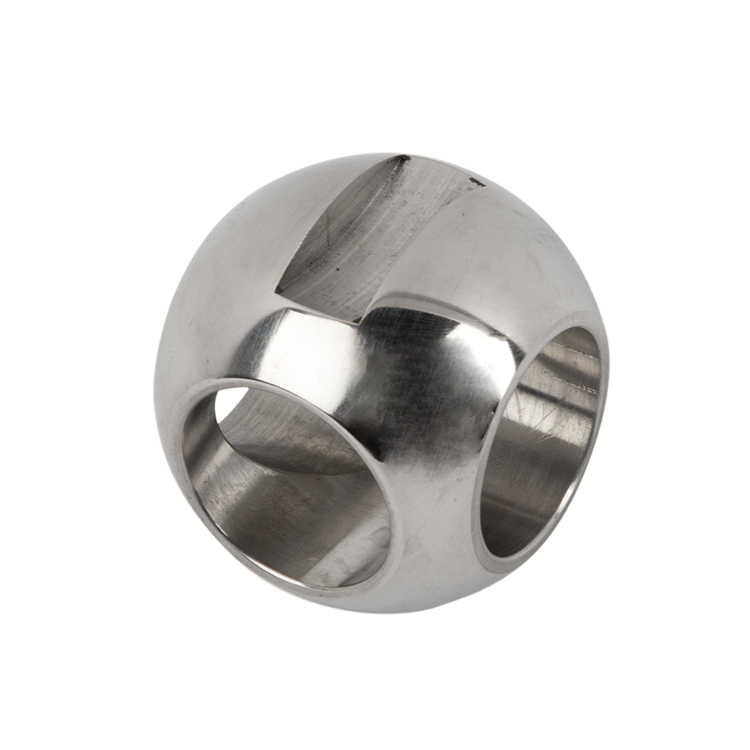
To design an efficient processing system, you must first understand the core mechanics of multi-port routing.
So, what is a three way valve exactly? Unlike traditional straight-line configurations that only open or block fluid flow, this device features three independent access ports machined into a single body housing. This structural layout allows a single unit to do the heavy lifting of two or three individual two-way options, saving substantial spatial footprint on your factory floor.
Industrial Diverting Lines: Directing a continuous incoming chemical or oil stream away from a full storage tank and into an empty backup container.
System Mixing Stations: Merging two separate fluids, like cold and hot liquids, into a single header pipe to achieve a specific target temperature.
Standard Utilities: Managing high-capacity processing loops, such as an industrial three way water valve network that balances cooling water flow between active heat exchangers and bypass loops.
The way fluids move through a multi-port system depends entirely on internal channel geometries and mechanical orientation.
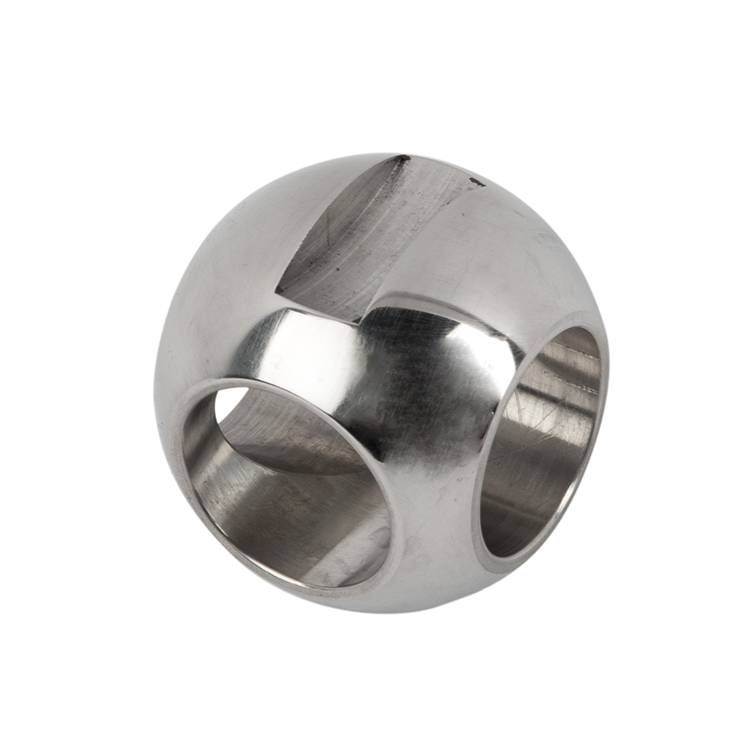
When you look at how do 3 way ball valves work in a live processing line, the secret lies in the specialized drilling inside the central sphere. As the operator turns the lever or an automated actuator spins the stem, the internal paths line up with different body ports to alter the fluid path instantly.
The L-Port Layout: This style features an L-shaped internal channel drilled at a perfect right angle. It acts primarily as a diverting mechanism, letting you switch an inlet flow smoothly between Port A and Port B, but it cannot connect all three ports simultaneously.
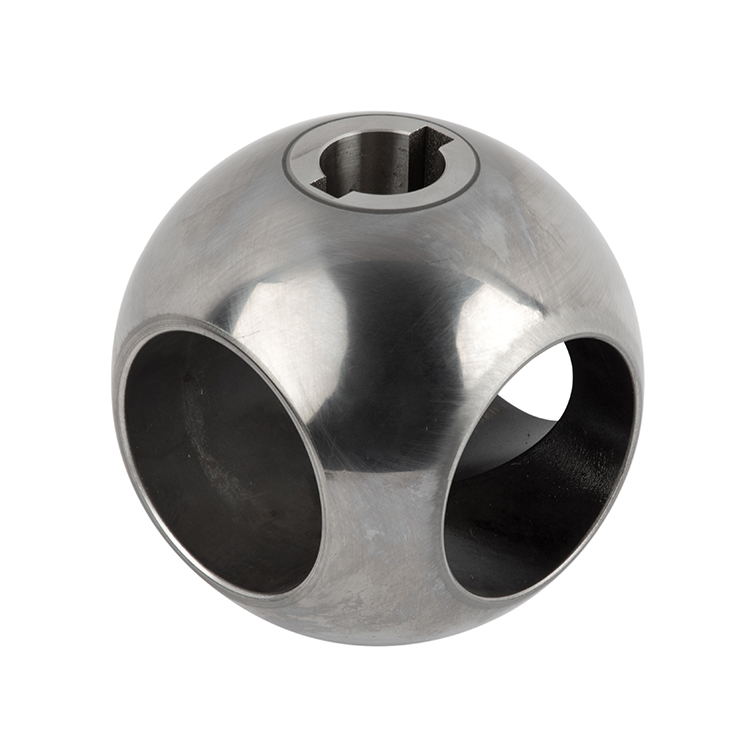
The T-Port Layout: This configuration features a T-shaped flow path drilled completely through the center. It offers incredible flexibility, allowing you to mix two incoming streams into one outlet, split one stream into two paths, or open all three channels at once for unrestricted flow.
The Operational Stroke: Understanding standard 3 way ball valve operation requires looking closely at rotation limits. A standard 90-degree turn switches an L-port path completely, while some advanced T-port setups require a full 180-degree rotation to access every available fluid pattern.
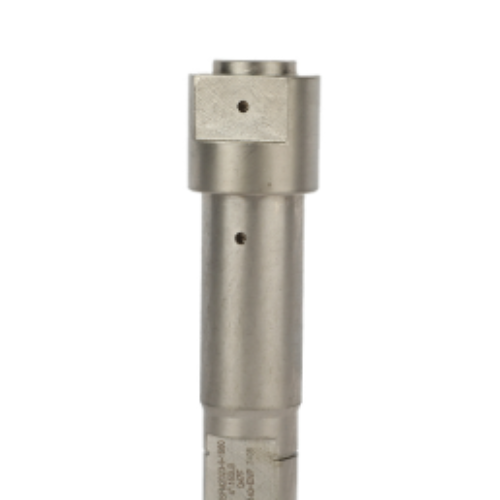
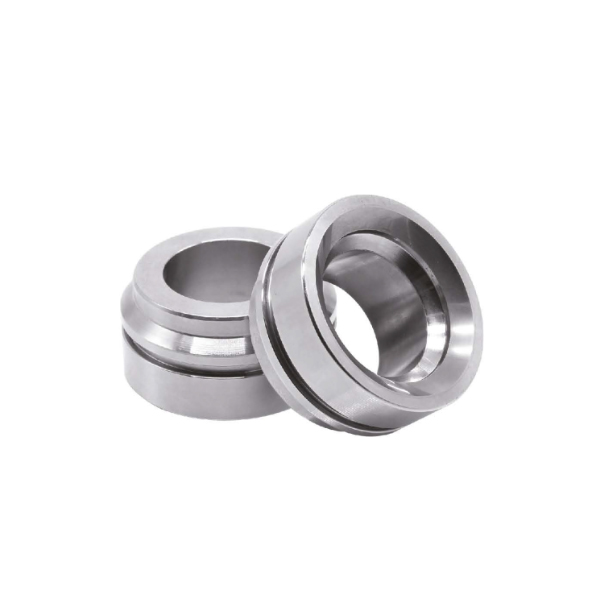
The external cast iron or steel housing of a valve rarely fails on its own. In multi-port environments, the operational success of the entire pipeline depends directly on the engineering quality of your internal Ball Valve Components.
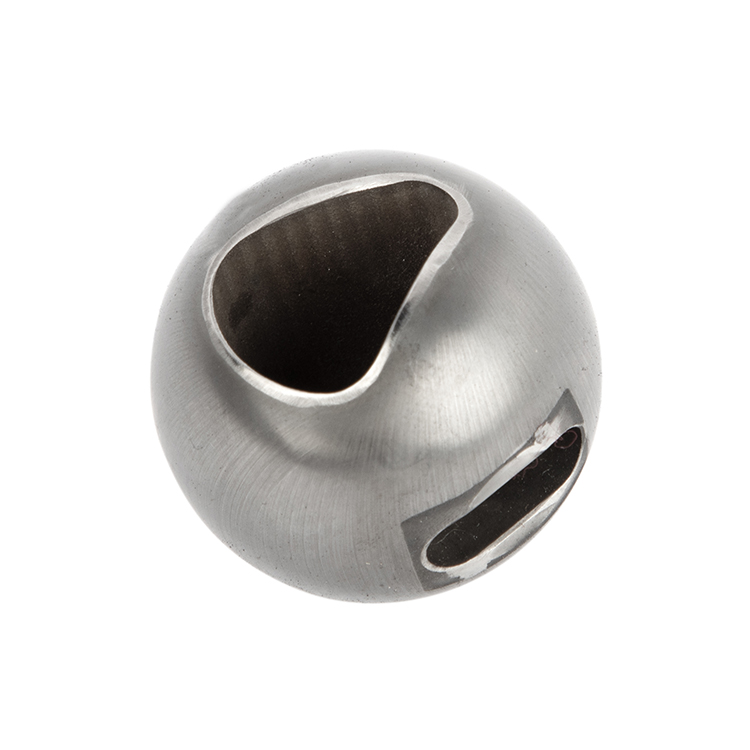
If the central Three Way Valve Balls lack perfect dimensional accuracy, your system faces immediate failure. Because three-way flow dynamics generate complex, uneven fluid pressures inside the housing, low-grade internal components will warp or drift under heavy processing loads.
Eliminating Internal Cross-Bypass: The internal sphere must feature flawless sphericity. If the ball is even slightly out-of-round, fluid will weep past the seal borders during the mid-stroke transition, contaminating your clean chemical batches.
Reducing Actuator Torque Stress: High-precision components utilize mirror-polished surface finishes. This low-friction face ensures smooth turning cycles, protecting expensive pneumatic or motorized actuators from burning out early due to high torque spikes.
Preventing Cavitation and Turbulence: The internal L or T flow channels must be machined with perfectly smooth, sharp-free entry borders. Rough edges inside the fluid track create violent vortices, causing rapid cavitation erosion that destroys soft polymer sealing rings within months.
While standard inline options are relatively easy to seal, multi-port units introduce extreme friction and alignment challenges that demand superior internal components.
Traditional isolation models use two seat rings to trap a sphere. In contrast, a high-performance three way ball valve often relies on an advanced 4-seat sealing system to isolate three independent pipeline openings. This means the custom-ground sphere must achieve perfect, leak-free contact with four separate polymer or metal seat borders at the exact same time.
The Sphericity Factor: A minor microscopic gap will open up when the valve is turned to a mid-stroke position if the ball face is uneven, allowing fluids from different lines to mix dangerously.
The Turning Torque Burden: Pushing a sphere tightly against four independent seats increases friction dramatically, which can stall automated actuators if the ball surface is rough.
Piping Alignment Impact: When external pipe installation stress twists the main valve body, it knocks these complex internal seating pockets out of alignment, causing early leaks. Reviewing how base-level ball valve parts and function handle fluid tracking gives your team a clear engineering baseline to calculate these localized installation stresses.
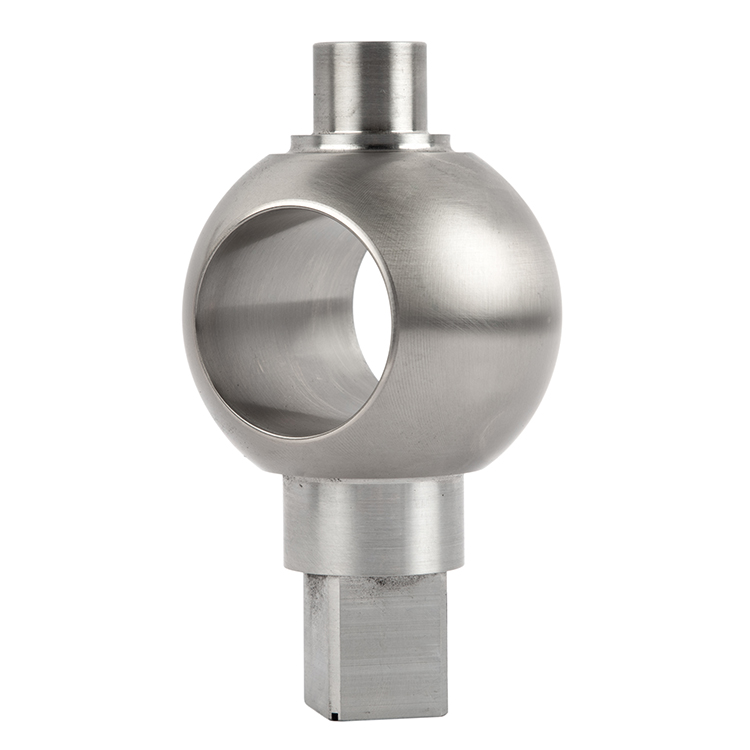
Fixed-Axis Stability: In large-bore or high-pressure systems, the immense fluid force pushing against a multi-port ball can cause it to drift slightly off-center. Supporting the heavy internal sphere on a fixed axis is vital to maintain smooth operation. Specifying an exact trunnion ball valve design guarantees low turning torque and protects your multi-seat array from premature wear.
To keep your procurement running smoothly, use these four practical field rules to pick the right internal sphere configuration for your next project turnaround.
Use an L-port design if your only goal is to switch flow back and forth between two alternate processing lines.
Choose a T-port design if your system needs to blend two separate fluid streams into a single discharge header.
Remember that a standard L-port sphere cannot block all three ports at once; if you need a true dead-end isolation state, look for a T-port ball with specialized 90-degree actuation limits.
T-port configurations allow straight-through flow paths that minimize turbulence, whereas L-port geometries force fluids to make a sharp 90-degree turn, causing higher pressure drops.
Multi-Port Configuration Selection Matrix
| System Flow Requirement | Recommended Ball Type | Operational Stroke Angle | Sealing Seat Ring Count |
| Diverting fluid from 1 main inlet to 2 alternate outlets | L-Port Sphere | 90-Degree Turn | 2-Seat or 4-Seat Options |
| Mixing 2 separate incoming lines into 1 single stream | T-Port Sphere | 90-Degree Turn | 4-Seat Full Containment |
| Connecting all 3 pipeline ports together for full flow | T-Port Sphere | 180-Degree Turn | 4-Seat Full Containment |
| Isolating paths with a complete dead-end block state | T-Port Sphere | 90-Degree Turn | 4-Seat Specialized Design |
Can a standard L-Port three way ball valve completely shut off all pipeline fluid flow paths simultaneously?
No, an L-port sphere always leaves at least two ports connected together; it cannot achieve total three-port dead-end isolation.
Why is the operational turning torque of a 4-seat multi-port valve significantly higher than a standard 2-seat valve?
The sphere rubs against four independent seat rings simultaneously, doubling the physical friction area and increasing required actuation forces.
How do custom-machined Three Way Valve Balls prevent dangerous fluid mixing during intermediate operational strokes?
Precision grinding ensures the ball maintaining micron-level contact with the seats during rotation, blocking fluid blow-by between processing lines.
What material coating protects a three way water valve sphere from rapid cavitation erosion in high-velocity loops?
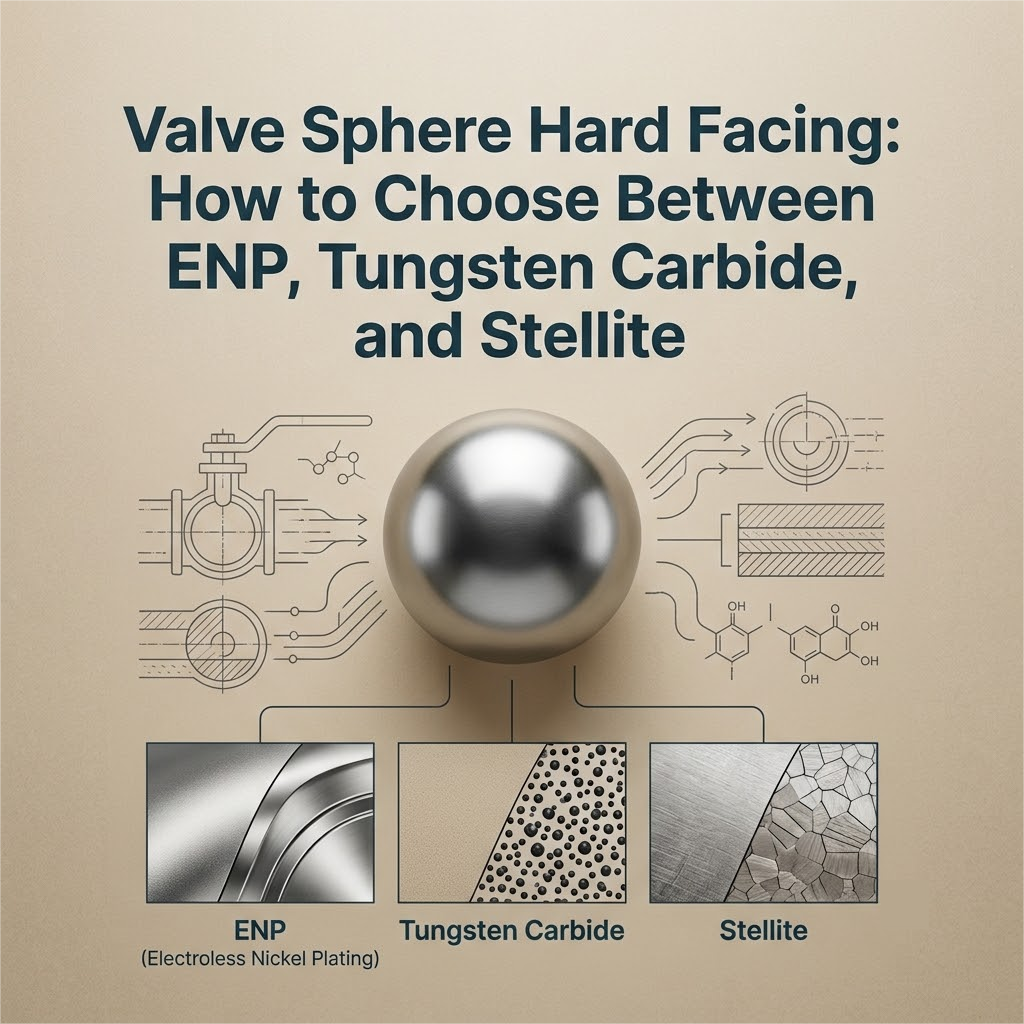
Industrial hard chrome plating or premium Stellite thermal spray coatings protect the internal ports from fast-moving water droplets and scale.
Can a trunnion-style multi-port assembly handle bidirectional sealing across all three pipeline entry ports?
Yes, fixed trunnion mountings paired with spring-loaded independent seats allow effective bidirectional pressure sealing at every single entry port.
What happens if an assembly worker installs a T-port sphere backward inside the valve body casing?
The fluid paths will misalign completely, causing unexpected blockages, accidental chemical mixing, or sudden upstream pressure spikes.
How can you reduce the high actuation torque on an abrasive chemical multi-port line?
Install self-lubricating PTFE or carbon-filled seat inserts paired with an ultra-smooth, mirror-polished internal valve sphere core.
Why do large chemical processing plants prefer 3-way valves over multiple standard 2-way isolation valves?
A single 3-way valve eliminates extra piping joints, reduces potential leak points, and automates complex routing with one actuator.
Managing multi-directional pipelines successfully requires moving past macro-level piping layouts and focusing directly on internal component tolerances. Sourcing high-sphericity spheres and robust seat kits keeps your routing clean and prevents cross-port contamination. Contact GOTEB today to send over your dimensional specs, or browse our high-precision 3-way valve balls and premium ball valve parts catalog to secure your system reliability.


 Optimized by Seraphinite Accelerator