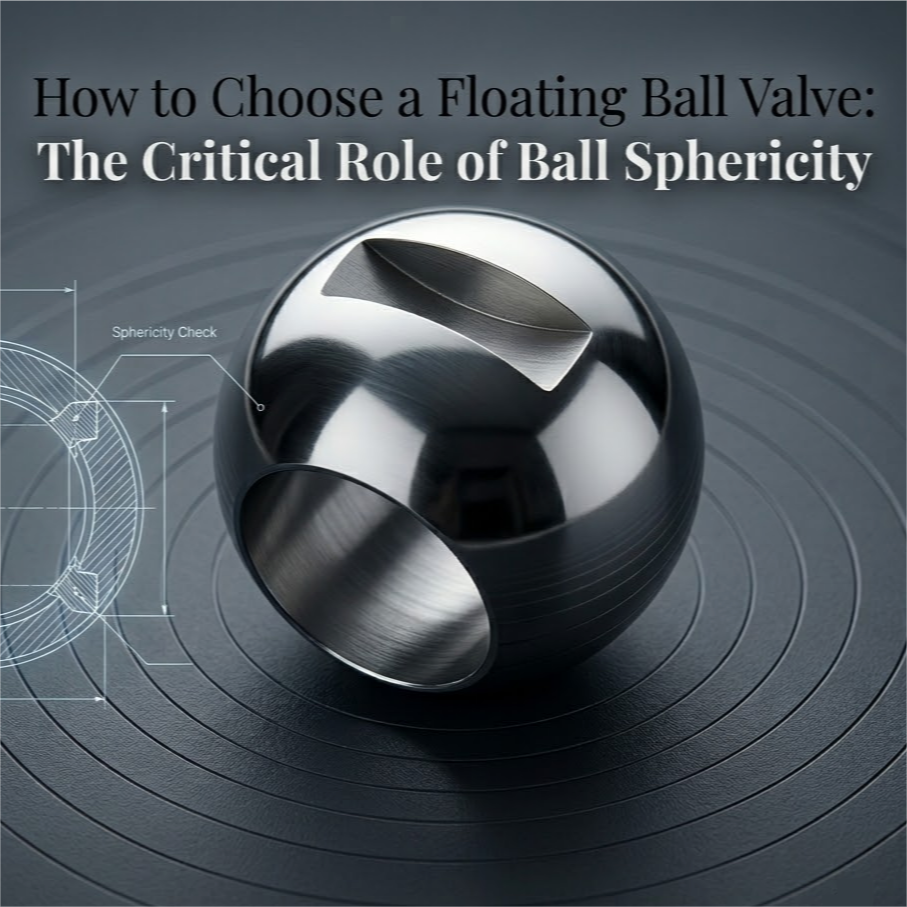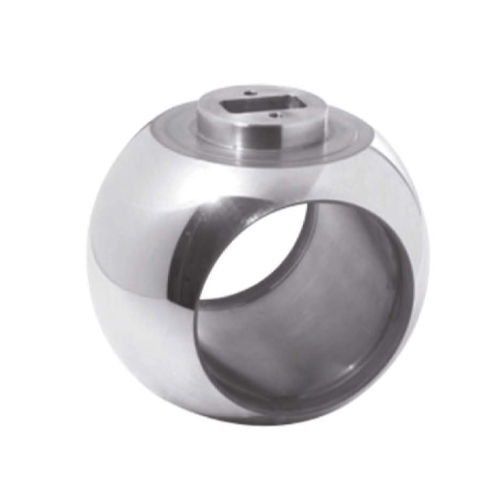


When your business sources high-precision industrial hardware, you cannot look at a valve sphere in isolation. The individual geometrical boundaries of the ball core directly dictate how your assembly engineers must select and match corresponding valve seat designs. Choosing the right internal combination ensures zero leakage and saves your team from expensive factory testing failures.
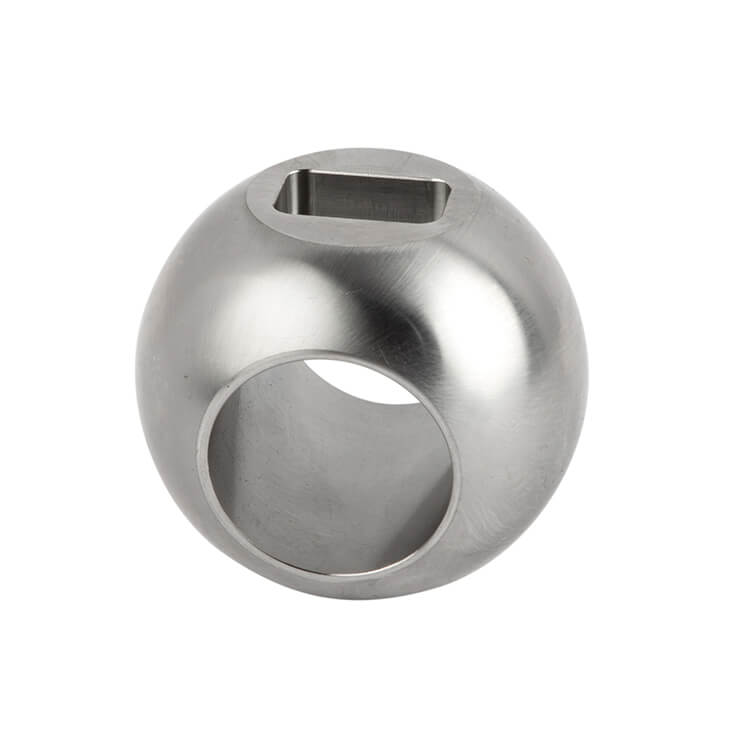
The valve sphere is the beating heart of your flow control setup, but its sealing success depends entirely on how it is held inside the housing. When comparing a trunnion mounted ball valve vs floating ball valve, the physical support system changes completely.
Floating Ball Valve: In a floating design, the ball connects only to the top stem. It behaves like a boat tied to a dock, free to drift slightly downstream when fluid pressure slams against its face.
Trunnion Ball Valve: In contrast, a trunnion design locks the ball core on a rigid, fixed vertical axis. It cannot move downstream because heavy-duty top and bottom shafts pin it firmly in place like a heavy revolving door.
The Sealing Consequence: Because the ball shifts in one design but stays dead-locked in the other, the surrounding seat rings must handle fluid forces in two completely opposite ways. Understanding the core function of a ball valve sphere helps your procurement team see why a ball and its seats must always be treated as a matched mechanical pair.
Because a floating ball physically moves under pressure, it relies on that very displacement to crush itself against the downstream seat ring to stop the fluid. This unique tracking movement changes your entire component sourcing strategy.
The Need for Flex: Since the ball pushes forward with massive force, the downstream seat must be resilient enough to absorb that physical impact without cracking. This is why a floating assembly almost always uses flexible elastomeric or soft plastic materials like PTFE.
The Downstream Squeeze: When your pipeline pressure climbs, the ball slides into the soft plastic cushion, squeezing out any micro-gaps. If you try to use a completely rigid, unyielding metal seat here without complex flexible backups, the shifting ball will simply scar the metal or fracture the component.
The Low-Pressure Trap: The trap with a floating ball is low-pressure sealing. If your pipeline does not have enough fluid force to push the ball forward, the seal relies purely on how tightly the soft plastic was crammed against the ball during factory assembly.
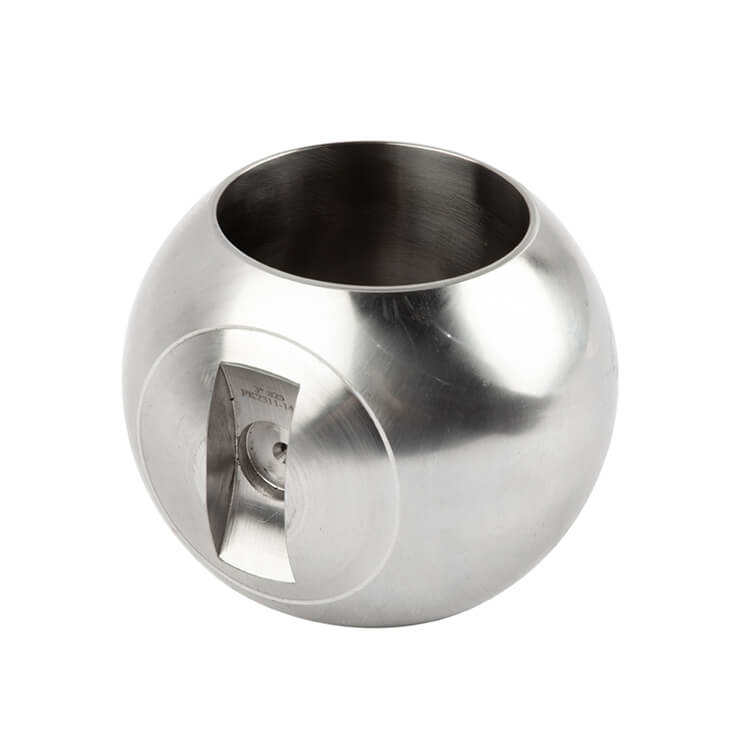
When you move away from floating designs and look at heavy-duty trunnion ball valves, the old sealing rules fly out the window. Since the massive internal sphere is anchored by shafts and cannot move even a micron downstream, the seat rings must do all the traveling.
Active Moving Seats: In this configuration, the seats are dynamic. They are housed in heavy metal rings that slide back and forth inside the valve body channels, constantly chasing the fixed ball.
The Spring Powerhouse: To make sure the seat maintains contact when there is zero line pressure, engineers embed small coil springs or wave springs behind the seat rings. These springs act like tiny shock absorbers, pushing the seal face forward against the dead-locked ball core.
The High-Pressure Assist: When pipeline pressure enters the valve, it slips behind the seat ring and forces it even tighter against the sphere. This self-relieving or double-sealing action is why a high-pressure trunnion ball valve design is the industry standard for severe, high-risk oil and gas transport lines.
When your incoming quality inspectors or assembly engineers review your component inventory, mixing up ball types and seat configurations can ruin your product reliability. Use this quick reference scorecard to ensure your sourced parts match perfectly.
| Ball Component Variant | Chosen Shaft Configuration | Ideal Matching Seat Type | Primary Factory Pressure Passing Standard |
| Solid Forged Sphere | Floating Stem Mount | Flexible Soft PTFE Inserts | Zero bubbles during API 598 low-pressure gas testing |
| Solid Forged Sphere | Dual-Shaft Trunnion | Spring-Loaded Moving Metal Seats | Pass high-pressure hydro-static shell and seat runs |
| Hollow Machined Ball | Floating Stem Mount | Reinforced Nylon or Elastomeric Seals | Perfect for light-duty, low-cost commercial water lines |
| Carbide-Coated Sphere | Dual-Shaft Trunnion | Lapped-to-Match Rigid Alloy Seats | Severe service gas isolation without soft elastomeric backups |
When dealing with a trunnion ball valve vs ball valve structures of a simpler nature, machining tolerances become your biggest bottleneck. A trunnion seat assembly has absolutely zero tolerance for out-of-round balls.
No Room to Flex: Because trunnion seats slide along a fixed path and cannot bend or warp like cheap plastic washers, they require a perfectly spherical ball valve core. If your ball factory supplies spheres with even minor oval spots, the sliding seat will jump over the flat zone.
The Erosion Vortex: This tiny geometric gap creates an immediate leak path. When high-pressure gas or abrasive slurry finds that gap, it acts like a high-speed saw, carving deep permanent grooves into your expensive seating kits.
Actuator Strain: Furthermore, an out-of-round ball creates uneven friction zones. Your mounted actuator will glide smoothly for part of the turn, then jam violently as it hits the wider section of the oval ball, causing field failures. Reviewing the core floating ball valve vs trunnion differences shows that precision tolerances are the only way to keep your automation torque low and predictable.
Can I use a standard hollow valve sphere in a high-pressure trunnion mounted valve body?
No, high pressures will crush or distort hollow spheres, destroying the tight alignment required for trunnion sliding seats.
Why do soft polymer seats fail faster in a floating configuration than a trunnion setup?
Floating balls constantly slide and slam directly into the plastic, causing fast material deformation and localized seat tearing.
What type of valve seat assembly is required if the valve sphere cannot move downstream?
You must use a dynamic, spring-loaded seat assembly that actively pushes forward against the fixed-axis ball core.
How do spring-loaded seat rings maintain a tight seal against a fixed-axis ball at zero pressure?
Miniature coil or wave springs behind the seat ring provide constant mechanical force, keeping the seal face flush.
Can a valve factory machine matching metal balls and seats out of the same forged alloy batch?
Yes, severe service lines require matched metal sets precision-lapped together to eliminate microscopic gaps without using soft plastics.
A pipeline valve is only as reliable as the physical interface between its ball core and seat ring. Balancing your choice of a valve sphere with flexible or spring-loaded seat housings eliminates factory testing failures. Contact GOTEB today to submit your technical drawings, request precision component quotes, or source perfectly synchronized part kits built for severe industrial service.


 Optimized by Seraphinite Accelerator