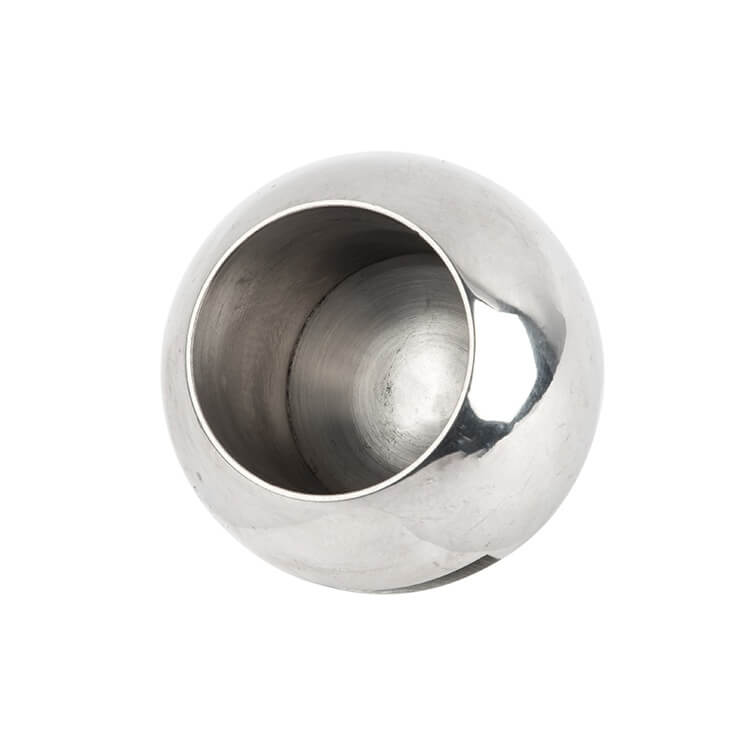


When your business builds high-performance valves, passing the factory pressure test comes down to microscopic details. Sourcing a flawed trunnion valve ball forces your team into costly re-work. Precision machining boundaries protect original equipment manufacturers from field failures, ensuring every individual moving component works flawlessly before leaving your assembly line.
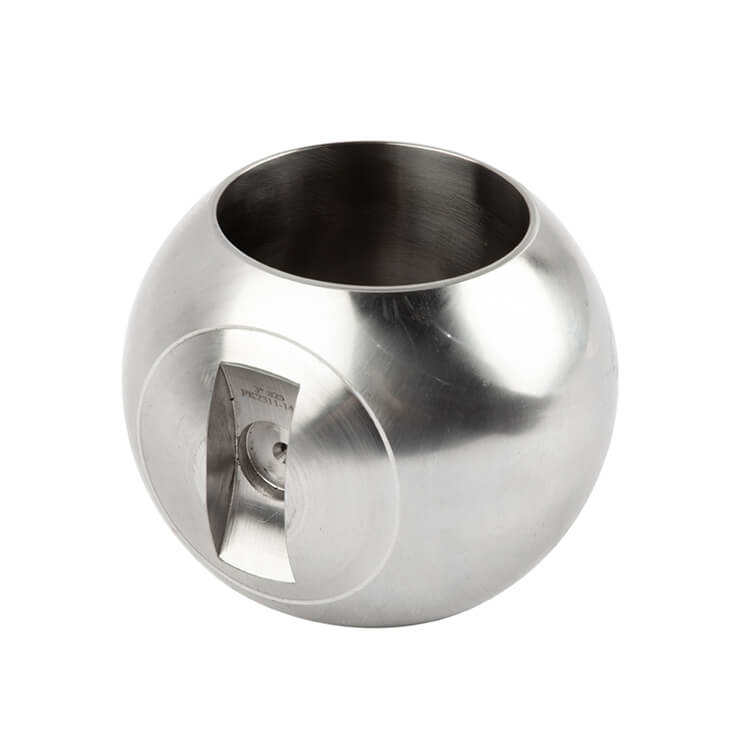
Sphericity defines how close a machined metal sphere comes to a mathematically perfect round shape. For severe pipeline service, this single metric determines whether your valve holds a tight seal or leaks immediately under low-pressure testing.
The Sphericity Limit: Premium component factories grind the ball core to a strict sphericity tolerance measured in microns. If the shape is slightly oval or uneven, it cannot push uniformly against the soft or metal seats.
Micro-Gap Pathways: When the ball shape has local flat spots, invisible micro-gaps appear during its 90-degree rotation. High-velocity pipeline medium will find these channels instantly, creating an internal leak path.
Erosive Washout: Once a micro-leak starts, the high-pressure stream cuts deep grooves into the polymer seat rings. This rapid destruction turns a minor geometric flaw into a permanent internal leakage disaster within days.
Surface roughness describes the microscopic peaks and valleys left on the outer sphere after the diamond-grinding phase. If the ball surface feels like extra-fine sandpaper instead of a smooth mirror, your customer will pay the price during automation setup.
The Friction Spike: A high surface roughness (Ra) value creates massive mechanical resistance when rubbing against spring-loaded seats. This high friction coefficient rapidly shears the edges of soft PTFE, Devlon, or Nylon inserts.
The Breakout Torque Hazard: When friction levels climb, the overall operational torque required to cycle the valve spikes violently. This unpredictable resistance disrupts standard valve sizing calculations.
Actuator Stalling Failures: If your system automation engineer sizes a pneumatic actuator based on a clean, low-friction profile, a rough ball face will stall the assembly halfway through its closing cycle, endangering the entire industrial line.
When your incoming quality inspectors receive a batch of machined spheres, verifying strict mechanical dimensions keeps your assembly lines moving safely.
| Geometrical Property | Root Defect When Out of Tolerance | Primary Factory Inspection Failure Mode | Proactive Manufacturing Target |
| Sphericity (Roundness) | Oval profiles or subtle flat spots on the sphere | Fails low-pressure gas seat leakage tests completely | Precision diamond grinding within 5 to 10 microns |
| Surface Roughness (Ra) | Microscopic peaks and ridges on the ground coating | Accelerated seat tearing and severe torque spikes | Mirror polishing to less than 0.2 microns |
| Journal Coaxiality | Upper and lower shaft centers are physically offset | Internal stem binding and uneven localized seat wear | Strict laser alignment within 0.03 millimeters |
| Coating Thickness | Non-uniform thermal spray layer distribution | Shell delamination, cracking, and premature peeling | Uniform application tracking between 0.15mm and 0.30mm |
In a heavy-duty fixed-axis assembly, the heavy metal sphere is not free to float downstream. Instead, it must rotate perfectly along a rigid vertical center line, anchored by an upper drive journal and a lower trunnion pin.
The Coaxial Metric: The center lines of the top and bottom shafts must match with absolute precision. If the coaxial alignment shifts by even a fraction of a millimeter, it introduces an immediate mechanical wobble.
The Uneven Squeeze: A crooked axis forces the ball core to track unevenly inside the valve body housing. It jams tightly into one side of the polymer seat insert while pulling completely away from the opposite side.
Stem Binding Catastrophes: Because the shafts are askew, the drive stem twists unevenly inside its protective bearing sleeves. This mechanical friction locks up the handwheels or actuators entirely when the pipeline operates under maximum differential pressure.
The Vertical Anchor: This strict structural requirement highlights why studying a comprehensive trunnion ball valve design is so important for engineering teams. Sourcing balls that maintain a straight vertical axis transfers massive pipeline crushing forces into the heavy journal bearings rather than overloading your delicate soft sealing rings.
When a valve handles abrasive mining slurries, dirty oil sands, or scorching temperatures above 250℃, soft plastic seat inserts melt or shred almost immediately. These severe service lines demand a transition to hard metal-to-metal seating kits utilizing specialized carbide coatings.
The Spray Uniformity Limit: Operators use High-Velocity Oxygen Fuel (HVOF) thermal spraying to fuse Tungsten Carbide or Chrome Carbide directly onto the raw forged sphere. The thickness of this hard face must track uniformly across the entire round profile.
The Delamination Threat: If the coating thickness varies across the face, severe thermal cycles create internal residual stresses. Under intense pipeline pressure surges, these micro-cracks expand, causing the hard carbide shell to flake, peel, or delaminate off the base metal core.
Lapped-to-Match Perfection: Because hard metal components cannot stretch or flex like soft plastics, they have no tolerance for dimensional errors. The finished carbide-coated sphere must be precision-lapped together with its matching metal seat rings as an inseparable set, ensuring the faces track perfectly flush.
Why does a visually mirror-shiny valve ball still fail low-pressure API 598 seat tests?
Visual shine does not mean geometric roundness; an oval ball creates micro-gaps that soft seats cannot compress enough to seal.
How does an out-of-tolerance surface roughness (Ra) alter automated actuator sizing?
High roughness spikes mechanical friction against the seats, raising overall torque and stalling out standard sized pneumatic actuators.
Why must a metal-seated valve ball be lapped-to-match with its corresponding seat rings as an inseparable set?
Metal components cannot deform to absorb errors; they require micron-level, custom-matched face tracking to achieve a tight seal.
What manufacturing defect causes a trunnion ball’s drive stem to bind or lock up during assembly?
Poor journal coaxiality alignment forces the top and bottom shafts to tilt, jamming the stem inside its bearing sleeves.
How does forging metallurgy protect dimensional tolerances under high thermal cycles compared to castings?
Forged alloys are free from internal gas porosity, preventing the base metal from warping or shifting during precision grinding.
Premium valve manufacturing starts with a premium, high-tolerance ball core. Sourcing components built to strict sphericity, roughness, and journal alignment metrics eliminates unexpected testing failures and secures your reputation for pipeline safety. Contact GOTEB today to submit your engineering drawings, request technical quotes, or source precision-ground custom components for your custom assembly lines.


 Optimized by Seraphinite Accelerator