
Ball valve components play an essential role in controlling fluid flow, maintaining sealing performance, and ensuring reliable operation in industrial piping systems. A ball valve uses a rotating spherical ball with a bore through its center to regulate the flow of liquids or gases. When the bore aligns with the pipeline, the valve opens; when the ball rotates 90 degrees, the bore blocks the flow and closes the valve.
Although ball valves have a relatively simple operating principle, their performance depends on the quality and coordination of several components, including the valve body, ball, stem, seats, seals, bonnet, and operating mechanism. Each component has a specific function that contributes to flow control, pressure resistance, and leak prevention.
Understanding the main components of a ball valve helps engineers, maintenance teams, and purchasing professionals select suitable products for their applications. It also provides a useful basis for evaluating component materials, manufacturing quality, and supplier capabilities.

A standard ball valve consists of several interconnected parts that work together to control fluid flow. The exact configuration depends on the valve design, pressure rating, connection type, and intended application.
The main ball valve components typically include:
Valve Body: The main housing that contains the internal components and connects to the pipeline.
Ball: The spherical component with a central bore that opens or blocks the flow passage.
Stem: The shaft that transfers rotational movement from the handle or actuator to the ball.
Valve Seats: Components that support the ball and provide a sealing interface.
Seals and O-Rings: Elements that help prevent fluid leakage through joints and around the stem.
Bonnet or Body Cover: A component used in certain designs to enclose internal parts and provide access for assembly or maintenance.
Handle or Actuator: The operating mechanism used to rotate the ball.
Packing and Gland: Components around the stem that help maintain external sealing and control leakage.
Not every ball valve uses the same arrangement. For example, some valves have a one-piece body, while others use two-piece or three-piece construction. Certain industrial designs also incorporate additional components to meet specialized operating requirements.
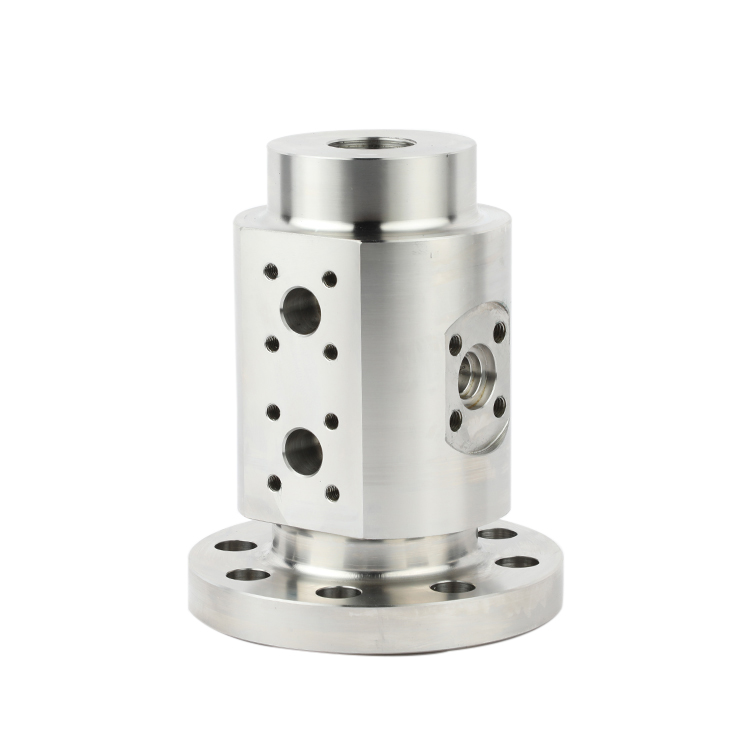
The ball valve body is the primary structural component of the valve. It houses the ball, seats, and other internal parts while providing the necessary connections to the piping system.
The body must withstand the specified operating pressure and temperature while maintaining structural integrity. Its design also affects the valve’s flow characteristics, installation requirements, and maintenance accessibility.
Common body materials include stainless steel, carbon steel, brass, and other alloys. Stainless steel is frequently selected for applications requiring corrosion resistance, while carbon steel may be suitable for many industrial systems where strength and operating conditions are the main considerations.
Ball valve bodies are available in different configurations, including one-piece, two-piece, and three-piece designs. One-piece bodies generally have a compact structure, while two-piece and three-piece designs can offer greater flexibility for assembly and servicing.
When selecting a ball valve body, buyers should consider the working medium, pressure rating, temperature range, corrosion conditions, connection type, and applicable standards.
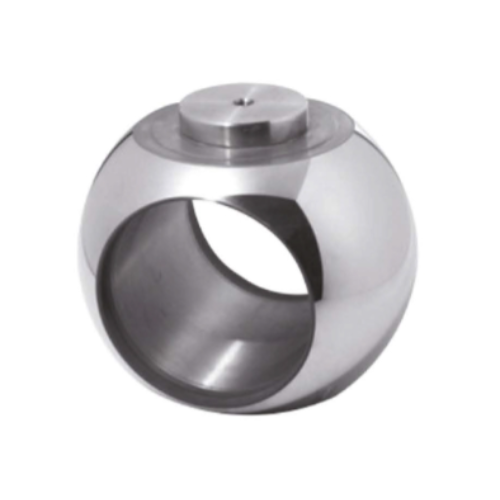
The ball is the central operating component of a ball valve. It is a spherical element with a bore through its center. By rotating the ball, the valve changes the alignment between the bore and the pipeline.
When the bore is aligned with the flow path, fluid can pass through the valve. When the ball rotates approximately 90 degrees, the solid portion of the ball blocks the passage, stopping the flow in a typical shutoff configuration.
Ball valves may use full-port or reduced-port designs. A full-port valve has a bore that is approximately the same diameter as the connecting pipe’s internal passage, helping minimize flow restriction. A reduced-port valve has a smaller bore and may provide a more compact or economical solution for certain applications.
The ball’s material, surface finish, roundness, and dimensional accuracy can significantly influence sealing performance and operating torque. Common materials include stainless steel, brass, and other alloys, depending on the valve design and service conditions.
In some designs, the ball has a floating structure. In others, it is supported by trunnions or other mechanical arrangements. These designs distribute loads differently and are selected according to factors such as valve size, pressure, and operating requirements.
The ball valve stem connects the ball to the operating mechanism. It transfers rotational movement from a handle, gearbox, pneumatic actuator, or electric actuator to the ball.
When the operator turns the handle or activates the actuator, the stem rotates the ball to open or close the valve. The stem must provide sufficient mechanical strength to withstand operating torque and repeated movement.
Stem design also affects sealing and safety. The stem passes through the valve body, so the area around it requires an appropriate sealing arrangement to prevent external leakage. Depending on the design, the stem may incorporate features intended to help prevent it from being ejected under pressure.
Stainless steel is commonly used for valve stems because of its mechanical properties and corrosion resistance. Other materials may be selected for specific pressure, temperature, or chemical conditions.
When evaluating a ball valve stem, buyers should check material compatibility, dimensions, machining accuracy, surface finish, torque requirements, and the design of the stem-to-ball connection.
Ball valve seats form the sealing interface between the ball and the valve body. They help maintain contact with the ball so that the valve can stop fluid flow when closed.
Seat performance depends on material properties, surface condition, contact pressure, operating temperature, and the characteristics of the fluid being handled.
Soft seats are commonly manufactured from materials such as PTFE and other suitable polymers. They can provide effective sealing for many general-purpose applications, subject to the material’s temperature, pressure, and chemical limitations.
Metal seats are used in certain demanding applications where higher temperatures, abrasive media, or specific mechanical requirements make soft-seat materials less suitable. Their performance depends on the seat design, material pairing, surface treatment, and manufacturing precision.
Choosing the correct seat material is essential. An unsuitable seat may deform, wear prematurely, swell in contact with certain chemicals, or lose its sealing performance.
Before selecting a ball valve, buyers should confirm the operating temperature, pressure differential, medium composition, required leakage performance, and expected service life.
Sealing components help prevent leakage at different locations within a ball valve. While the ball and seats control flow through the valve, seals and packing help prevent fluid from escaping through body joints or around the stem.
O-rings and static seals may be installed at suitable connection points between components. Their material must be compatible with the operating medium, temperature, and pressure conditions.
Stem packing is positioned around the valve stem to maintain a seal where the stem passes through the body. A gland or packing adjustment mechanism may apply the required compression, depending on the valve design.
Common sealing materials include PTFE, elastomers, graphite, and other specialized materials. The appropriate choice depends on chemical compatibility, temperature limits, pressure, regulatory requirements, and the intended application.
Sealing performance can deteriorate because of aging, wear, incorrect installation, excessive compression, chemical attack, or unsuitable operating conditions. Regular inspection and appropriate maintenance help identify potential leakage before it develops into a more serious problem.
A ball valve bonnet or body cover is used in certain valve designs to enclose internal components and provide a structural connection to the valve body. Depending on the design, it may also support parts of the stem assembly or provide access for maintenance.
Not all ball valves have a separate bonnet. Many designs use a one-piece or multi-piece body in which the internal components are accessed through the main body construction. Therefore, the terminology and function of a bonnet can vary among manufacturers and valve configurations.
Where a separate bonnet is used, its material, dimensions, connection method, and sealing arrangement must be compatible with the valve body and the specified operating conditions.
A properly designed bonnet connection helps maintain structural integrity and prevent leakage at the joint. For pressure-containing components, manufacturers must follow the applicable design requirements and inspection procedures.
The handle or actuator provides the force needed to rotate the ball through the stem.
Manual handles are common in smaller valves and applications where operators can easily access the installation. They provide a straightforward way to turn the valve between open and closed positions.
Pneumatic actuators use compressed air to operate the valve. They are often used in automated production lines and process systems where remote operation or frequent cycling is required.
Electric actuators use an electric motor to operate the valve. They can be integrated into control systems for remote operation, automated sequences, and process monitoring.
The operating mechanism must provide sufficient torque for the valve’s actual operating conditions. Factors such as pressure differential, seat design, medium properties, valve size, and operating frequency affect torque requirements.
When selecting an actuator, buyers should also consider the required opening and closing time, available power or compressed air, control signals, installation space, and any applicable safety requirements.
The main ball valve components operate as an integrated mechanical and sealing system. Each part performs a specific function, but the valve’s overall performance depends on their compatibility.
The operating process can be summarized in three stages:
Opening the valve: The operator turns the handle or activates the actuator. The stem transfers the rotational movement to the ball, aligning its bore with the pipeline.
Controlling or stopping flow: In a typical quarter-turn ball valve, rotating the ball approximately 90 degrees moves the bore away from the flow path. The ball and seats then form the shutoff interface.
Maintaining sealing performance: The seats contact the ball to restrict flow when the valve is closed, while the stem packing and other seals help prevent external leakage. The body contains the pressure and supports the internal assembly.
If one component is poorly manufactured or incorrectly selected, it can affect the performance of the entire valve. For example, a damaged seat may cause internal leakage, an improperly finished ball may accelerate seat wear, and unsuitable stem packing may allow leakage to the outside.
For this reason, dimensional compatibility, material selection, machining accuracy, assembly quality, and appropriate testing are all important when manufacturing or purchasing ball valve components.
Selecting suitable ball valve components requires more than comparing dimensions or purchase prices. Buyers should evaluate the complete operating environment and confirm that each component meets the technical requirements of the application.
Consider the Operating Medium
Identify whether the valve will handle water, oil, gas, steam, chemicals, or fluids containing suspended particles. The medium affects the choice of body, ball, seat, and sealing materials.
Confirm Pressure and Temperature Requirements
Each component must be suitable for the valve’s specified pressure and temperature range. Buyers should verify the complete valve’s pressure-temperature rating rather than relying only on the nominal rating of an individual material.
Evaluate Material Compatibility
Stainless steel, carbon steel, brass, polymers, and specialized alloys offer different combinations of strength, corrosion resistance, cost, and temperature capability. The material should be selected according to actual operating conditions.
Check Dimensions and Manufacturing Tolerances
The ball, stem, seats, seals, and body must fit together correctly. Dimensional accuracy and surface finish influence assembly, operating torque, and sealing performance. For replacement parts, drawings, part numbers, and the original valve model can help confirm compatibility.
Verify Quality Control and Testing
Reliable suppliers should be able to explain their material verification, machining inspection, dimensional checks, assembly procedures, and pressure or leakage testing. Applicable standards and acceptance criteria should be agreed upon before production or purchase.
Assess Customization and Supplier Capability
For OEM projects or replacement components, confirm whether the supplier can work from technical drawings, samples, or defined specifications. Production capacity, traceability, inspection documentation, lead times, and technical communication are also important factors.
Ball valve components work together to provide reliable flow control, pressure containment, and sealing performance in industrial piping systems. The body supports the assembly, the ball controls the flow path, the stem transmits operating motion, the seats create the primary shutoff interface, and the seals and packing help prevent leakage. The handle or actuator enables manual or automated operation, while a bonnet or body cover is included where the particular design requires it.
For industrial buyers, understanding these components makes it easier to evaluate valve designs, select compatible materials, and identify reliable manufacturers. By considering operating conditions, dimensional accuracy, manufacturing quality, and testing requirements, businesses can choose ball valve components that meet their application needs and support long-term equipment reliability.
When sourcing custom or replacement ball valve components, providing detailed drawings, material specifications, operating parameters, and quality requirements can help manufacturers recommend suitable options and reduce compatibility issues.
1. What are the main components of a ball valve?
The main components of a ball valve typically include the valve body, ball, stem, seats, seals, O-rings, stem packing, and handle or actuator. Some designs also include a separate bonnet or body cover. Each component contributes to flow control, sealing performance, or structural integrity.
2. What is the function of the ball in a ball valve?
The ball controls fluid flow through a central bore. When the bore aligns with the pipeline, fluid can pass through. Rotating the ball approximately 90 degrees moves the bore away from the flow path, closing the valve.
3. What does a ball valve stem do?
The ball valve stem transfers rotational movement from the handle or actuator to the ball. Its strength, dimensions, surface finish, and sealing arrangement affect operating reliability and leakage prevention.
4. What materials are commonly used for ball valve components?
Common materials include stainless steel, carbon steel, brass, PTFE, elastomers, and graphite. The appropriate material depends on the operating medium, pressure, temperature, corrosion conditions, and required sealing performance.
5. What is the difference between a ball valve seat and a seal?
A ball valve seat forms the sealing interface between the ball and the valve body to control flow when the valve closes. Other seals, such as O-rings and stem packing, help prevent leakage through body joints and around the stem.


 Optimized by Seraphinite Accelerator