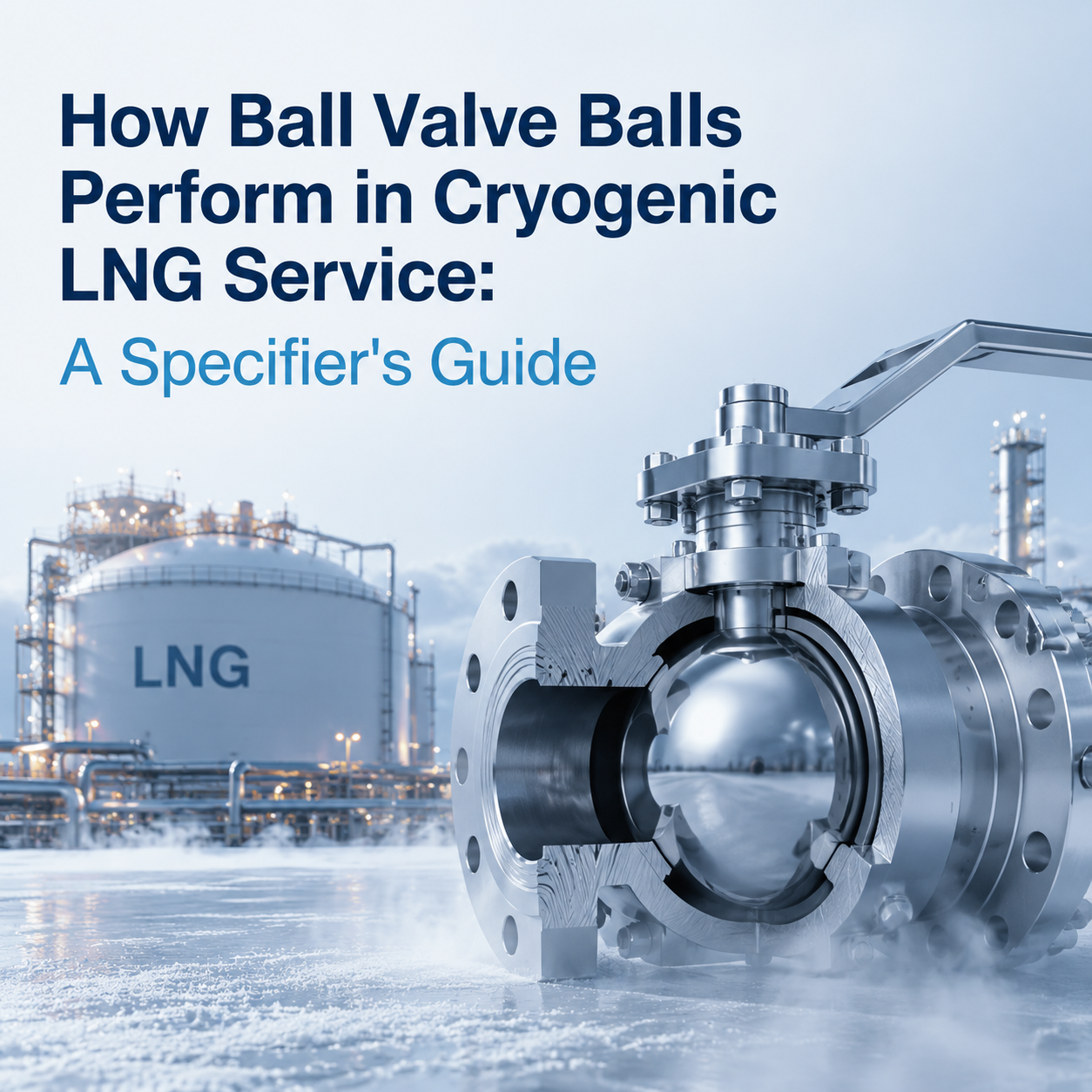

When your business moves liquefied natural gas, you are handling a fluid that boils at roughly -162°C (-260°F). At that temperature, metal does not behave the way it does in your workshop. The ball at the heart of your ball valve — the component that actually shuts off flow — faces thermal contraction, a real risk of embrittlement, and a sealing challenge that ordinary valves fail. This guide explains how ball valve balls perform in cryogenic LNG service, what materials and finishes keep them leak-tight, and how you should specify them so your plant stays safe and on-stream.
For specification purposes, “cryogenic” is usually taken as any service below -50°C, and true LNG duty sits near -162°C. Under BS 6364 the valve is classed as cryogenic when it must hold a bubble-tight seal at that design temperature. The ball itself only sees the full cold temperature when LNG is flowing through the bore; during standby, the extended bonnet keeps the stem packing in the warm vapour column so it does not freeze up. That thermal gradient is exactly why the ball, the seat, and the bonnet have to be designed and stabilized as a system — not as separate parts you buy on price alone.
| Service Band | Typical Temperature | What It Does to the Ball | Your Takeaway |
|---|---|---|---|
| Ambient / warm | +20°C to -50°C | Normal fit and hardness | Baseline machining tolerances apply |
| Low-temperature | -50°C to -100°C | Measurable contraction begins | Use low-temp-rated alloys; verify impact toughness |
| Cryogenic (LNG) | -100°C to -196°C | Significant shrinkage; carbon steel embrittles | Specify 316L + cryogenic stabilization + Ra≤0.4µm |
You cannot specify a cryogenic ball on price. The material has to keep its toughness at -162°C, or it can crack under a pressure transient. For LNG, the industry standard is austenitic stainless steel — AISI 316/316L, supplied as forged A182 F316/F316L or cast A351 CF8M/CF3M. These grades retain ductility and impact strength through the cryogenic range. Plain carbon or low-alloy steel loses toughness and can shatter, which is why you will see it rejected for the wetted ball.
For higher mechanical load, 17-4PH (H1150M) is common; for sour or highly corrosive duty, Inconel 718 or 625 earns its cost. Whatever you choose, require a cryogenic stabilization (sub-zero) treatment per BS 6364 so retained austenite transforms before the ball reaches your site — otherwise it keeps moving in service and your seal drift worsens over time.
| Ball Material | Min Service Temp | Typical Hardness | Corrosion Resistance | Best Fit for Your Business |
|---|---|---|---|---|
| 316L (A182 F316L) | -196°C | ~150 HB | Excellent | Standard LNG, general cryogenic |
| 17-4PH (H1150M) | -73°C to -196°C* | ~300 HB | Good | High torque / wear, confirmed low-temp grade |
| Inconel 718 | -196°C | ~350 HB | Superior | Sour / corrosive / high-pressure cryogenic |
*Confirm the specific low-temperature certified grade and heat treatment with your supplier before you order.
The coefficient of thermal expansion (CTE) of 316 stainless is about 16.5 µm/m·°C. Cool a 100 mm ball from +20°C to -162°C and it shrinks by roughly 0.27 mm. That sounds small until you realize the seat is shrinking too — and if the two do not contract together, you get either a leak path or a ball that binds and needs a hammer to turn.
For your business, the practical rule is simple: the ball and the seat must be specified as a matched pair with compatible CTE, and the running clearance has to be designed at ambient so it closes correctly at cryogenic temperature. This is also why a billet that was “close enough” on the inspection bench can fail the moment LNG fills the line.
A cryogenic seat — usually PCTFE (Kel-F) or glass-filled RPTFE — achieves bubble-tight Class VI leakage (per ISO 5208 / API 598) only when the ball it presses against is near-mirror finished. The sealing line cares more about sphericity and waviness than about the average roughness number, but as a working spec you should require Ra ≤ 0.4 µm (16 µin) on the sealing surfaces, verified on the sphere — not just on a coupon.

Where your service is abrasive or you want longer life between overhauls, a hard-facing option for your valve sphere — ENP, tungsten carbide, or Stellite — changes the wear and corrosion trade-off. We cover that choice in detail in our separate guide so you can match the coating to the medium.
Do not accept a cryogenic ball on a certificate of conformity alone. The design basis you should see referenced is BS 6364, API 6D Annex F, ISO 28921-1, and MSS SP-134. The test that proves the ball performs is the cryogenic seat test: the assembled valve is submerged in liquid nitrogen at design pressure, thermally cycled (typically 5–15 cycles between ambient and cryo), then checked for bubble-tight leakage with helium or air.
When you request a quote, ask your supplier for a signed cryogenic test report that lists the test medium, temperature, cycles, and the leakage class achieved. If they cannot produce one, the ball has not actually been proven for LNG duty — only assumed to be.
Tell us your bore, class, and medium. We supply 316L and 17-4PH trunnion ball valve balls.
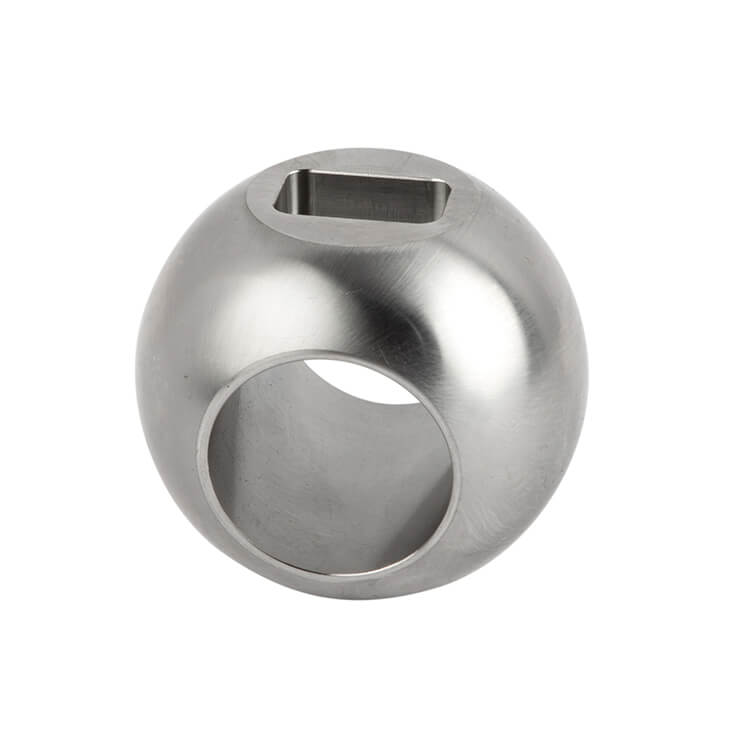
This is the question that decides the ball geometry. In small bore and lower pressure lines, a floating ball valve ball is held against the seat by line pressure and is the cost-effective choice. In large bore (DN300+) and higher class (600+) LNG transfer, a trunnion ball valve ball is mechanically supported so it absorbs thrust, cuts operating torque, and holds a stable seal under thermal stress. Most terminal and ship-loading LNG valves are trunnion-mounted for exactly that reason.

Whichever geometry you choose, the seat that rides on the ball must be cryogenic-rated.
Most cryogenic ball failures are not mysterious; they are specification gaps. Watch for these:
A short procurement checklist for your team: confirm the material cert (EN 10204 3.1), the cryogenic stabilization record, the surface finish Ra, the seat material, and a real LN2 test report. If a supplier cannot tick all five, you are buying risk.
Anything below about -50°C is treated as low-temperature, and LNG duty is near -162°C. Under BS 6364 a valve is classed as cryogenic when it must hold a bubble-tight seal at its design temperature — for LNG that means proving performance at -162°C, not just at the workshop.
Austenitic stainless 316L (A182 F316L / A351 CF3M) is the industry default because it keeps its toughness at -196°C. Step up to 17-4PH for higher mechanical load, or Inconel 718/625 for sour or corrosive duty. Avoid plain carbon steel, which embrittles in cryo.
With a CTE near 16.5 µm/m·°C, a 100 mm 316L ball contracts roughly 0.27 mm from ambient to LNG temperature. The ball and seat must be specified as a matched pair so the running clearance closes correctly at cryo instead of leaking or binding.
Specify Ra ≤ 0.4 µm (16 µin) on the sealing surfaces, measured on the actual sphere. Sphericity and waviness matter as much as roughness, because the seat seals on a continuous line, not an average number.
The design basis is BS 6364, API 6D Annex F, ISO 28921-1, and MSS SP-134. Testing follows a cryogenic seat test submerged in liquid nitrogen at design pressure with 5–15 thermal cycles and bubble-tight leakage checks per ISO 5208 / API 598.
Not always, but in abrasive or long-life LNG service a hard-facing layer — electroless nickel (ENP), tungsten carbide, or Stellite — improves wear and corrosion resistance. The right choice depends on your medium and cycle count, which is why we publish a separate coating guide to help you decide.
The assembled valve is cooled in liquid nitrogen to design pressure, thermally cycled between ambient and cryo, then checked for bubble-tight leakage with helium or air. Ask for a signed cryogenic test report listing medium, temperature, cycles, and leakage class — it is your proof the ball performs in LNG, not just on paper.
Whether you need a standard 316L sphere or a fully customized ball valve ball in Inconel for sour LNG, our team will match the material, finish, and test to your line. Send your drawing or spec — we reply with a quote and a test plan.
A ball valve ball in cryogenic LNG service lives at the edge of what metal can do. Pick the right austenitic grade, stabilize it for cryo, finish it to Ra ≤ 0.4 µm, match it to a cryogenic seat, and prove it with a real LN2 test — and your business gets a valve that seals on the first cool-down and keeps sealing for years. Get any one of those steps wrong and you buy downtime you did not budget for. If you are specifying balls for an LNG, ethylene, or air-separation line, talk to us early.
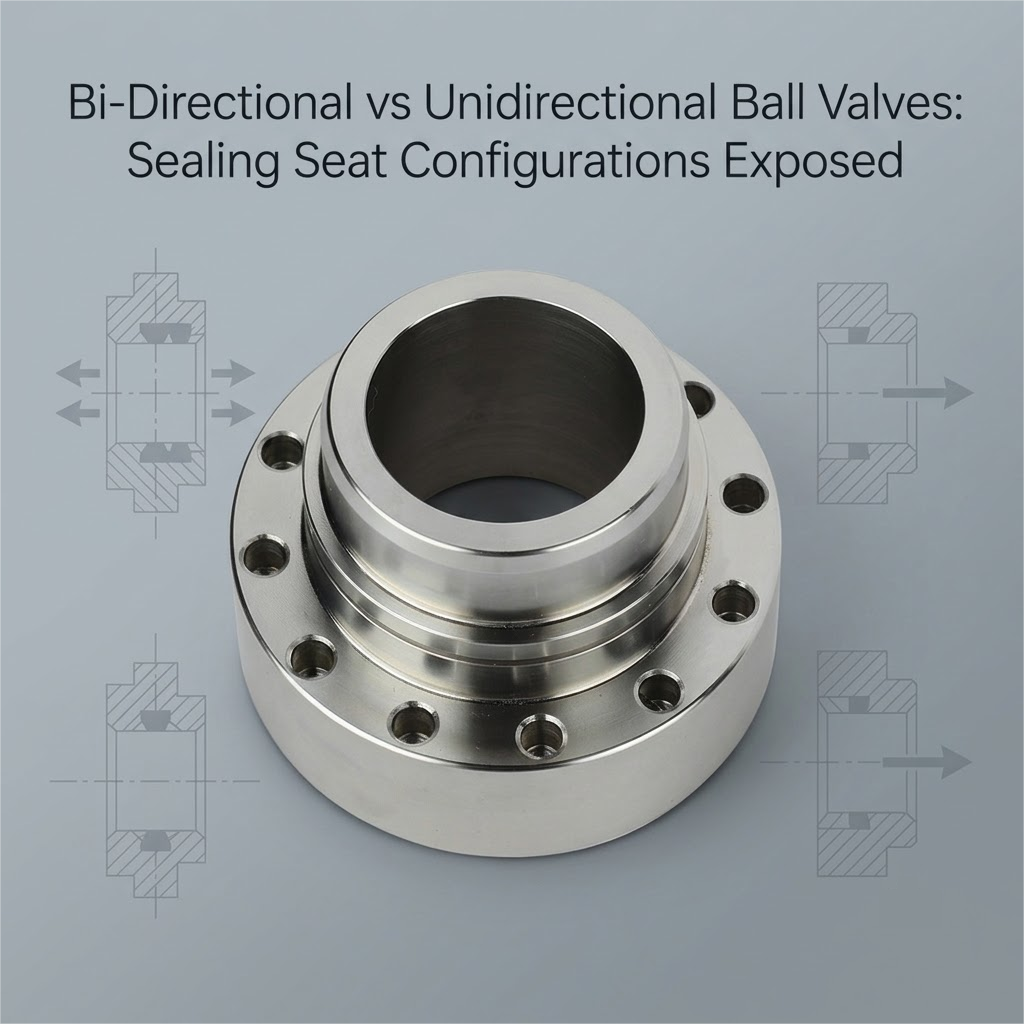
Related reading: our guide to bi-directional vs unidirectional seat configurations explains how seat design affects zero-leakage sealing in cryogenic service.


 Optimized by Seraphinite Accelerator