

Flanged ball valves are widely used in industrial piping systems because of their reliable sealing performance, convenient installation, and strong connection structure. Unlike threaded or welded valve connections, flanged ball valves use bolted flange connections to join the valve to the pipeline, making installation and maintenance more manageable.
For engineers, contractors, distributors, and industrial equipment buyers, understanding how a flanged ball valve improves pipeline installation is important when selecting suitable valve configurations. Factors such as connection standards, pressure ratings, flange dimensions, sealing materials, and installation space all influence the efficiency and reliability of a piping system.

A flanged ball valve is a type of quarter-turn valve that uses a spherical ball with a central opening to control fluid flow. It features flanged ends on both sides of the valve body, allowing it to connect to pipeline flanges through bolts and gaskets.
When the handle or actuator rotates the ball by 90 degrees, the valve opens or closes the flow passage. This simple operating mechanism provides quick shut-off and reliable flow control.
Flanged ball valves are available in different sizes, pressure classes, materials, and flange standards, making them suitable for various industrial applications, including water treatment, oil and gas, chemical processing, power generation, and general manufacturing.
Flanged ball valves offer several installation advantages that help simplify pipeline assembly and improve connection reliability.
One of the main advantages of a flanged ball valve is its straightforward connection method. The valve can be installed between two matching pipeline flanges using bolts, nuts, and suitable gaskets.
This structure makes it easier to integrate the valve into existing piping systems without requiring specialized welding equipment. It is particularly useful for projects involving pipeline modifications, equipment replacement, and system expansion.
Flanged connections allow the valve to be removed without cutting the pipeline. Technicians can loosen the bolts, separate the connection, and remove the valve for inspection, maintenance, or replacement.
This feature helps reduce maintenance complexity and makes flanged ball valves suitable for industrial systems that require periodic servicing.
A properly installed flanged ball valve provides a secure connection through the compression of a gasket between mating flange surfaces.
When the flange faces are aligned correctly and bolts are tightened evenly, the gasket creates an effective seal that helps prevent external leakage.
The sealing performance depends on several factors, including gasket material, flange surface condition, bolt tightening force, and operating pressure.
Compared with certain welded valve connections, flanged ball valves generally require fewer specialized installation procedures. Their bolted connection structure allows technicians to complete installation using standard mechanical tools and appropriate tightening equipment.
This can help improve installation efficiency, especially in large industrial piping projects involving multiple valve connections.
Flanged ball valves are available in different face-to-face dimensions, connection standards, and pressure ratings. This variety allows engineers to select suitable configurations for different pipeline layouts.
They can also be used with various pipeline materials and equipment connections, provided that the flange dimensions, pressure ratings, and sealing requirements are compatible.
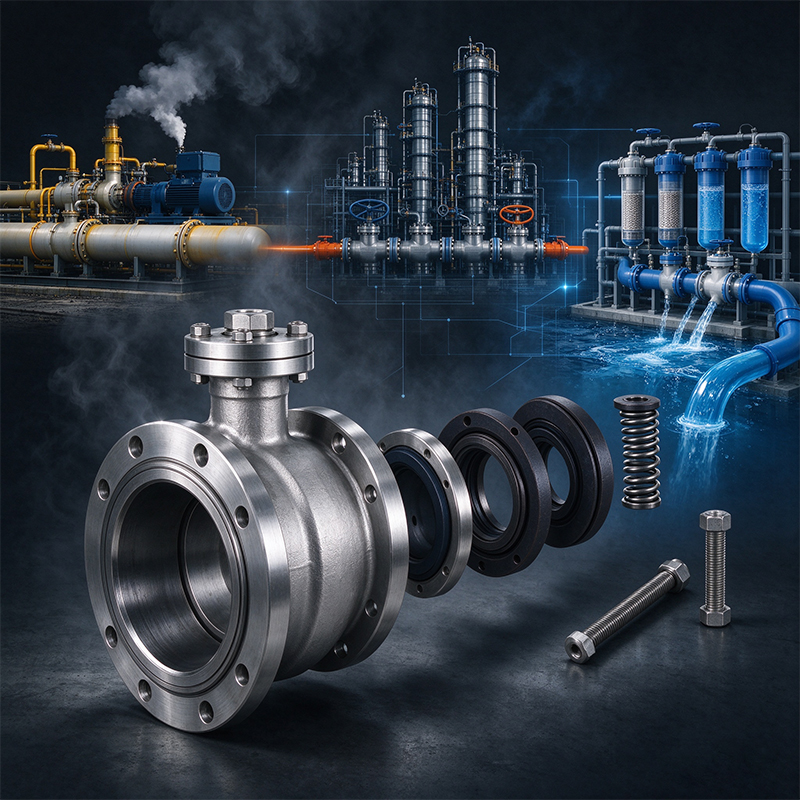
Understanding the main components helps explain how flanged ball valves achieve reliable pipeline connections.
The flange ends are located on both sides of the valve body and provide the connection interface with the pipeline. Their dimensions, bolt-hole arrangements, and facing types must match the corresponding pipeline flanges.
Common flange standards include ANSI/ASME, DIN, and JIS, depending on the project requirements.
Gaskets are installed between the mating flange faces to prevent fluid leakage. Common materials include PTFE, rubber, graphite, and other application-specific sealing materials.
The correct gasket should be selected according to the operating medium, pressure, temperature, and flange facing.
Bolts and nuts secure the valve between the pipeline flanges. Proper bolt selection and tightening procedures help distribute compression evenly across the gasket and maintain connection stability.
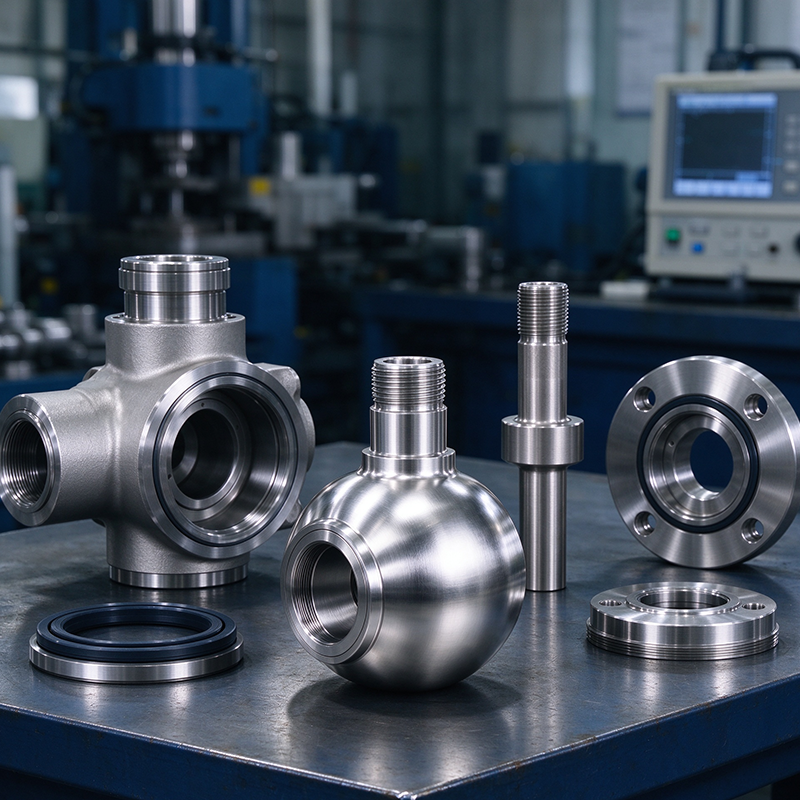
The valve body provides the main pressure-containing structure, while the internal ball controls fluid flow. These components must meet the required pressure and temperature specifications to ensure safe operation after installation.
Although flanged ball valves simplify pipeline connections, proper preparation is still essential.
Flange Standard Compatibility: Confirm that the valve flange standard matches the pipeline connection. ANSI/ASME, DIN, and JIS flanges may have different dimensions and bolt patterns, so compatibility should never be assumed.
Pressure and Temperature Ratings: Check that the valve and its flange connections are suitable for the system’s maximum operating pressure and temperature.
Gasket Selection: Choose gasket materials that are compatible with the process fluid and operating environment. Incorrect gasket selection may lead to leakage or premature deterioration.
Pipeline Alignment: Ensure that the pipeline flanges are properly aligned before installation. Excessive misalignment can create additional stress on the valve body and connection components.
Installation Space: Allow sufficient space for valve operation, actuator installation, bolt tightening, and future maintenance.
Flow Direction and Valve Position: Follow the manufacturer’s installation instructions. Although many ball valves support bidirectional flow, certain designs have specific flow-direction or mounting requirements.
Following a standardized installation procedure helps improve connection reliability and reduce potential problems.
Before installation, check the valve for transportation damage and verify its size, pressure rating, material, and flange specifications.
Inspect the pipeline flange faces to ensure they are clean, flat, and free from significant scratches or deformation.
Choose a gasket that matches the flange facing and operating conditions. Place it correctly between the two flange faces, ensuring that it is centered and does not obstruct the flow passage.
Position the valve between the pipeline flanges without forcing the connections together. The pipeline should be properly supported and aligned to avoid transferring excessive external loads to the valve.
Insert the appropriate bolts and nuts into the flange holes. Tighten them gradually in a cross-pattern sequence to distribute the gasket compression evenly.
Use the manufacturer’s recommended tightening procedure and torque specifications where provided.
After installation, check the flange connections, valve operation, and surrounding pipeline components. Perform the required pressure or leakage tests according to the applicable project standards and safety procedures before placing the system into service.
Different valve connection methods offer different advantages. Understanding their characteristics helps engineers select the right option for specific installation requirements.
| Comparison | Flanged Ball Valve | Threaded Ball Valve | Welded Ball Valve |
| Connection Method | Bolts and gaskets | Threaded connections | Welded joints |
| Installation | Relatively straightforward | Simple for compatible small connections | Requires welding procedures |
| Maintenance | Convenient removal | Can be removed by unscrewing | More difficult to remove |
| Connection Strength | Depends on flange and bolting design | Depends on thread design | Depends on weld quality |
| Typical Applications | Industrial and large pipeline systems | Smaller pipeline systems | Permanent pipeline installations |
Flanged ball valves are particularly suitable for applications where maintenance accessibility and convenient equipment replacement are important.
However, the best connection type depends on pipeline size, operating conditions, applicable standards, and installation requirements.
Even though flanged ball valves are relatively easy to install, improper procedures can still cause connection problems.
Flange Misalignment: Misaligned pipeline flanges may create uneven stress and affect gasket sealing. Ensure proper pipeline alignment before tightening the bolts.
Incorrect Gasket Selection: An unsuitable gasket may deteriorate or fail under operating conditions. Always verify material compatibility and pressure-temperature requirements.
Uneven Bolt Tightening: Uneven tightening can result in inconsistent gasket compression and leakage. Follow a cross-pattern tightening sequence and the recommended torque specifications.
Excessive External Loads: Poor pipeline support may transfer bending forces or mechanical stress to the valve. Install appropriate pipe supports and avoid using the valve to correct pipeline misalignment.
Incorrect Pressure Rating: Installing a valve with an insufficient pressure rating may compromise system safety. Confirm the pressure class of the complete connection assembly before installation.
Flanged ball valves are used across a wide range of industries because of their convenient installation and reliable shut-off capabilities.
Oil and Gas Industry: Used in pipeline isolation, fluid transportation, and processing equipment.
Chemical Processing: Applied in systems handling industrial chemicals and compatible corrosive fluids.
Water Treatment: Used in water distribution, filtration, and wastewater treatment pipelines.
Power Generation: Installed in industrial water, cooling, and auxiliary piping systems.
General Manufacturing: Used in production equipment, fluid transfer systems, and industrial utility pipelines.
Material selection, sealing design, and pressure ratings should be adjusted according to the specific operating environment.
Flanged ball valves improve pipeline installation by providing convenient bolted connections, easier equipment removal, reliable gasket sealing, and flexible installation configurations. These advantages make them a practical choice for industrial piping systems that require efficient assembly and regular maintenance.
To achieve reliable performance, engineers and buyers should pay attention to flange standard compatibility, pressure ratings, gasket selection, pipeline alignment, and proper bolt tightening procedures.
Working with an experienced flanged ball valve manufacturer can also help ensure dimensional accuracy, consistent product quality, and suitable connection configurations for different industrial projects.
1.What is a flanged ball valve?
A flanged ball valve is a quarter-turn valve with flanged ends that connect to pipelines using bolts, nuts, and gaskets. It provides reliable shut-off performance and convenient installation.
2.What are the main advantages of flanged ball valves?
The main advantages include easy installation, reliable sealing, convenient maintenance, simple removal, and compatibility with various industrial pipeline configurations.
3.What flange standards are commonly used for ball valves?
Common standards include ANSI/ASME, DIN, and JIS. The appropriate standard depends on pipeline specifications, connection dimensions, and project requirements.
4.How do you prevent leakage in a flanged ball valve?
Use compatible gaskets, ensure proper flange alignment, clean the sealing surfaces, and tighten bolts evenly according to the manufacturer’s recommended torque specifications.
5.Can a flanged ball valve be removed without cutting the pipeline?
Yes. Its bolted connection allows technicians to loosen the flange bolts and remove the valve for inspection, maintenance, or replacement without cutting the pipeline.


 Optimized by Seraphinite Accelerator