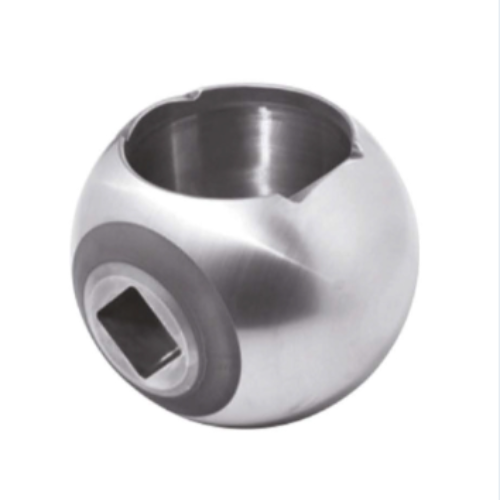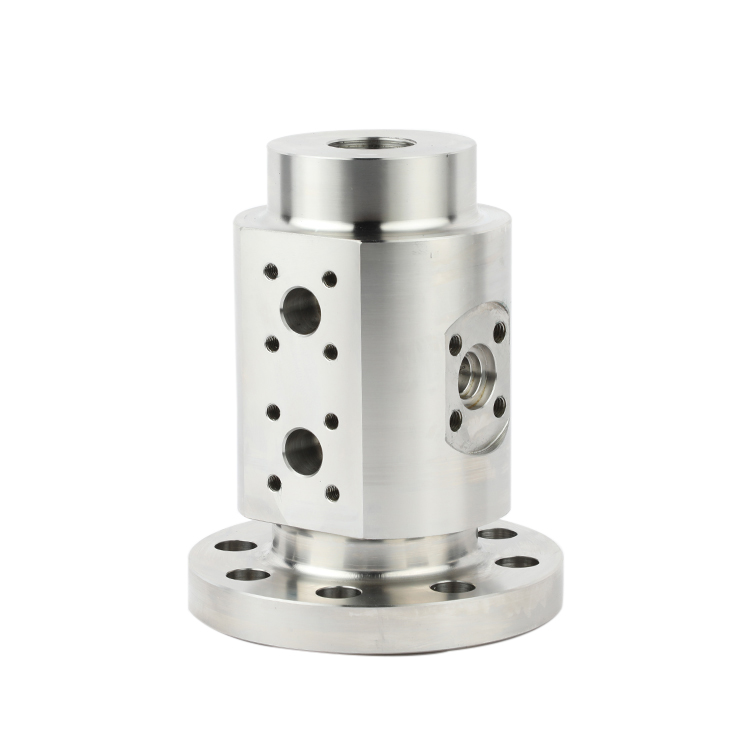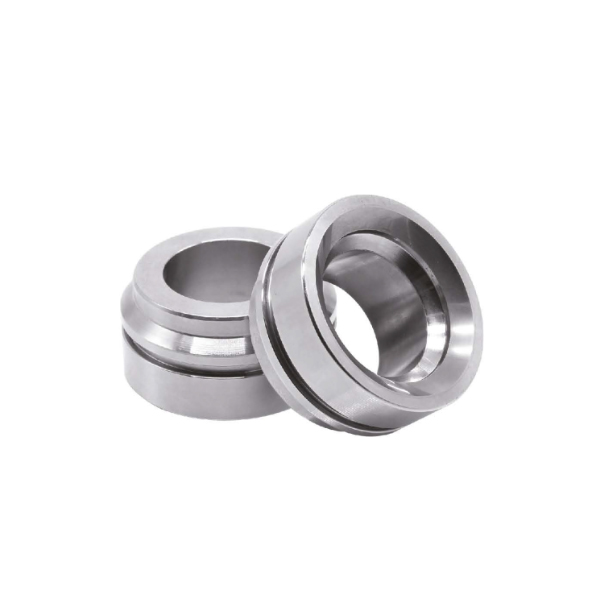


In the world of flow control, the floating valve ball is the hero that works under pressure. But when you are sourcing parts, you’ll face a fork in the road: Hollow vs. Solid. Choosing the wrong one can lead to seat failure or wasted budget. This guide breaks down the technical “why” to help your business make the right call.
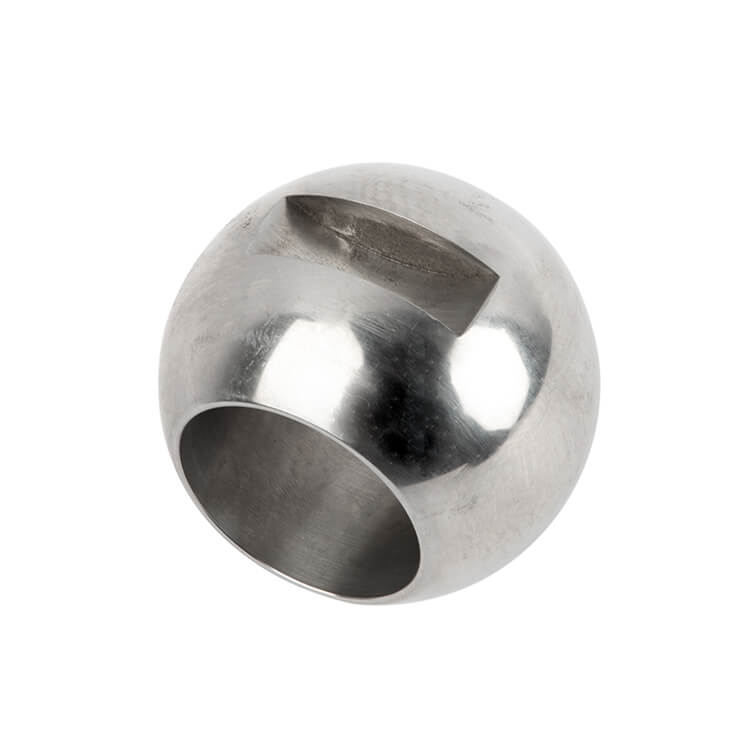
At a glance, they look like identical shiny spheres. However, the internal “guts” of the ball change how the entire valve behaves when the handle is turned. It’s the difference between a heavyweight boxer and a nimble fencer.
The Solid Ball Architecture: This is the “heavyweight” powerhouse. It is typically machined from a single piece of forged bar stock. There are no cavities, welds, or hidden empty spaces. It is dense, predictable, and incredibly strong. When you pick it up, the weight tells you it’s built for the long haul.
The Hollow Valve Ball Engineering: This is the “lightweight” champion. It consists of a precisely engineered shell with a hollow center. Depending on the manufacturing method, it might be made by welding two hemispheres or by using advanced casting cores. The goal isn’t just to save cost; it’s to eliminate unnecessary mass while maintaining a perfect external sealing diameter.
The Floating Logic: In a floating ball valve, the ball isn’t anchored by a trunnion; it “floats” between the seats. A solid ball brings more inertia and “slamming” force to this movement, while a hollow ball is more agile, moving quickly to hit the downstream seat as soon as the pressure shifts.
A Comparison Table for Quick Decision Making
| Feature | Solid Floating Ball | Hollow Valve Ball |
| Material Usage | High (Solid forged) | Low (Weight-saving shell) |
| Crush Resistance | Superior (Indestructible) | Limited (Dependent on wall thickness) |
| Operating Torque | Higher due to mass | Lower (Easier on actuators) |
| Manufacturing Method | Machining from forged bar | Welding or specialized casting |
| Pressure Limit | Class 2500+ | Usually capped at Class 300/600 |
| Cost | Premium | Budget-friendly |
Weight isn’t just about shipping costs; it is a mechanical variable that dictates how often your team will be out in the field doing repairs. In the world of OEM ball valves, mass equals friction, and friction is the enemy of longevity.
In large-diameter valves (10 inches and above), a solid ball is a massive piece of steel. Over thousands of cycles, gravity never sleeps.
The Problem: The ball’s weight can cause it to “sag” slightly within the valve body. This puts constant, uneven pressure on the bottom half of the ball valve seat.
The Result: The bottom of the seat wears down faster than the top, creating a gap. This is why many valves start leaking even when they appear to be fully closed.
The Solution: A hollow valve ball reduces this gravitational load by 40% to 60%. By making the ball lighter, you ensure the wear on your seats is perfectly symmetrical, preventing those annoying “bottom-side” leaks and doubling the time between seal replacements.
Every time you turn a valve, you are fighting the bond between the ball and the seat. A lighter ball is simply more “nimble.”
Lower Breakaway Torque: If the ball is light, the force needed to get that first degree of rotation—the “breakaway torque”—is significantly lower.
Downsized Actuators: Because the torque is lower, your business can source a smaller trunnion mounted valve ball or floating design, leading to significant project ROI. This can save thousands of dollars in a single project.
Faster Emergency Response: In emergency shutdown (ESD) scenarios, every millisecond counts. A lighter ball has less inertia, meaning it can reach the closed position faster than a heavy solid one, potentially preventing a catastrophic spill or explosion.
Pressure is the ultimate judge. It’s where a solid design usually earns its premium price tag.
Crush Resistance and the “Egging” Effect
In high-pressure lines (Class 600, 900, or 1500), the fluid exerts immense force on the sphere. A solid ball is virtually indestructible; it simply cannot “implode.” A hollow valve ball, however, is a shell. If the wall thickness isn’t perfectly calculated for the specific pressure rating, the ball can flatten slightly—a defect engineers call “egging.” Once the ball becomes an oval instead of a sphere, it loses contact with the seat, and you lose your zero leakage ball valve status.
The Trapped Cavity Danger
Hollow balls have an internal space. If fluid seeps into that cavity while the valve is open, and then the valve is closed, that liquid is trapped. If the temperature in the pipeline spikes (due to sunlight or process heat), the trapped liquid expands. In a solid ball, there is no cavity for this to happen. In a hollow design, that internal pressure can cause the ball to swell like a balloon or even burst. This is why high-end hollow balls often feature a “vent hole” to equalize internal and external pressure.
Achieving high-end sealing standards on a hollow structure is a much bigger challenge than on a solid one. This is why Why Precision Components Matters is the mantra of elite manufacturers.
To achieve a tight seal, the ball must be a perfect sphere. When machining a solid ball, the massive metal body acts as a “heat sink” and stays rigid under the grinding tool. A hollow valve ball, however, can suffer from “chatter” or micro-vibrations during polishing because it lacks internal mass. It takes a master craftsman to ensure a hollow ball doesn’t warp during the heat of the polishing process.
The sealing surface roughness is the silent killer of valve seats.
The Solid Advantage: A solid ball provides a rock-solid foundation for polishing, making it easier to achieve a mirror finish.
The Hollow Precision: Because hollow balls have a higher risk of slight “flexing” under load, their surface must be even smoother than a solid one. If the surface isn’t perfect, the ball will “grab” the seat material during that tiny flex, tearing the polymer and causing a leak.
When you deal with abrasive fluids like sand or slurry, you need a hard coating.
The Substrate Factor: A TCC Valve Ball (Tungsten Carbide) or Chrome Valve Ball relies on the metal underneath for support.
The Risk: If a hollow ball’s wall is too thin, the “flex” under pressure can cause the brittle hard coating to develop micro-cracks—much like an eggshell cracking when squeezed. Precision engineering ensures the hollow wall is thick enough to support these high-performance coatings.
You wouldn’t use a sledgehammer to hang a picture frame, and you shouldn’t use a solid ball where a hollow one excels.
High-Pressure Oil & Gas: Where the risk of structural collapse is too high to ignore.
Abrasive Slurries: Where the ball needs thick walls to resist the “sandblasting” effect of the media.
High-Temperature Service: To ensure the ball expands predictably without buckling.
Large Water Treatment Plants: Where costs add up and pressures are relatively low.
Offshore and Marine: Where reducing the “top-side” weight of the piping system is a critical safety goal.
Chemical Distribution: Where a lightweight, budget-friendly solution meets the project’s ROI targets.
Is a solid ball always safer than a hollow one?
In extremely high-pressure or high-temperature environments, yes, a solid ball is structurally safer.
Can I swap a solid ball for a hollow one in an existing valve
Only if the actuator torque and seat design are compatible with the lower mass of the hollow ball.
Why is the weight of a solid ball a disadvantage for my seats
Heavy balls can cause “cold flow” or sagging in the bottom seat, leading to uneven wear and leaks.
How do I know if my hollow ball is high-quality
Check for a vent hole and ask about the sphericity tolerance—precision is harder to achieve in hollow designs.
Choosing between hollow and solid balls is a balancing act between structural strength, weight, and budget. While solid balls offer the ultimate peace of mind for high-pressure service, hollow balls provide unmatched efficiency and cost-savings for large-scale, lower-pressure systems. Contact GOTEB today for a technical consultation and discover how our precision components can keep your business running leak-free.


 Optimized by Seraphinite Accelerator