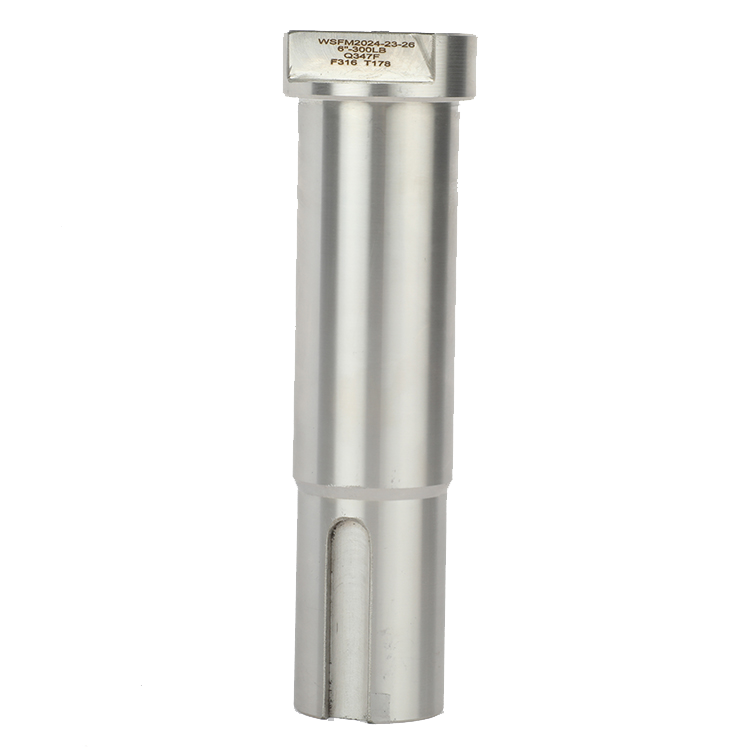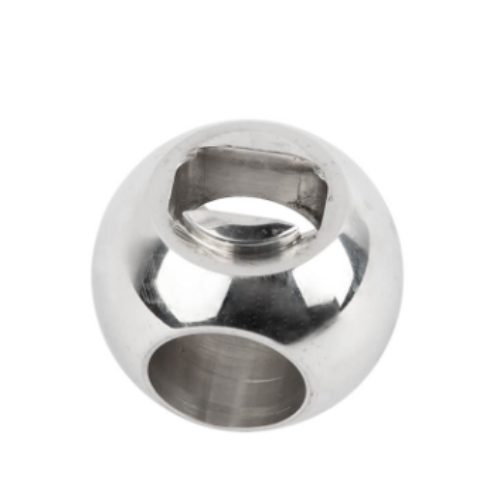


When choosing between full bore vs reduced bore ball valves, the first thing most people look at is the price. But if you focus solely on saving a few pennies right now, you’re bound to fall into those deceptive “hidden pitfalls.” The size of the bore is the key factor that determines how long a ball valve will last. If you pick the wrong one, your business will end up spending way more on ball valve maintenance.

The easiest way to tell them apart is to look straight through the valve.
Full Bore: The core of this design lies in “clear path.” The hole inside the ball valve ball fits the inner diameter of the pipe perfectly, with a seamless, tight seal. Once the valve is opened, it feels as if the valve isn’t even there—the water flows as if in a straight line, rushing through unhindered, without the slightest obstruction.
Reduced Bore: This is what’s known as a standard port, but it looks exactly like a funnel. The hole in the center of the ball is usually one size smaller. For example, if you’re installing a 4-inch reduced bore valve, but the hole inside is only 3 inches wide. When water flows through here, it has to squeeze right through.
Since the valve body and internal components of a ball valve are smaller, a reduced bore valve is indeed lightweight and takes up very little space. However, this tiny hole acts like a bottleneck, completely altering the flow characteristics—the way the fluid rushes into your ball valve accessories is entirely different from before.
| Feature | Full Bore | Reduced Bore |
| Internal Diameter | Matches the pipe’s inner diameter. | Smaller than the pipe’s inner diameter (e.g., 3″ hole for a 4″ valve). |
| Flow Path | Straight, clear, and unhindered. | Funnel-like; fluid must “squeeze” through. |
| Flow Resistance | Minimal (acts like a straight pipe). | Higher (acts as a bottleneck). |
| Size & Weight | Larger and heavier. | Compact, lightweight, and space-saving. |
| Visual Appearance | Look straight through with no obstruction. | Look through and see a narrowed opening. |
When your system squeezes fluid through a smaller hole, things get violent inside the valve body.
Velocity Surge: It’s like watering flowers with a plastic hose. If you press your thumb over the end, the water shoots out at high speed. That’s what’s known as the “Venturi effect.” The narrowed opening acts like that finger, forcing the water inside to accelerate rapidly so that it has to push hard to squeeze through the center of the ball.
Pressure Drop (Cv): Because the path narrows here, the pressure is bound to drop. Full bore valves have a very high ball valve flow coefficient (Cv), meaning water flows through smoothly. But if you switch to a reduced bore valve, it becomes a bottleneck designed to cause blockages—the pump has to strain and work overtime, wasting a ton of electricity in the process.
Turbulence & Dead Zones: Inside a reduced bore, the pipe is wider than the valve port. It’s as if there were a “threshold” or a edge inside the cavity. When the fluid hits this point, it no longer travels in a straight line but begins to swirl, causing the fluid to form vortices and creating dead zones.
This is where the real damage happens. Those physical changes in flow directly attack your ball valve accessories.
Impact 1: High-Velocity Erosion (The Sandblasting Effect)
The Cause: The media flows at high speed through the reduced bore, practically slamming into the edges of the ball valve seat.
The Wear: This constant impact can literally strip away a layer of material from the valve seat. Over time, the sealing surface becomes eroded, making it impossible for the valve to close tightly.
Impact 2: Cavitation Pitting on the Ball Surface
The Cause: When water flows through a reduced port, the pressure drop in valves suddenly, causing bubbles to form inside as if the water were boiling, and then they burst with a “pop.”
The Wear: Don’t underestimate these tiny bubbles—when they burst, they act like countless hammers, chiseling out a multitude of holes in the ball’s surface. Once the ball’s surface becomes as rough as a file, every time you turn the handle, it will scrape a layer of material off the soft valve seat.
Impact 3: Abrasive Scoring from Trapped Debris
The Cause: Debris gets caught in the “dead zones” created by the reduced bore’s internal shoulders. The gunk loves to get stuck in these nooks and crannies.
The Wear: When you turn the valve, these trapped grit acts like sandpaper, being forcibly dragged across the valve seat. This can carve deep scratches into the plastic or metal surface. This is the primary cause of ball valve leaks.
In easy, clean water applications, you might think it doesn’t matter whether the bore is full or reduced. But when you encounter these three “tough nuts to crack,” the difference in wear and tear caused by bore becomes night and day—and you’ll instantly see which one is truly built to last.
Slurry and Abrasive Media Handling: If the fluid contains sand or grit, a reduced-bore design is a death sentence for the valve seat—it won’t last more than a few days. When the water suddenly accelerates here, those particles act like bullets in a sandblaster. The only way to save the valve seat is to switch to a full-bore design—allowing the fluid to flow slowly and steadily through.
High-Pressure Drop Services: If ball valve pressure drops wildly, like a roller coaster, the reduced-bore section is bound to become a hotspot for cavitation. Switch to a full-bore design to keep the flow profile as steady as a rock—that’s the only way to prevent vapor bubbles from pitting your ball valve ball.
High-Frequency Automated Systems: On a non-stop automated production line, the turbulence caused by a reduced bore is like a forceful tug on the valve. Switching to a full bore—with a flow path that runs straight through—ensures smooth, stable operation. Only then can your ball valve components avoid breakdowns, withstand the strain, and reliably last for many more years.
Is a full bore ball valve always more cost-effective?
Not on day one. But if you factor in the savings from fewer seat replacements and lower energy bills, you’ll find that full bore is actually more cost-effective.
Does a reduced bore increase the torque on the ball valve stem?
Yes. If the seat gets scored or there’s debris inside, the friction can become high. This puts a greater strain on the stem, and you’ll end up wasting money on a more expensive, larger actuator.
Can I use a reduced bore valve for high-velocity steam?
It’s risky. High-velocity steam in a restricted port leads to rapid erosion. For steam, you want to keep the flow as smooth as possible to avoid cutting the seats.
High-velocity steam flowing through a restricted port can cause severe erosion. For steam, you need to keep the flow as smooth as possible to avoid cutting the seats.
How do I identify the bore type of a valve in the field?
Check the nameplate for “FB” (Full Bore) or “RB” (Reduced Bore). If that’s missing, look through the port; if you see a “step” or shoulder between the pipe and the ball, it’s a reduced bore.
Your business’s ball valve life expectancy depends on whether its design and internal components are a good match. Don’t try to save a few dollars upfront only to end up with a repair nightmare.
Protect your system from premature wear. Contact our technical team. We’ll tailor a solution to your flow requirements, ensuring fluid flow velocity remains optimal by selecting the toughest balls, seats, and stems available.


 Optimized by Seraphinite Accelerator