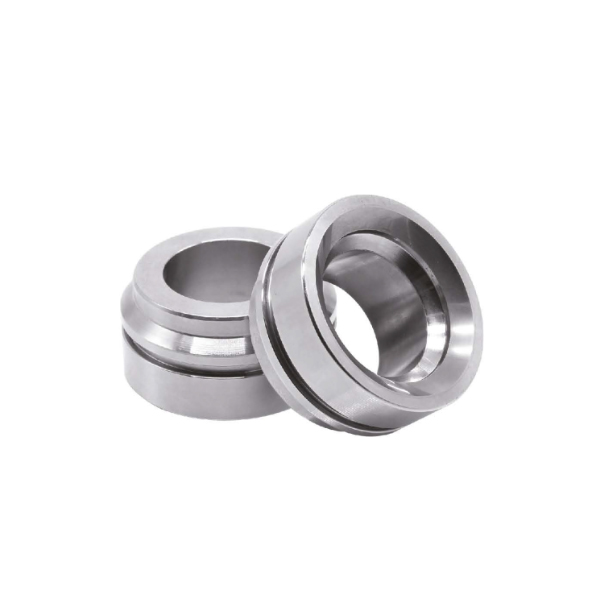


Custom ball valve components are essential for manufacturers that require precise dimensions, specific material properties, and reliable performance in industrial fluid control systems. OEM manufacturing allows valve manufacturers, equipment producers, and industrial brands to source components according to their own designs, technical drawings, and application requirements.
Unlike standard off-the-shelf parts, customized ball valve components can be tailored to specific valve structures, operating conditions, and assembly requirements. These components may include valve bodies, balls, stems, seats, bonnets, and other precision-machined parts. Their quality directly affects dimensional compatibility, sealing performance, operating reliability, and the service life of the finished valve.
Choosing the right OEM manufacturer involves more than comparing unit prices. Buyers need to evaluate material selection, machining capabilities, dimensional tolerances, quality control, customization flexibility, and production capacity. This guide explains the key factors to consider when sourcing custom ball valve components for OEM manufacturing.

The first step in an OEM project is to identify which components need to be customized. Different parts have different structural requirements, manufacturing processes, and performance expectations.
Common custom ball valve components include:
Ball Valve Body: The main housing that supports the internal assembly and contains operating pressure.
Ball Valve Ball: The spherical flow-control element that opens or closes the flow passage.
Ball Valve Stem: The component that transfers rotational movement from the handle or actuator to the ball.
Ball Valve Seat: The sealing component that contacts the ball to help control fluid flow.
Ball Valve Bonnet: A cover used in certain designs to enclose internal components and provide a structural connection.
Seals and Packing Components: Parts that help prevent leakage at body joints and around the stem.
Before requesting a quotation, buyers should define the required components, their intended functions, and their relationship to the complete valve assembly. Providing a parts list or assembly drawing can help manufacturers understand the project scope and identify potential compatibility issues.
Material selection is one of the most important factors in custom ball valve manufacturing. Each component must withstand the mechanical, chemical, and thermal conditions associated with its intended application.
Stainless Steel
Stainless steel is widely used for ball valve bodies, balls, stems, and other metal components because of its corrosion resistance and mechanical properties. Grades such as 304 and 316 are common options, although the appropriate grade depends on the medium, temperature, and service environment.
Grade 316 generally offers better resistance to many chloride-containing environments than grade 304, but neither grade is suitable for every corrosive application.
Carbon Steel
Carbon steel may be suitable for applications that require mechanical strength and cost-effective pressure-containing components. Its suitability depends on the operating environment, corrosion protection requirements, and applicable design specifications.
Brass and Other Alloys
Brass is used in many smaller valves and applications where its properties and cost are appropriate. Other alloys may be specified for more demanding chemical, thermal, or mechanical conditions.
Seat and Sealing Materials
Valve seats and seals may use PTFE, elastomers, graphite, or other specialized materials. Their selection depends on chemical compatibility, pressure, temperature, wear resistance, and required leakage performance.
For OEM projects, buyers should specify material grades and applicable requirements rather than relying on general descriptions such as stainless steel or corrosion-resistant material. Where necessary, request material certificates or other traceability documentation.
Dimensional accuracy is critical when manufacturing custom ball valve components. Even small deviations can affect assembly, operating torque, sealing performance, and compatibility with existing valve designs.
Important dimensions vary by component. For a valve body, they may include overall dimensions, bore diameter, connection geometry, and mounting features. For a ball, critical characteristics may include diameter, bore dimensions, roundness, and surface finish. For a stem, they may include shaft diameter, length, drive geometry, and connection features.
Buyers should provide technical drawings with clearly defined dimensions, tolerances, material specifications, and relevant inspection requirements. Critical-to-function dimensions should be identified so the manufacturer can prioritize them during production and quality inspection.
For replacement components, the original part number, sample, or valve assembly drawing can help verify compatibility. However, a physical sample should be measured and checked against the intended requirements rather than copied without technical review.
A clear tolerance specification also helps prevent unnecessary manufacturing costs. Extremely tight tolerances should be applied where functional requirements justify them, while noncritical dimensions can use suitable standard tolerances.
The manufacturing process influences the accuracy, consistency, and reliability of custom ball valve components. Depending on the part design and material, production may involve casting, forging, CNC turning, milling, drilling, grinding, lapping, or other specialized processes.
CNC machining is commonly used for components that require precise dimensions and repeatable geometry. Turning may be suitable for cylindrical stems and spherical components, while milling and drilling can produce mounting features, connection interfaces, and other complex geometries.
For valve balls and sealing surfaces, the required finish and geometry depend on the valve design and seat arrangement. Additional finishing operations may be necessary to achieve the specified surface characteristics.
When evaluating an OEM manufacturer, buyers should consider:
Available machining equipment and processing range.
Experience with the required component types and materials.
Ability to manufacture according to technical drawings.
Dimensional inspection equipment and measurement procedures.
Production repeatability across batches.
Ability to manage secondary processes and outsourced operations.
A capable manufacturer should be able to review the design, identify manufacturing constraints, and recommend practical improvements without compromising essential performance requirements.
Quality control is essential for ensuring that custom ball valve components meet the agreed specifications. Inconsistent dimensions, unsuitable materials, or surface defects may cause assembly problems, premature wear, or leakage in the finished valve.
A suitable quality-control process may include several stages.
Incoming Material Inspection
Manufacturers verify material identification and relevant documentation against the purchase order and technical specifications. Additional testing may be required for critical materials or regulated applications.
In-Process Inspection
During machining and finishing, manufacturers check important dimensions and features to identify deviations before the components proceed to later production stages.
Final Dimensional Inspection
Completed parts are inspected against the approved drawings and tolerances. Depending on the component, checks may cover dimensions, roundness, surface finish, and other functional characteristics.
Assembly and Performance Testing
When the OEM project includes complete valve assembly, testing may include pressure tests, seat leakage tests, and external leakage checks according to the applicable standards and agreed acceptance criteria.
Not every individual component requires the same testing. Buyers should distinguish between component-level inspections and finished-valve performance tests, then specify the appropriate requirements for each.
For projects with strict quality requirements, agree on inspection plans, sampling methods, documentation, and acceptance criteria before production begins.
Custom ball valve components must fit the intended valve design. Compatibility involves more than matching basic dimensions; it also includes connection geometry, sealing arrangements, material combinations, operating torque, and assembly sequence.
During the design review, manufacturers should confirm that the proposed components can be produced within the specified tolerances and that their interfaces are consistent with the complete assembly.
Customization may involve:
Nonstandard component dimensions.
Special connection or mounting features.
Alternative metal or sealing materials.
Modified machining geometry.
Specific surface finishes or treatments.
Adjustments required for an existing valve model.
For new OEM projects, it is useful to conduct a design review before tooling or batch production. Prototype samples or first-article inspections can help verify fit and function before the order moves to full-scale manufacturing.
Buyers should also establish a process for managing engineering changes. Any revision to dimensions, materials, or manufacturing methods should be documented and approved to maintain consistency between samples and production batches.
OEM buyers often require consistent component supply over multiple production cycles. A manufacturer’s production capacity and scheduling practices can therefore be as important as its machining accuracy.
Before placing an order, confirm the expected order quantity, monthly demand, batch size, sample lead time, tooling requirements, and estimated production lead time. These details help both parties plan production and avoid delays.
Lead times may vary according to material availability, component complexity, order quantity, finishing requirements, and inspection procedures. Custom tooling or specialized processes may also affect the initial production schedule.
For long-term projects, ask how the supplier manages repeat orders, raw material procurement, production records, and changes in demand. A clear production plan can help reduce supply interruptions and improve purchasing predictability.
The lowest quoted price does not always represent the best value for an OEM project. Custom ball valve components must meet the required technical specifications, and defects or compatibility problems can create additional costs during assembly and operation.
When comparing quotations, consider material grade, machining complexity, required tolerances, finishing processes, inspection requirements, packaging, transportation, and order quantity.
For example, a supplier offering a lower unit price may use a different material grade, exclude certain inspections, or require a larger minimum order quantity. These differences should be clarified before comparing offers.
Buyers should also consider the cost of rejected parts, production delays, rework, and after-sales support. A manufacturer that consistently delivers conforming components may provide better long-term value than a supplier selected solely on price.
To improve quotation accuracy, provide complete drawings, material requirements, expected quantities, delivery expectations, and quality specifications.
Supplier evaluation should include the manufacturer’s quality-management practices, production experience, documentation capabilities, and communication standards.
A documented quality-management system can help establish consistent procedures for production, inspection, and corrective action. Depending on the project and market, buyers may also need specific certifications, material documentation, or compliance evidence.
When evaluating a supplier, consider the following:
Relevant quality-management certifications and their validity.
Material identification and traceability procedures.
Inspection records and test documentation.
Experience manufacturing similar valve components.
Ability to meet agreed delivery schedules.
Responsiveness during technical reviews and problem resolution.
Certifications should be checked against the actual scope of the project. A quality-management certificate does not automatically prove that every component complies with a particular valve standard or application requirement.
For critical applications, buyers may request sample inspection reports, material certificates, or an audit of the supplier’s manufacturing and quality-control processes.
A complete technical inquiry helps manufacturers evaluate feasibility, estimate costs, and provide more accurate quotations.
Before contacting a supplier, prepare the following information:
Component details: Identify the required parts and their functions.
Technical drawings: Provide dimensions, tolerances, connection details, and revision numbers.
Material specifications: State the required grades for metal components, seats, and seals.
Operating conditions: Include the medium, working pressure, temperature range, and relevant environmental conditions.
Quality requirements: Specify inspection procedures, applicable standards, traceability, and required documentation.
Order information: Provide estimated quantities, sample requirements, delivery expectations, and repeat-order forecasts.
If complete drawings are unavailable, photographs, physical samples, part numbers, and assembly information may help initiate a technical discussion. The manufacturer should confirm whether additional measurements or engineering information are required before production.
Agreeing on specifications and acceptance criteria before manufacturing helps reduce misunderstandings and improves the consistency of delivered components.
Custom ball valve components play an important role in the performance and reliability of OEM valve products. Successful manufacturing depends on selecting suitable materials, defining accurate dimensions, choosing appropriate machining processes, and establishing effective quality-control procedures.
For OEM buyers, supplier selection should also consider design compatibility, production capacity, lead time, traceability, and total cost. Clear technical communication and documented specifications help manufacturers understand project requirements and deliver components that fit the intended valve assembly.
Whether sourcing valve bodies, balls, stems, seats, bonnets, or other precision parts, buyers should provide detailed drawings and operating requirements before production begins. Working with a capable manufacturing partner can help improve dimensional consistency, reduce assembly issues, and support reliable long-term supply.
If you are sourcing custom ball valve components for an OEM project, prepare your technical drawings, material requirements, target quantities, and quality specifications to help manufacturers evaluate your project and provide a suitable quotation.
1. What are custom ball valve components?
Custom ball valve components are specially manufactured parts designed to meet specific technical requirements. Common examples include valve bodies, balls, stems, seats, bonnets, and sealing components. They can be produced according to customer drawings, samples, material specifications, and application requirements.
2. Which ball valve components can be customized for OEM manufacturing?
Most major ball valve components can be customized, including the body, ball, stem, seat, bonnet, and supporting parts. Customization may involve dimensions, materials, connection geometry, surface finishes, machining features, and tolerances.
3. What materials are commonly used for custom ball valve components?
Common materials include stainless steel grades 304 and 316, carbon steel, brass, and other alloys. Seat and sealing components may use PTFE, elastomers, graphite, or specialized materials. The final selection depends on the operating medium, pressure, temperature, corrosion conditions, and required performance.
4. What information is required to request a quotation for custom ball valve components?
Buyers should provide technical drawings, material specifications, dimensions and tolerances, operating conditions, order quantities, delivery expectations, and quality requirements. Samples or existing part numbers can also help manufacturers verify compatibility.
5. Why are dimensional tolerances important in OEM ball valve manufacturing?
Dimensional tolerances determine whether components fit and function correctly within the valve assembly. Inaccurate dimensions can cause assembly difficulties, excessive operating torque, premature wear, or sealing problems. Clearly defined tolerances help manufacturers maintain consistent product quality.


 Optimized by Seraphinite Accelerator