

Choosing the right ball valve body is important for ensuring reliable flow control, pressure containment, and long-term performance in industrial piping systems. The valve body is the main housing of a ball valve and supports the internal ball, seats, stem, and other components. It also provides the flow passage and connects the valve to the pipeline.
Industrial applications can involve different fluids, pressures, temperatures, pipe sizes, and operating environments. As a result, a ball valve body suitable for one application may not be appropriate for another.
When selecting a ball valve body, buyers should evaluate material, pressure and temperature ratings, valve size, port design, body construction, connection type, operating medium, applicable standards, and maintenance requirements. A systematic evaluation can help ensure that the selected valve body matches the actual service conditions.

The first factor to consider is the medium that will pass through the valve. Different liquids and gases can have significantly different effects on valve body materials and internal components.
Water, air, oil, chemicals, steam, corrosive fluids, and other media may require different material and sealing configurations.
For example, stainless steel may be suitable for applications where corrosion resistance is important, while carbon steel may be used in certain industrial systems where the medium and environment are compatible with the material.
The chemical properties of the medium should therefore be evaluated before selecting the ball valve body. Factors such as concentration, corrosiveness, cleanliness, and potential contamination should also be considered.
Material selection directly affects the strength, corrosion resistance, durability, and service life of the valve body.
Stainless steel ball valve bodies are widely used in industrial applications where corrosion resistance and durability are important. Common grades include 304 and 316 stainless steel.
316 stainless steel may be considered for applications involving more aggressive environments or corrosive media, depending on the specific operating conditions.
Carbon steel can provide good mechanical strength and is commonly used in industrial systems where the operating medium and environment are compatible with the material.
It may be suitable for applications involving relatively high mechanical loads, but corrosion protection and environmental conditions should be evaluated.
Brass ball valve bodies are commonly used in water, HVAC, plumbing, and other general-purpose systems. They offer good machinability and can provide suitable corrosion resistance for many applications.
Some industrial applications require specialized alloy materials because of high temperatures, corrosive chemicals, or demanding pressure conditions. Material selection should be based on the actual service environment rather than a general material preference.
The ball valve body must be capable of handling the maximum pressure expected in the piping system.
When selecting a valve body, buyers should consider both the normal operating pressure and potential pressure fluctuations or surges.
The pressure rating should be compatible with the valve size, body material, temperature, and applicable standards. A valve body should not be selected based solely on its nominal pipe size because pressure capability can vary significantly between different valve designs and materials.
For high-pressure applications, buyers may also need to consider whether a forged or specially engineered valve body is more appropriate for the operating conditions.
Temperature can affect the mechanical properties of the valve body as well as the performance of seats and seals.
Before selecting a ball valve body, determine the minimum and maximum operating temperatures of the system. Consider both continuous operating temperature and potential temperature peaks.
Material strength, seat material, gasket material, and sealing design should all be compatible with the expected temperature range.
For high-temperature applications, selecting the body material alone is not sufficient. The complete valve assembly needs to be evaluated for the actual temperature conditions.
Valve size should correspond to the requirements of the piping system and the desired flow capacity.
A valve that is too small may create excessive pressure drop and restrict the required flow. A valve that is unnecessarily large can increase equipment and installation costs and may not provide the desired flow-control characteristics.
The nominal valve size should therefore be selected based on pipe size, flow rate, pressure drop, medium characteristics, and system design.
Ball valve bodies can be designed with different flow passage configurations.
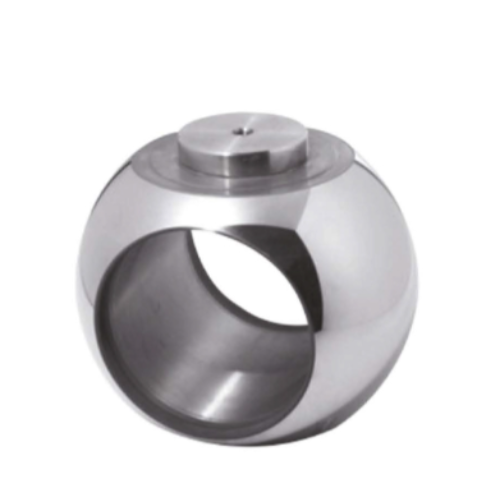
A full-port ball valve has a flow passage that is approximately the same diameter as the connected pipe. This configuration can help minimize flow restriction and pressure loss.
A reduced-port ball valve has a smaller flow passage. It may be suitable for applications where a certain degree of flow restriction is acceptable and a more compact or economical valve design is preferred.
The choice should be based on the required flow characteristics rather than simply selecting the largest available port.
Ball valve bodies are commonly available in one-piece, two-piece, and three-piece configurations.
A one-piece design integrates the main housing into a single body. It can provide a relatively simple and compact construction with fewer body joints.
A two-piece body consists of two main sections. This construction is widely used and provides a practical balance between manufacturing, installation, and maintenance requirements.
A three-piece body typically consists of a center body section and two end connections. The center section can often be removed for maintenance while the end connections remain connected to the pipeline.
For systems requiring frequent inspection, cleaning, or component replacement, a three-piece construction may provide greater maintenance convenience.
The connection between the valve body and piping system must match the installation requirements.
Common connection types include:
Threaded connections
Flanged connections
Socket weld connections
Butt weld connections
Threaded ball valve bodies are commonly used in smaller piping systems and applications where threaded installation is appropriate.
Flanged ball valve bodies are often used in larger industrial piping systems or applications where bolted connections are preferred.
Socket weld and butt weld connections can provide permanent welded connections and are commonly considered for industrial systems where leakage prevention and mechanical integrity are important.
The selected connection should match the pipe material, size, pressure class, installation method, and applicable standards.
Industrial ball valve bodies may need to comply with specific standards depending on the industry and application.
Relevant requirements may cover valve dimensions, pressure ratings, materials, testing, connection dimensions, and other technical characteristics.
Before placing an order, buyers should identify the standards required for the project and confirm that the manufacturer’s products and testing procedures meet those requirements.
For international projects, it is also important to clarify whether the valve needs to comply with specific international, regional, or customer standards.
Corrosion can significantly affect the service life of a ball valve body. The risk depends on the process medium, temperature, humidity, external environment, and material.
For corrosive media, stainless steel or suitable alloy materials may provide better resistance than standard carbon steel in certain applications.
External environmental conditions should also be considered. A valve installed outdoors, in a humid environment, or in a chemically aggressive area may require additional surface protection.
Material compatibility should therefore be evaluated for both internal and external conditions.
The quality of the manufacturing process can directly influence the dimensional accuracy, mechanical strength, and sealing performance of the ball valve body.
Important manufacturing capabilities may include casting, forging, CNC machining, heat treatment, surface finishing, and precision inspection.
Critical areas such as the ball chamber, seat locations, stem opening, flow passage, and connection surfaces require appropriate dimensional control.
When purchasing from a manufacturer, buyers can ask about production equipment, inspection procedures, material traceability, and quality-control documentation.
Pressure and leakage testing are important considerations when selecting industrial ball valve bodies.
Depending on the applicable requirements, manufacturers may perform shell pressure testing, seat leakage testing, and other inspections.
Testing helps verify the pressure-containing integrity and sealing performance of the valve assembly.
Buyers should confirm the applicable test standards and acceptance criteria before ordering, especially for critical industrial applications.
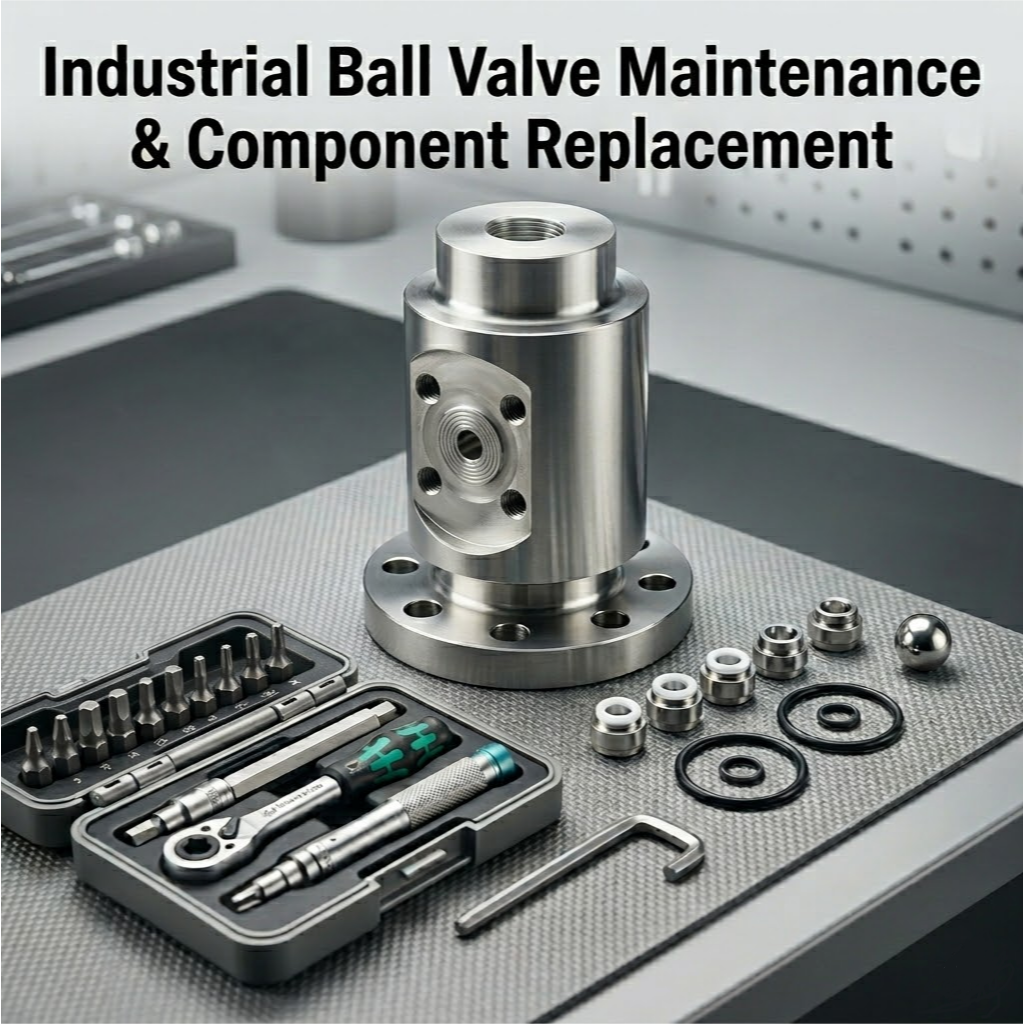
Maintenance requirements can vary according to the valve body construction and application.
For systems where regular inspection or component replacement is expected, a two-piece or three-piece body may provide easier access to internal components than a permanently integrated design.
The availability of replacement seats, seals, stems, and other components can also affect long-term maintenance.
When selecting a ball valve body, consider not only initial installation but also the expected maintenance schedule and total service requirements.
Standard ball valve bodies are suitable for many industrial applications, but some projects require customized designs.
Customization may involve:
Special materials
Non-standard dimensions
Special pressure ratings
Customized port sizes
Different connection configurations
Special surface finishes
Specific mounting requirements
Customized marking and traceability
For custom requirements, buyers should provide accurate drawings, technical specifications, operating conditions, or samples to the manufacturer.
A capable manufacturer should be able to evaluate the requirements and confirm whether the proposed design is suitable for the application.
The manufacturer can have a significant influence on product consistency and supply reliability.
When evaluating suppliers, buyers should consider manufacturing experience, production capacity, material control, machining capabilities, inspection equipment, quality-management systems, certifications, and technical support.
It is also useful to review whether the manufacturer can provide documentation such as material certificates, inspection reports, pressure-test records, and product traceability when required.
For long-term industrial projects, supplier communication and the ability to maintain consistent specifications across repeat orders can be just as important as the initial product price.
Choosing the right ball valve body for industrial applications requires more than selecting a valve based on size or material alone. The operating medium, pressure, temperature, valve size, port design, body construction, connection type, corrosion conditions, applicable standards, and maintenance requirements should all be considered.
Manufacturing quality and testing capabilities are also important when evaluating suppliers. For customized applications, technical drawings and detailed operating information can help manufacturers determine the appropriate material, construction, dimensions, and manufacturing process.
By evaluating these factors systematically, industrial buyers can select a ball valve body that is compatible with their piping system and suitable for the required operating conditions.
Key factors include the operating medium, material, pressure rating, temperature range, valve size, port design, body construction, connection type, corrosion resistance, applicable standards, and maintenance requirements.
What is the best material for a ball valve body?
There is no single material suitable for every application. Stainless steel, carbon steel, brass, and special alloys may all be appropriate depending on the medium, pressure, temperature, corrosion conditions, and application requirements.
How do I choose the right ball valve body size?
The valve body size should match the piping system and required flow conditions. Flow rate, pressure drop, pipe diameter, and medium characteristics should be considered rather than selecting a size based only on the existing pipe.
What is the difference between a full-port and reduced-port ball valve body?
A full-port design has a flow passage that is approximately the same diameter as the connected pipe, which can reduce flow restriction. A reduced-port design has a smaller passage and may be suitable when some flow restriction is acceptable.
How do I select the correct ball valve body pressure rating?
The pressure rating should be suitable for the maximum operating pressure of the system, while also considering temperature, material, valve size, pressure fluctuations, and applicable standards.
Should I choose a one-piece, two-piece, or three-piece ball valve body?
The choice depends on installation and maintenance requirements. One-piece designs provide a compact construction, while two-piece and three-piece designs can offer greater access to internal components for maintenance.


 Optimized by Seraphinite Accelerator