
When you specify a ball valve for a demanding application, the coating on the valve sphere is one of the most important — and most overlooked — decisions you will make. Get it right, and your business enjoys years of leak-tight, low-maintenance service. Get it wrong, and you are looking at premature seat wear, unplanned shutdowns, and costly field repairs. This guide walks you through the three most widely used hard-facing options for valve spheres — Electroless Nickel Plating (ENP), Tungsten Carbide, and Stellite — so you can match the right coating to your operating conditions with confidence.

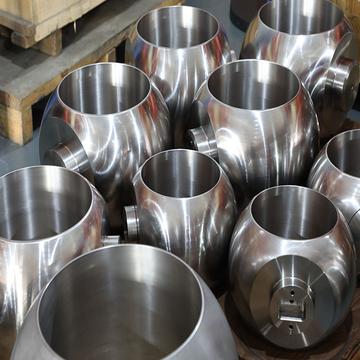
The valve sphere (commonly called the ball) is the heart of any ball valve. Its surface finish and hardness determine how well it seals against the seat, how it resists abrasive particles in the flow stream, and how long it survives before you need to schedule maintenance. If you want a deeper technical breakdown of what this component actually does inside the valve, you can review the function of the ball valve sphere and how it interacts with the seat under pressure.
Without proper hard facing, an uncoated sphere is vulnerable to three failure modes: corrosion from aggressive media (H2S, CO2, chlorides), erosion from sand, scale, or particulates, and galling from repeated metal-to-metal contact during operation. Your business cannot afford any of these outcomes in a critical pipeline, refinery, or offshore application, which is why coating selection deserves the same engineering rigor as pressure class or end connection.
Not every coating is right for every application. Below, you will find a breakdown of how each option performs, along with where it fits best in your project.
Electroless Nickel Plating (ENP) is a chemical deposition process rather than a thermal spray, which means it produces a uniform coating even on complex geometries — including the inside of a bore or a trunnion ball assembly. As-plated ENP typically reaches a hardness in the range of 68 to 72 HRC, and it offers corrosion resistance comparable to 300-series stainless steel at a fraction of the cost of solid stainless internals.
You will most often see ENP specified on carbon steel valve spheres in sweet or moderately sour service, where the primary threat is chemical corrosion rather than heavy abrasion. It is also a strong fit when your business needs a cost-effective way to upgrade carbon steel trim without switching to solid alloy construction. If you are working with a trunnion ball valve, ENP is frequently the default recommendation for the ball surface because of its uniform build-up on the spherical geometry.
Tungsten carbide hard facing is applied using a High Velocity Oxygen Fuel (HVOF) thermal spray process, which propels carbide particles at extremely high velocity so they mechanically fuse to the substrate. The result is one of the hardest coatings available for valve internals, typically reaching a Rockwell C hardness around 70, with excellent resistance to wear and erosion.
If your application involves sand-laden fluids, slurries, high-pressure choke service, or any environment where mechanical abrasion is the dominant threat, tungsten carbide is usually your strongest option. Keep in mind that corrosion resistance is not its strong suit compared to ENP or Stellite, and coating thickness is generally held to around 150 microns or less due to porosity concerns at greater thickness. You will also want to review how the sphere interacts with the rest of the trim — including the ball valve stem — since mismatched hardness between components can accelerate wear elsewhere in the assembly.
Stellite is a cobalt-based alloy containing chromium, tungsten, and carbon, applied as a weld overlay directly onto the valve sphere. Compared to tungsten carbide, Stellite has a lower hardness (typically 35 to 45 HRC), but it makes up for that with outstanding resistance to chemical erosion and excellent performance at elevated temperatures.
Your business should lean toward Stellite when the primary concern is high-temperature, high-corrosion service — particularly in applications involving acidic or highly corrosive process fluids where wear is secondary to chemical attack. One important caveat: Stellite is generally not recommended for seawater service due to cracking risk, and it is typically limited to pressure drops below roughly 30 bar. For higher pressure drop applications, tungsten carbide or chromium carbide is usually the better choice.
| Property | ENP Coating | Tungsten Carbide (HVOF) | Stellite |
|---|---|---|---|
| Hardness | 68–72 HRC (as-plated) | ~70 HRC (very high) | 35–45 HRC |
| Corrosion Resistance | Excellent, similar to 300-series SS | Moderate to poor | Excellent |
| Wear / Abrasion Resistance | Moderate | Excellent | Good |
| High-Temperature Performance | Limited | Good, up to moderate temperatures | Very good |
| Best Suited For | Sweet/sour service, complex geometries, cost-sensitive projects | Sand/slurry service, high-pressure choke valves | High-temp, high-corrosion service |
| Limitations | Lower abrasion resistance vs. carbide | Thickness limited, poor corrosion resistance | Not for seawater; pressure drop limits apply |
| Relative Cost | Lowest | Mid to high | Highest |
When your team is evaluating which hard-facing option makes sense, walk through these four questions:
1. What is your primary threat — corrosion or abrasion? If your process fluid is aggressive but relatively clean, ENP or Stellite are your strongest candidates. If sand, scale, or solid particulates dominate the flow stream, tungsten carbide typically outperforms the alternatives.
2. What is your operating temperature? Stellite generally handles elevated temperatures better than ENP, while tungsten carbide sits in the middle depending on the specific application and coating thickness.
3. What is your pressure drop across the valve? High differential pressure applications, such as choke service, tend to favor tungsten carbide or chromium carbide over Stellite, which has known pressure drop limitations.
4. What is your budget and total cost of ownership target? ENP delivers strong corrosion protection at the lowest cost, making it the default choice for many general-service applications, while tungsten carbide and Stellite are reserved for more severe service where their added performance justifies the investment.
It’s also worth noting that hard facing decisions rarely happen in isolation — they should be evaluated alongside your valve’s overall design, including whether you are working with a floating or trunnion configuration. For a deeper look at how these designs differ in practice, see the comparison of the difference between a ball valve and a floating ball valve, as well as details on floating ball valve design.

One of the most frequent errors your business can make is selecting a coating based purely on hardness numbers without considering the actual failure mechanism in your service. A coating with the highest hardness rating is not automatically the right choice if corrosion, not abrasion, is the real threat in your system.
Another common pitfall is overlooking how the sphere coating interacts with the rest of the internal trim. Coating mismatches between the ball and seat, or between the ball and stem, can lead to uneven wear and premature sealing failure. Understanding how internal components determine ball valve flow direction can help you evaluate the full trim package rather than focusing on the sphere coating in isolation.
Your business deserves a valve partner who understands that hard facing is an engineering decision, not a checkbox. At GOTEB, we work directly with you to analyze your fluid composition, pressure profile, temperature range, and budget constraints before recommending ENP, tungsten carbide, or Stellite hard facing for your valve spheres. Our manufacturing process includes rigorous quality control at every coating stage, so the valves you specify perform reliably in the field — not just on paper.
Need help selecting the right hard-facing coating for your next project?
1. What is valve sphere hard facing?
Valve sphere hard facing is the process of applying a wear- and corrosion-resistant coating to the surface of a ball valve’s sphere (ball) to improve sealing performance and extend service life under demanding operating conditions.
2. Which coating is best for sour service (H2S/CO2)?
ENP is widely used in sour service because it delivers corrosion resistance comparable to 300-series stainless steel, often combined with a tungsten carbide overlay for added wear protection depending on the severity of the application.
3. Can I use tungsten carbide coating for corrosive media?
Tungsten carbide is primarily selected for abrasion and wear resistance rather than corrosion protection. If your application involves both abrasive particles and corrosive fluids, you should discuss a combined coating strategy with your valve supplier.
4. Is Stellite suitable for seawater applications?
No. Stellite is generally not recommended for seawater service because it carries a higher risk of cracking in that environment. ENP or tungsten carbide are typically better suited for marine and seawater applications.
5. How thick is a typical tungsten carbide coating on a valve sphere?
Tungsten carbide coatings applied via HVOF are usually held to around 150 microns or less, since thicker deposits can introduce porosity issues that compromise coating integrity.
6. What hardness should I expect from ENP coating?
As-plated ENP typically achieves a hardness in the range of 68 to 72 HRC, which can be adjusted through heat treatment depending on the specific corrosion and wear requirements of your application.
7. Does hard facing affect valve lead time?
Yes, hard facing adds processing time to manufacturing, since coated surfaces require grinding, lapping, and inspection (including liquid penetrant testing) before the valve is ready for shipment. Discuss lead time expectations with your supplier early in the specification process.
8. Can hard facing be applied to both the ball and the seat?
Yes, and in many applications it is recommended. However, it is common practice to treat the seat as a sacrificial component with a slightly lower hardness than the ball, since the seat is generally easier to replace or repair.
9. What pressure drop limits apply to Stellite hard facing?
Stellite is generally limited to pressure drops below approximately 30 bar. For higher differential pressure applications, tungsten carbide or chromium carbide hard facing is typically recommended instead.
10. How do I know which coating is right for my specific project?
The right coating depends on your process media, temperature, pressure drop, and abrasion profile.
Get a coating recommendation tailored to your application.


 Optimized by Seraphinite Accelerator