

Ever wondered why some machines hum like a dream for decades while others seize up after a single rainy season? It usually boils down to the tiny, metallic unsung heroes hidden inside: the steel balls. If you’re a procurement manager or an engineer, you know that choosing between Chrome Steel vs. Stainless Steel Balls: Material Selection for Extreme Environments isn’t just a technicality—it’s a high-stakes decision that dictates your machine’s lifespan. Whether you’re battling the salty corrosive air of an offshore rig or the blistering heat of an industrial kiln, the “standard” choice might be your fastest route to a costly shutdown. Let’s break down the science of steel so you can buy with confidence.

When you’re staring at a spec sheet, the numbers can start to blur. But in the world of Steel ball material selection, two heavyweights dominate the ring: AISI 52100 (Chrome Steel) and AISI 316 (Stainless Steel).
Chrome steel is the workhorse of the bearing world. It’s incredibly hard, boasting a Rockwell hardness that makes it perfect for high-load applications. However, it has a “kryptonite”—moisture. Without a constant coat of oil, it rusts faster than an old pickup truck.
On the flip side, GOTEB Stainless Steel Balls, specifically the AISI 316 variant, trade off a bit of that extreme hardness for near-invincibility against chemicals and salt. If your application involves food processing, medical devices, or marine hardware, AISI 316 is your best friend. It’s the difference between a tool that lasts a summer and one that lasts a decade.
| Property | AISI 52100 (Chrome Steel) | AISI 316 (Stainless Steel) |
| Hardness (HRC) | 60–66 | 25–39 (Non-hardened) |
| Corrosion Resistance | Low (Requires lubrication) | Excellent (Acid/Salt resistant) |
| Magnetic? | Yes | No |
| Common Use Case | Automotive Bearings, Wind Turbines | Chemical Pumps, Marine Valves |
You’ve got a kiln or a high-speed engine, and the temperature is climbing north of 120°C. What happens? Standard chrome steel starts to lose its temper—literally. It softens, deforms, and eventually leads to a catastrophic bearing failure.
In these “Extreme Environments,” you need specialized heat treatment or high-alloy stainless steels. When we talk about a corrosion resistance steel balls comparison, we also have to factor in thermal stability. For instance, AISI 440C stainless steel offers a middle ground; it can be hardened like chrome steel but retains enough chromium to fight off oxidation at higher temps.
At GOTEB, we’ve seen clients in the Middle East struggling with equipment seizing in desert heat combined with coastal humidity. By switching to a high-grade stainless alloy with vacuum-degassed processing, they cut their maintenance intervals by nearly 60%. Sometimes, spending more upfront on the right material is the cheapest thing you’ll ever do.
Since 2016, GOTEB has been more than just a supplier; we’ve been a Leading Ball Valve Accessories Manufacturer. Why does this matter to you? Because a ball valve is only as reliable as the sphere inside it.
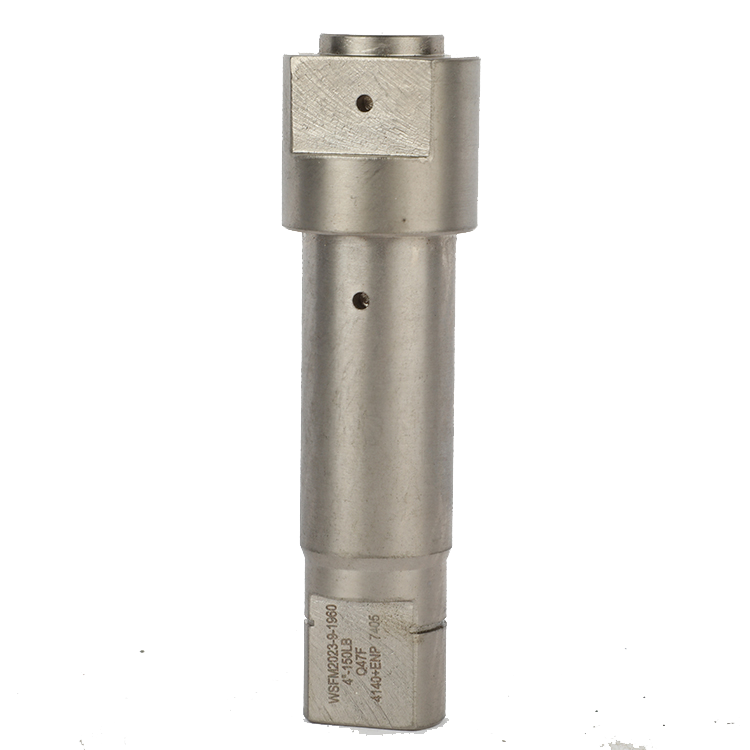
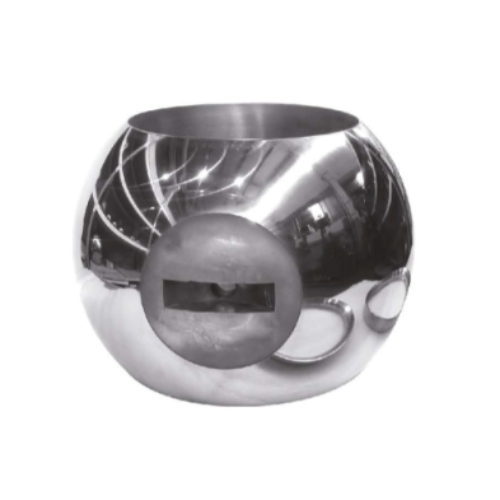
We specialize in high-precision valve components, especially Ball Valve Trunnion Ball GBT1615. We don’t just “make” balls; we engineer them for survival. Our surface hardening options are like armor for your hardware. Depending on your environment, we offer:
Tungsten Carbide (TCC): For the most abrasive slurries.
Stellite (STL): When heat and wear are both trying to kill your valve.
Hard Chromium (HCR) & Nickel Phosphorus (ENP): For smooth, anti-stick performance.
If you’re sourcing for a B2B operation across the 40+ countries we serve, you aren’t just buying metal; you’re buying the peace of mind that comes from exquisite craftsmanship and rigorous quality standards.
I remember a buyer from a desalination plant in Southeast Asia who kept ordering standard chrome balls because they were “budget-friendly.” Every three months, their pumps would fail. Why? The saltwater mist was eating the chrome steel alive.
We sat down, looked at the Steel ball material selection process, and moved them to GOTEB Stainless Steel Balls (AISI 316L). The cost per unit went up, but the replacement frequency dropped to once every two years. Crunch the numbers: the labor cost of replacing those bearings four times a year was 10x the price of the better steel. Don’t be that guy—choose for the environment, not just the invoice.
It’s not just about the “flavor” of the steel; it’s about how round it is. In our industry, we talk about Grades (G10, G25, G100). The lower the number, the more perfect the sphere.
For high-speed bearings, you need a G10. For a simple check valve, a G100 might suffice. Using a G100 ball in a high-speed motor is like putting square tires on a Ferrari—it’s going to shake itself to pieces. Always ask your supplier for the precision grade report; at GOTEB, transparency is part of our DNA.
Choosing between chrome and stainless isn’t a toss-up; it’s a calculated move based on your specific “battlefield.” If you need sheer load-bearing strength and have a dry environment, go Chrome. But if you’re facing moisture, chemicals, or the unpredictability of the outdoors, GOTEB Stainless Steel Balls are the undisputed champions.
Remember, since 2016, GOTEB has been helping pros like you navigate the complexities of valve and bearing components. We’ve grown into a global partner because we don’t cut corners—we round them to perfection. Ready to upgrade your hardware? Let’s get your equipment the “heart” it deserves.
Ready to optimize your supply chain with world-class precision? Contact GOTEB today for a custom quote on high-performance steel balls and valve components!
Q1:Can I use GOTEB Stainless Steel Balls in food processing equipment?
A:Absolutely! Our AISI 316 and 304 series are ideal for food-grade environments due to their high corrosion resistance and ease of cleaning, ensuring you meet all safety standards.
Q2:What is the main difference in the AISI 52100 vs AISI 316 debate for outdoor use?
A:AISI 52100 (Chrome Steel) will rust if exposed to rain or humidity without constant lubrication. AISI 316 is a “marine grade” stainless steel that can handle outdoor exposure and even saltwater without corroding.
Q3:Does GOTEB offer custom hardening for ball valve spheres?
A:Yes, we provide various surface treatments including Tungsten Carbide (TCC), Stellite, and Plasma Nitriding to ensure your Ball Valve Trunnion Ball GBT1615 survives even the most abrasive industrial conditions.
Q4:How do I know which precision grade to choose for my bearings?
A:It depends on your RPM and load. High-speed applications usually require G10 or G25. For slower, static, or less critical applications, G100 to G500 might be more cost-effective. Contact our technical team for a specific recommendation.
Q5:How many countries does GOTEB ship to?
A:We currently serve clients in over 40 countries, providing reliable logistics and high-quality industrial components to a global B2B market since 2016.


 Optimized by Seraphinite Accelerator