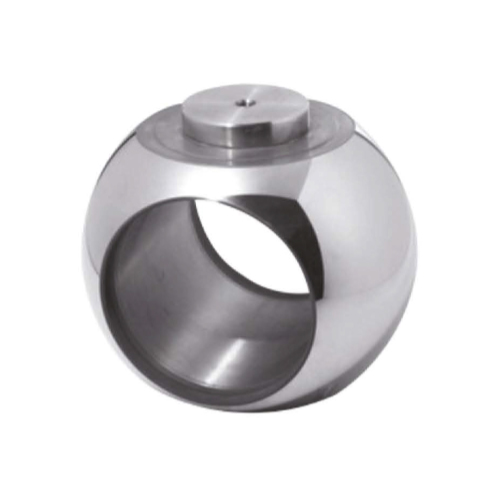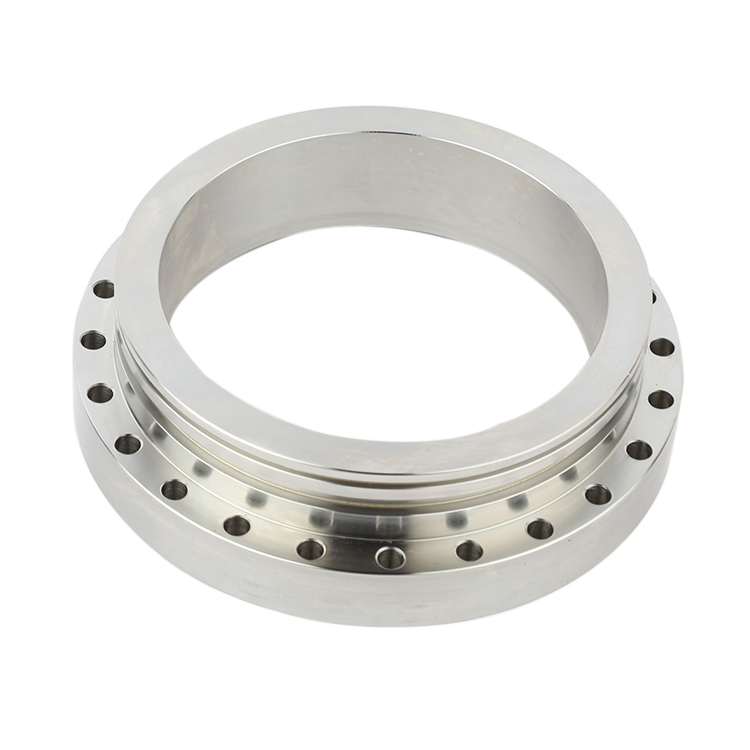


If your business sources floating ball valve spheres, seats, stems, or bodies from China, one factory visit can be the difference between a reliable 10-year supplier and a project stuck in rework. Auditing a ball valve parts factory before ordering is not about catching every flaw on day one. It is about proving the supplier can repeat quality, lot after lot, and ship parts that match your drawings.
This guide gives your procurement team a practical, repeatable checklist for auditing a Chinese ball valve parts factory.

This checklist is for any B2B buyer whose reputation depends on component quality:
If your business resells ball valve parts under its own name, this audit also protects your brand from a batch of out-of-spec seats or stems reaching your customer.
Before you book flights, ask for documents. A legitimate manufacturer will share them quickly. A trading company disguised as a factory will stall or send photocopies that do not match the business name.
| Document | Why it matters | Red flag |
|---|---|---|
| Business license | Confirms the legal entity and whether the registered scope includes manufacturing, not only trading. | Refuses to share; scope says “trading” or “sales” only. |
| ISO 9001 / API 6D / API 607 / CE | Shows the factory has a documented quality system and valve-industry certifications. | Expired, no cert number, or only a low-res photocopy. |
| Export license / customs record | Proves real export experience and familiarity with your Incoterms. | No verifiable export history; vague about shipping terms. |
| Factory video / live walkthrough | Lets you see machines, operators, and cleanliness before committing to travel. | Only sends stock photos or rendered images. |
| Bank account in company name | Adds financial traceability and reduces payment fraud risk. | Requests payment to a personal account or mismatched company name. |
Once the documents check out, schedule an on-site audit. Use the table below as your scorecard. Each point ties back to a risk your business will face after the order is placed.
| # | Checkpoint | What to inspect | Pass criteria |
|---|---|---|---|
| 1 | Machine park & maintenance | CNC lathes, grinders, milling centers, heat-treatment ovens, and preventive-maintenance logs. | Equipment matches claimed capacity; calibration stickers are current. |
| 2 | Material traceability | Incoming mill test certificates (MTC), raw-material lot codes, and segregated stock. | Every batch links to a mill cert; stainless steel, carbon steel, and alloy grades are separated. |
| 3 | Dimensional inspection | CMM, micrometers, thread gauges, bore gauges, and hardness testers. | Instruments are calibrated; inspectors record actual numbers, not pass/fail ticks only. |
| 4 | Surface treatment / hard-facing | ENP plating, tungsten carbide spray, or Stellite overlay lines and thickness records. | Coating thickness reports match spec; adhesion samples are available. Learn more about choosing ENP, tungsten carbide, or Stellite hard-facing. |
| 5 | Seat & stem machining | Ball valve seats, stems, surface finish, tolerances, and concentricity checks. | Seats match drawing dimensions; stems pass torque and straightness checks. |
| 6 | Assembly & leak testing | Hydrostatic and pneumatic test benches, test certificates, and seal inspection. | Test reports exist per batch; zero leakage at rated pressure. Review the difference between bi-directional and unidirectional seat sealing. |
| 7 | QC system & records | Inspection plans, AQL sampling cards, non-conformance reports, and corrective-action logs. | Records cover at least the last 12 months; failures are tracked to closure. |
| 8 | Packaging & rust prevention | VCI bags, wooden crates, desiccant, labeling, and humidity indicators. | Export-grade packaging; parts are protected for sea freight. |
| 9 | Workforce & capacity | Shift roster, skilled machinists, engineering team, and typical monthly output. | Low turnover; engineers can read and question your drawings. |

A factory audit is only part of the story. Your business should also verify the actual parts before they ship. Use AQL sampling for incoming inspection, or hire a third-party inspector for critical first articles.
For high-risk orders, book a pre-shipment inspection to check:
Third-party inspection usually costs between $250 and $600 per man-day in China. That is a small premium compared to receiving a container of unusable valve parts.
The cheapest quote is rarely the safest. When your business compares offers, break each quote into the same categories:
When every supplier answers the same questions, the real cost difference becomes clear.

If your business needs customized ball valve balls for an OEM assembly, the audit should go deeper than standard catalog parts. Ask for:
A factory that treats customization as an afterthought will struggle to hold tolerance on your next batch.
Some signals are not worth negotiating around. If you see more than one of these, your business is usually better off with another supplier:
Start with a supplier that welcomes audits. Request a tailored quote for floating balls, trunnion balls, seats, stems, and OEM valve components.
Look for ISO 9001 as a baseline, plus valve-specific credentials such as API 6D, API 607, API 608, or CE/PED depending on your market. Ask for the certificate number and verify it on the issuer’s website.
A one-day factory audit by a recognized inspection firm typically costs between $250 and $600, plus travel expenses. For a first audit of a critical supplier, the cost is usually recovered by avoiding one bad batch.
Travel to China when the order value justifies the trip and your team has valve-engineering expertise. For initial qualification, a third-party inspector with valve experience is faster and gives you an independent report.
Acceptable Quality Limit (AQL) is a statistical sampling method that tells you how many parts to inspect and how many defects are acceptable. It matters because inspecting every ball valve seat or stem is usually impractical; AQL gives your business a defensible acceptance rule.
Check the business license scope, ask for a live factory video, and look for owned equipment with current calibration stickers. A real manufacturer can show raw material stock, production records, and in-process parts. A trader will show only finished goods or stock photos.
Common defects include out-of-round spheres, poor surface finish on seats, incorrect stem hardness, missing or inconsistent hard-facing thickness, thread errors, and rust from inadequate packaging. A strong audit catches these before shipment.
Yes. Many suppliers now offer live video walkthroughs via WhatsApp, WeChat, or Microsoft Teams. Ask the factory to show specific machines, raw material areas, and inspection records in real time. A virtual audit is not a full replacement, but it is a useful first filter.
Auditing a Chinese ball valve parts factory before ordering is not a formality. It is the process that proves your supplier can deliver the same quality in batch 20 as in batch 1. Your business should verify documents remotely, walk through the 9-point on-site checklist, use sample verification, and read every quote line by line.


 Optimized by Seraphinite Accelerator