

Ball valve accessories maintenance is essential for ensuring reliable operation, reducing unexpected downtime, and extending the service life of industrial valve systems. Components such as handles, actuators, valve stems, sealing elements, mounting brackets, limit switches, and solenoid valves support valve operation, flow control, and system automation. Without proper maintenance, these components may experience wear, corrosion, misalignment, or functional failure that affects overall valve performance.
In industries such as oil and gas, chemical processing, water treatment, power generation, and general manufacturing, well-maintained ball valve accessories help improve operational reliability and reduce replacement costs. A systematic maintenance program also allows engineers and maintenance teams to identify potential problems before they interrupt production.
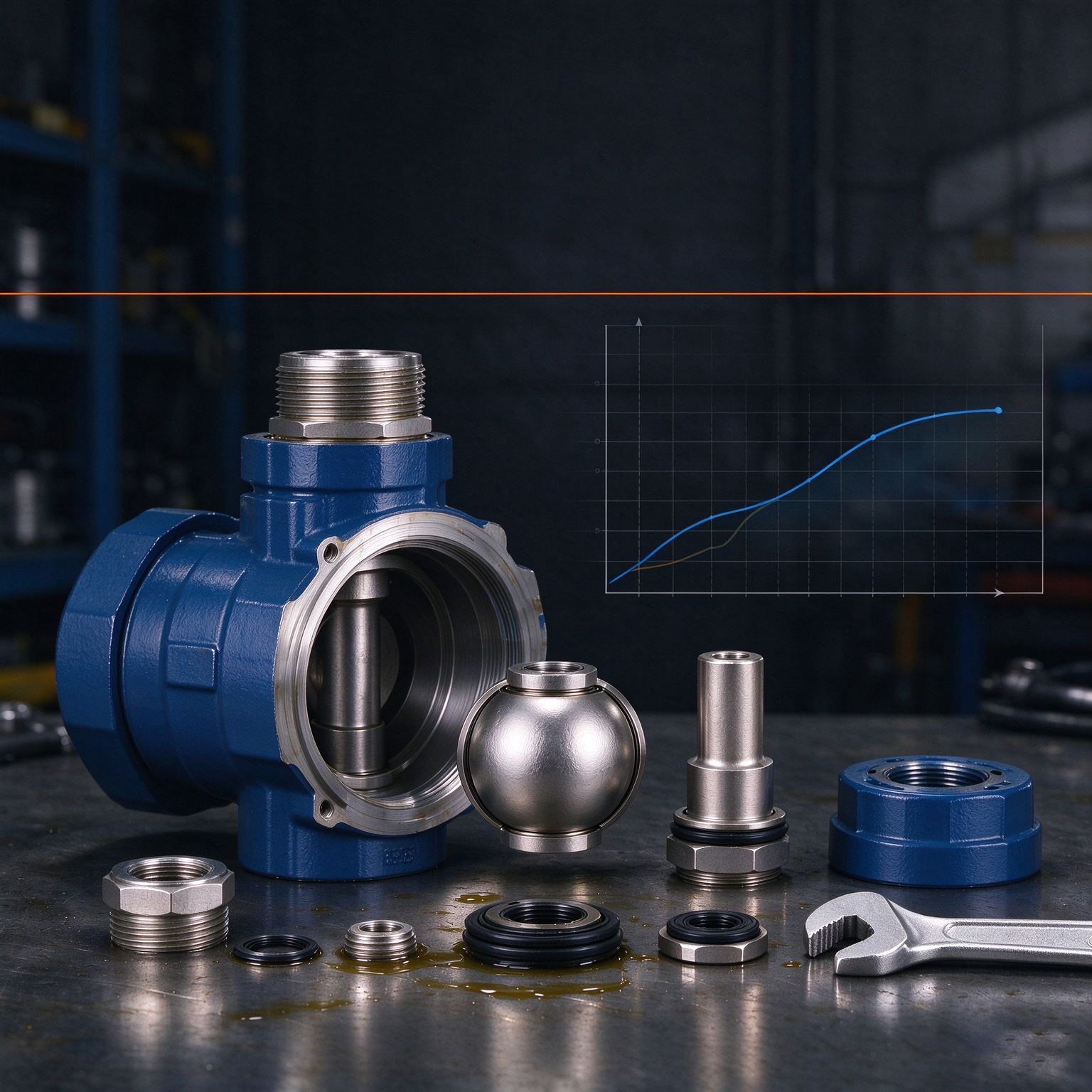
Ball valve accessories operate under different mechanical, environmental, and process conditions. Repeated movement can cause wear, while moisture, chemicals, temperature fluctuations, and contamination may gradually affect component performance.
Regular maintenance helps identify deterioration before it leads to more serious problems. For example, inspecting actuator couplings can reveal alignment issues, while checking sealing components can help identify early signs of leakage. Maintaining limit switches and other control accessories also supports reliable valve position monitoring in automated systems.
Effective maintenance provides several benefits, including improved operational reliability, reduced unplanned downtime, better spare-parts management, and longer accessory service life. However, maintenance procedures must match the component design and operating conditions. Not every accessory requires lubrication, adjustment, or disassembly, so manufacturer instructions should always guide the maintenance process.
1. Ball Valve Handles and Handwheels
Handles and handwheels allow operators to open and close manually operated ball valves. Their maintenance mainly focuses on checking mechanical condition, secure attachment, and smooth operation.
Inspect handles for cracks, deformation, corrosion, loose fasteners, and excessive movement at the stem connection. If the handle becomes difficult to turn, investigate the cause rather than applying excessive force. Increased resistance may indicate internal valve problems, excessive differential pressure, corrosion, or mechanical damage rather than a faulty handle alone.
Replace damaged handles with compatible components that match the valve stem dimensions and mounting interface. Avoid using extensions or improvised tools to increase leverage unless the valve manufacturer specifically permits them.
2. Pneumatic and Electric Ball Valve Actuators
Actuators are important components in automated ball valve assemblies. Pneumatic actuators use compressed air, while electric actuators use electric motors to operate the valve.
For pneumatic actuators, inspect air lines, fittings, and connections for leakage or visible damage. Check that the air supply meets the manufacturer’s requirements and that the actuator completes its intended travel. Contaminated air, inadequate pressure, and damaged seals can interfere with performance.
For electric actuators, inspect external enclosures, cable entries, mounting hardware, and electrical connections according to the manufacturer’s procedures. Look for signs of moisture ingress, overheating, unusual noise, or inconsistent movement. Electrical testing and internal servicing should be performed by qualified personnel using the appropriate isolation procedures.
Actuator maintenance should also include reviewing operating cycles, response time, and any alarms or abnormal torque indications. Persistent problems may require a detailed assessment of actuator sizing, valve operating torque, or the control system.
3. Valve Stems and Sealing Components
Valve stems transfer movement from the handle or actuator to the ball. Stem seals, valve seats, and other sealing components help maintain the integrity of the valve assembly.
Inspect accessible areas for leakage, visible wear, corrosion, or damage. Pay attention to changes in operating torque and any signs of deterioration around stem sealing areas. Seals may lose their effectiveness because of chemical incompatibility, excessive temperature, aging, or mechanical wear.
When replacement is necessary, confirm the material, dimensions, and design specifications of the replacement component. PTFE and elastomers are commonly used in suitable sealing applications, but their performance depends on the process medium and operating conditions.
Do not assume that all sealing components are interchangeable. Follow the valve manufacturer’s maintenance instructions and complete the required inspection or leakage testing before returning the assembly to service.
4. Mounting Brackets and Couplings
Mounting brackets and couplings connect actuators to ball valves and transfer operating torque. Incorrect alignment or loose mounting hardware can create mechanical stress and accelerate wear.
Inspect these components for corrosion, deformation, loose fasteners, and signs of movement at connection points. Verify that the actuator and valve remain correctly aligned and that the coupling engages properly with the valve stem.
Use the specified fasteners and tightening requirements when adjustments are necessary. If a bracket or coupling is cracked, significantly deformed, or otherwise damaged, replace it with a compatible component rather than attempting an unapproved repair.
5. Limit Switches and Solenoid Valves
Limit switches provide position feedback, while solenoid valves control the flow of compressed air in many pneumatic actuator systems. These accessories are important for automated valve operation and monitoring.
For limit switches, check mounting security, actuator travel settings, wiring condition, and the accuracy of position signals. A switch that activates too early or too late may provide misleading feedback to the control system.
For solenoid valves, inspect electrical connections, air lines, fittings, and the external housing. Check for contamination, air leakage, and inconsistent switching. Any internal cleaning or servicing should follow the manufacturer’s instructions.
Functional testing should confirm that the accessories respond correctly to control commands and provide the expected signals. Electrical isolation and pneumatic pressure release are necessary before work that could expose personnel to electrical or stored-pressure hazards.
1. Establish a Regular Inspection Schedule
A structured inspection schedule helps maintenance teams identify deterioration and keep equipment in reliable operating condition. Inspection frequency should reflect operating pressure, temperature, cycling frequency, environmental exposure, and the consequences of failure.
Routine checks may include examining visible components, confirming secure connections, monitoring actuator movement, and checking for leakage or corrosion. More detailed inspections may be required for critical applications or equipment with a history of recurring failures.
Use the manufacturer’s maintenance recommendations and the facility’s risk assessment to determine appropriate inspection intervals. Avoid applying the same schedule to every valve regardless of service conditions.
2. Follow Correct Cleaning and Lubrication Procedures
Dirt, dust, chemical deposits, and other contaminants can affect mechanical movement and interfere with control accessories. Cleaning helps prevent contamination from accumulating around accessible components, electrical enclosures, and pneumatic connections.
Use cleaning methods and agents that are compatible with the component materials and process requirements. Avoid directing cleaning fluids into electrical equipment or sealed assemblies unless the manufacturer permits it.
Lubrication should only be performed where specified. Use the recommended lubricant, application points, and quantity. An unsuitable lubricant may damage seals, attract contaminants, or cause problems in high-temperature or process-sensitive applications.
3. Monitor Operating Torque and Valve Movement
Changes in operating torque can provide an early indication of mechanical problems. Increasing resistance may be associated with seal deterioration, contamination, corrosion, internal valve wear, or changing process conditions.
For automated valves, review actuator performance, travel time, alarms, and available torque or load information. For manual valves, operators should report unusual resistance, sticking, or inconsistent movement.
Do not compensate for a sticking valve by applying excessive force or increasing actuator output without investigating the cause. Doing so may damage the stem, coupling, actuator, or other components.
4. Protect Accessories from Environmental Damage
Environmental conditions can significantly affect accessory service life. Outdoor equipment may be exposed to rain, humidity, dust, temperature extremes, and corrosive atmospheres. Industrial facilities may also contain cleaning chemicals or airborne contaminants that affect external components.
Select accessories with suitable materials and environmental protection ratings for the installation. Inspect enclosure seals, cable entries, protective coatings, and exposed metal surfaces where applicable.
For spare parts, follow the manufacturer’s storage requirements and protect components from moisture, contamination, impact, and temperature extremes. Proper storage helps prevent damage before installation.
5. Use Compatible Replacement Parts
Replacement accessories must meet the requirements of the original valve assembly or an approved equivalent specification. Components that appear similar may differ in dimensions, materials, torque capacity, electrical ratings, or mounting interfaces.
Before ordering replacement parts, record the valve manufacturer, model, nominal size, accessory part number, material requirements, and operating conditions. Photographs and technical drawings can help suppliers verify compatibility.
Using suitable replacement components reduces the risk of repeated failures and helps maintain consistent performance across similar valve assemblies.
6. Maintain Accurate Service Records
Maintenance records help teams identify recurring problems, plan replacement activities, and improve maintenance decisions. Useful information includes inspection dates, operating conditions, observed defects, corrective actions, replaced components, and post-maintenance test results.
For automated valve assemblies, records may also include operating cycles, actuator alarms, response times, and relevant control-system observations.
When a component fails repeatedly, review the maintenance history to determine whether the underlying cause involves incorrect sizing, unsuitable materials, installation errors, abnormal process conditions, or inadequate protection.
One common mistake is applying excessive force when a valve becomes difficult to operate. Increased resistance may indicate a problem within the valve or actuator system, and forcing the mechanism can worsen the damage.
Another mistake is using unsuitable lubricants or cleaning agents. Some chemicals can damage elastomers, plastics, protective coatings, and electrical components. Maintenance products should always be checked for compatibility.
Ignoring small leaks, loose mounting hardware, or intermittent control signals can also lead to more serious failures. Minor abnormalities should be documented and investigated according to their potential operational impact.
Finally, maintenance teams should avoid replacing accessories without confirming the cause of failure. A new actuator may not solve a problem caused by excessive valve torque, misalignment, or a faulty control signal. Effective maintenance addresses both the failed component and the underlying condition.
Use the following checklist as a starting point and adapt it to the manufacturer’s instructions and site-specific maintenance procedures.
Inspect handles, handwheels, and accessible mechanical components for wear, cracks, and deformation.
Check mounting brackets, couplings, and fasteners for looseness, corrosion, or misalignment.
Inspect accessible sealing areas for leakage and visible deterioration.
Check pneumatic lines and fittings for damage or air leakage where applicable.
Inspect electric actuator enclosures, cable entries, and external connections according to approved procedures.
Verify limit switch operation, position feedback, and solenoid valve response where installed.
Monitor unusual operating resistance, vibration, noise, and actuator response time.
Confirm that lubrication and cleaning follow the manufacturer’s requirements.
Record inspection findings, repairs, replacements, and functional test results.
Confirm that required operational and leakage checks are complete before returning the equipment to service.
Before maintenance begins, isolate the valve and associated energy sources as required by the facility’s safety procedures. Electrical power, compressed air, trapped pressure, and process fluids can create hazards even when the valve appears stationary.
Accessories should be replaced when they are damaged, excessively worn, corroded beyond acceptable limits, or unable to perform their intended function reliably. Replacement may also be appropriate when a component no longer meets the application’s technical or safety requirements.
For example, a cracked handle, damaged coupling, defective limit switch, or actuator with persistent internal faults may require replacement. Worn seals may be replaceable if the valve design supports servicing and suitable replacement parts are available.
The decision should consider manufacturer recommendations, repair feasibility, component condition, application criticality, and the risks associated with continued operation. After maintenance or replacement, complete the required functional checks and any applicable leakage or operational tests before returning the valve assembly to service.
Ball valve accessories maintenance is essential for improving operational reliability, reducing unplanned downtime, and extending equipment service life. Regular inspection of handles, actuators, stems, sealing components, mounting hardware, and control accessories helps identify wear and deterioration before they develop into more serious problems.
The most effective maintenance programs combine appropriate inspection intervals, correct cleaning and lubrication, compatible replacement parts, performance monitoring, and accurate service records. Maintenance procedures should always reflect the actual operating environment and the manufacturer’s requirements.
For industrial manufacturers, distributors, engineers, and maintenance teams, working with a reliable ball valve accessories supplier can help simplify spare-parts selection, confirm component compatibility, and support long-term maintenance planning.
Maintenance frequency depends on operating conditions, valve cycling frequency, environmental exposure, and manufacturer recommendations. Regular visual inspections should be combined with periodic functional checks based on the equipment’s importance and service requirements.
2.Which ball valve accessories require regular maintenance?
Common components requiring inspection include handles, handwheels, actuators, valve stems, sealing components, mounting brackets, couplings, limit switches, and solenoid valves. Maintenance requirements vary according to component design and operating conditions.
3.What are the signs that ball valve accessories need maintenance?
Common warning signs include unusual operating resistance, loose connections, corrosion, visible leakage, abnormal noise, excessive vibration, incomplete valve travel, and inconsistent position feedback. Prompt investigation can help prevent more serious failures.
4.Do ball valve accessories need regular lubrication?
Not all accessories require lubrication. Some mechanical components may need periodic lubrication, while others are designed to operate without it. Always follow the manufacturer’s instructions regarding lubricant type, application points, and maintenance intervals.
5.How can I prevent corrosion of ball valve accessories?
Select corrosion-resistant materials suitable for the operating environment, maintain protective coatings where applicable, and inspect components for moisture damage or chemical exposure. Proper storage and timely replacement of severely corroded parts also help improve service life.


 Optimized by Seraphinite Accelerator