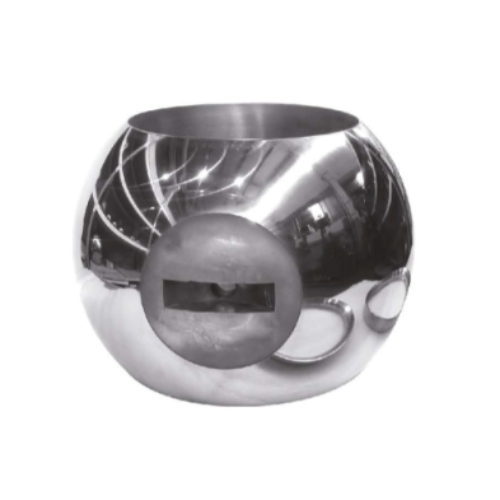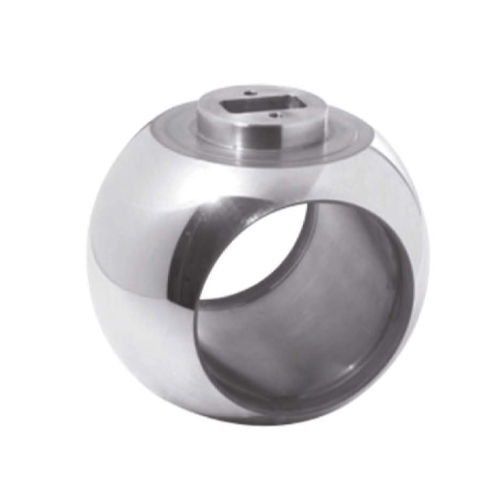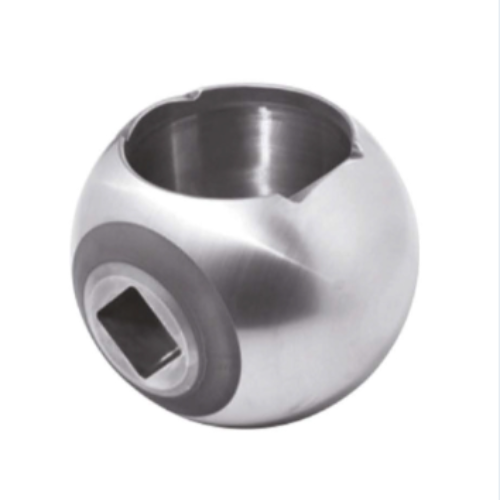


The ball valve stem is a key mechanical component that transfers rotational movement from the handle or actuator to the internal ball. Although the stem is relatively small compared with the valve body, its material has a direct impact on mechanical strength, corrosion resistance, durability, and overall valve performance.
Ball valve stems are manufactured from different materials depending on the valve design and operating conditions. Stainless steel and carbon steel are commonly used options, while alloy steels and other specialized materials may be selected for applications involving high temperatures, aggressive chemicals, high pressure, or demanding operating environments.
Choosing the appropriate ball valve stem material requires consideration of more than basic material strength. Factors such as the working medium, temperature, pressure, operating frequency, corrosion exposure, sealing arrangement, and compatibility with other valve components should also be evaluated.

The stem must withstand the torque required to rotate the ball repeatedly without excessive deformation or premature failure. At the same time, it may be exposed to the surrounding environment or, depending on the valve design, the working medium.
An unsuitable material can lead to corrosion, wear, deformation, or reduced mechanical strength. Surface deterioration can also affect the interaction between the stem and its sealing components, potentially increasing the risk of external leakage.
For this reason, stem material selection should be considered as part of the overall valve design. The stem needs to work effectively with the valve body, ball, seats, packing, O-rings, and actuator.
Stainless steel is one of the most widely used materials for ball valve stems because it combines good mechanical strength with corrosion resistance.
Different stainless steel grades offer different levels of corrosion resistance and mechanical properties. Common grades used in valve components include 304 and 316 stainless steel, while other grades may be selected according to specific design and application requirements.
Stainless steel stems can provide several advantages:
Good resistance to corrosion and oxidation
Suitable mechanical strength for many valve applications
Good durability under repeated operation
Suitable for various industrial environments
Availability in different grades and specifications
For applications involving moisture, water, chemicals, food processing, or outdoor exposure, stainless steel may offer advantages over less corrosion-resistant materials.
304 stainless steel is a common engineering material used for many industrial valve components. It offers good general corrosion resistance and mechanical properties and can be suitable for a wide range of general-purpose applications.
However, the exact suitability of 304 stainless steel depends on the working medium and environmental conditions.
316 stainless steel contains molybdenum, which provides improved resistance to certain forms of corrosion compared with 304 stainless steel.
It is often considered for applications involving more corrosive environments, including certain chemical processing, marine, food processing, and other industrial applications.
The use of 316 stainless steel does not automatically make a valve suitable for every corrosive medium. Compatibility should always be evaluated based on the actual chemical composition, concentration, temperature, and operating conditions.
Carbon steel can provide high mechanical strength and is used in valve applications where the operating environment does not require the higher corrosion resistance associated with stainless steel.
Carbon steel can be suitable for certain industrial piping systems, oil and gas applications, and other environments where mechanical performance and cost considerations are important.
Carbon steel stems can offer:
High mechanical strength
Good load and torque resistance
Availability in various grades
Cost-effective material options
Suitability for many general industrial applications
However, carbon steel generally requires greater consideration of corrosion protection when exposed to moisture, corrosive media, or aggressive environments.
Depending on the valve design and application, protective coatings or other corrosion-control measures may be required.
The choice between stainless steel and carbon steel depends primarily on the operating environment rather than simply which material has higher strength.
| Factor | Stainless Steel | Carbon Steel |
| Corrosion resistance | Generally higher | Generally lower without protection |
| Mechanical strength | Good to high depending on grade | Generally high |
| Moisture resistance | Good | Requires greater corrosion protection |
| Chemical applications | Depends on grade and medium | Depends heavily on protection and medium |
| Outdoor environments | Often suitable | May require corrosion protection |
| Cost | Often higher | Often more economical |
| Material selection | Wide range of grades | Wide range of grades |
The appropriate material should be selected according to the complete valve specification and actual service conditions.
For applications requiring specific combinations of strength, hardness, temperature resistance, or wear resistance, alloy steel may be considered.
Alloy steel can be engineered with different alloying elements and heat-treatment conditions to achieve particular mechanical properties.
In demanding valve applications, the stem may need to withstand high torque, pressure, temperature, or repeated cycling. An appropriate alloy steel grade and heat-treatment process can help meet these requirements.
The exact alloy should be selected based on the required mechanical and environmental performance rather than simply choosing a material described as “alloy steel.”
Depending on the valve design, operating conditions, and applicable standards, manufacturers may use other specialized materials for ball valve stems.
Some applications may require materials with enhanced resistance to high temperature, corrosion, wear, or specific chemical environments. Nickel-based alloys and other specialized alloys may therefore be considered for particularly demanding service conditions.
The use of specialized materials is generally more application-specific and may involve higher material and manufacturing costs.
Material selection should take several operating parameters into account.
The fluid or gas passing through the valve is one of the most important considerations. Water, oil, natural gas, steam, acids, alkalis, and other chemicals can have very different compatibility requirements.
The stem material should be evaluated together with the valve body, ball, seats, and sealing components to ensure that the complete valve is suitable for the medium.
Temperature can affect material strength, corrosion behavior, dimensional stability, and sealing performance.
A material that performs well at room temperature may not provide the same performance at elevated or extremely low temperatures. The selected stem material should therefore match the valve’s specified temperature range.
The stem must withstand the torque required to rotate the ball. Higher pressure, larger valve sizes, different seat materials, and certain operating conditions can increase the required operating torque.
The stem diameter, geometry, material strength, and connection with the ball should be designed to withstand the expected mechanical load.
Corrosion can reduce the effective cross-section and mechanical strength of a stem over time. Outdoor environments, humid conditions, salt exposure, and corrosive chemicals can increase corrosion risks.
Stainless steel or specialized alloys may be appropriate where corrosion resistance is an important requirement.
A valve used occasionally may experience very different wear conditions from one that cycles hundreds or thousands of times.
Frequent operation increases the importance of material strength, surface finish, hardness, lubrication, and compatibility with stem seals.
The stem normally passes through a sealing arrangement that prevents leakage from the valve body. Material selection and surface finish can affect friction and wear at the stem-seal interface.
A suitable combination of stem material, surface condition, and sealing material is important for reliable long-term performance.
Material selection is only one part of ball valve stem manufacturing. Depending on the material and application, heat treatment or surface treatment may be used to improve specific properties.
Heat treatment can be used to achieve desired hardness and mechanical characteristics in suitable steel grades. Surface finishing can also improve the condition of areas that interact with seals or other components.
For certain applications, surface treatments or coatings may be considered to improve wear or corrosion resistance.
The appropriate treatment depends on the stem material, valve design, operating conditions, and required performance.
A professional ball valve stem manufacturer normally evaluates several technical factors before selecting a material.
First, the manufacturer considers the valve’s pressure and temperature ratings, operating medium, valve size, and operating method. The required mechanical properties are then used to determine suitable material grades.
Manufacturers may also consider dimensional requirements, machining tolerances, heat treatment, surface finish, sealing design, and applicable industry standards.
For OEM and customized valve components, the material can be specified according to customer drawings, technical requirements, application conditions, or existing valve designs.
For industrial buyers, material verification can be an important part of supplier evaluation.
Buyers can request relevant material documentation, inspection records, dimensional inspection reports, and other quality-control documentation according to the application.
Depending on the project requirements, material identification or chemical composition verification may also be used to confirm that the supplied material corresponds to the specified grade.
Dimensional accuracy and surface condition should also be checked because a correct material alone does not guarantee proper valve performance.
There is no single material that is suitable for every ball valve application.
For general industrial applications with moderate corrosion requirements, carbon steel or common stainless steel grades may be considered depending on the valve design.
For environments where corrosion resistance is more important, stainless steel can provide a practical material option. The specific grade should be selected according to the actual medium and operating conditions.
For high-temperature, high-wear, highly corrosive, or otherwise demanding applications, alloy steels or specialized alloys may be required.
The most appropriate choice should balance mechanical strength, corrosion resistance, temperature capability, service life, manufacturability, and cost.
The material of a ball valve stem plays an important role in determining the reliability and durability of the valve. Stainless steel provides good corrosion resistance and is widely used in many industrial environments, while carbon steel offers high mechanical strength and can be a cost-effective option for suitable applications.
Alloy steels and specialized materials can provide additional performance characteristics for demanding operating conditions. However, material selection should always be based on the actual application rather than relying on material type alone.
When selecting or purchasing ball valve stems, buyers should consider the working medium, pressure, temperature, corrosion exposure, operating frequency, torque requirements, sealing system, and applicable standards. Working with an experienced valve stem manufacturer can also help ensure that the selected material and manufacturing specifications match the requirements of the complete valve system.
1. What materials are commonly used for ball valve stems?
Common ball valve stem materials include stainless steel, carbon steel, and alloy steel. Specialized alloys may also be used for high-temperature, highly corrosive, or other demanding applications.
2. Is stainless steel better than carbon steel for a ball valve stem?
Neither material is universally better. Stainless steel generally provides better corrosion resistance, while carbon steel can offer high mechanical strength and a more economical option for suitable environments. The choice depends on the operating conditions.
3. Why is stainless steel commonly used for ball valve stems?
Stainless steel offers a combination of mechanical strength, corrosion resistance, durability, and resistance to oxidation. Different grades, such as 304 and 316 stainless steel, can be selected according to application requirements.
4. What is the difference between 304 and 316 stainless steel valve stems?
Both are commonly used stainless steel grades, but 316 stainless steel contains molybdenum and generally provides improved resistance to certain corrosive environments compared with 304. The appropriate grade depends on the working medium and operating conditions.
5. When should carbon steel be used for a ball valve stem?
Carbon steel may be considered when high mechanical strength is required and the operating environment does not demand high corrosion resistance. Appropriate corrosion protection may be necessary in humid or corrosive environments.


 Optimized by Seraphinite Accelerator