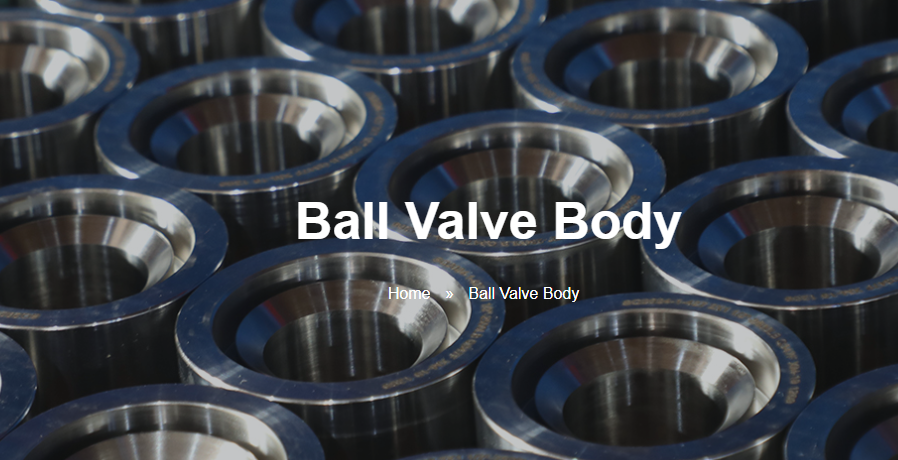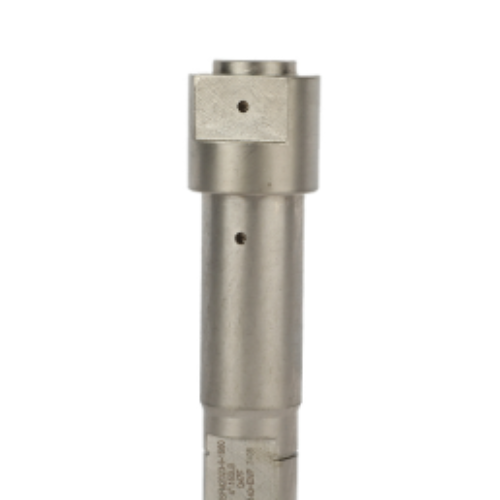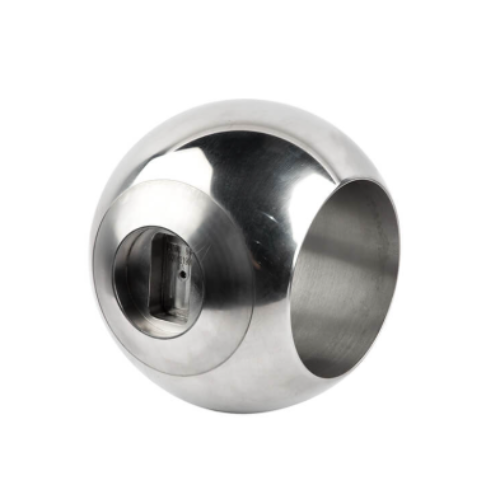


A ball valve body is the main pressure-containing component of a ball valve. It houses the valve ball, seats, stem, and other internal components while providing the flow passage and connection points for the piping system. Because the valve body directly affects pressure resistance, sealing performance, durability, and service life, its manufacturing process requires careful control at every stage.
Depending on the valve design, material, size, pressure rating, and application, a ball valve body may be manufactured through casting, forging, machining, or a combination of different processes.
For industrial buyers, understanding how a ball valve body is manufactured can make it easier to evaluate product quality, manufacturing capabilities, and supplier reliability.

The manufacturing process starts with the technical design of the valve body. Engineers determine the required dimensions, body configuration, flow passage, connection type, pressure rating, material, and other specifications according to the intended application.
Important design factors may include:
Valve body size
One-piece, two-piece, or three-piece construction
Full-port or reduced-port design
Threaded, flanged, socket weld, or butt weld connection
Pressure and temperature requirements
Operating medium
Applicable industry standards
Required surface finish and dimensional tolerances
The design must provide sufficient mechanical strength while maintaining accurate internal dimensions for proper installation of the ball, seats, and stem.
Material selection is an important part of ball valve body manufacturing because the body must withstand the pressure, temperature, and chemical conditions of the application.
Common materials include stainless steel, carbon steel, brass, and various alloy steels.
Stainless steel is often selected when corrosion resistance and durability are important. 304 and 316 stainless steel are commonly used for different industrial applications.
Carbon steel can provide high mechanical strength and is widely used in many industrial systems where the operating environment is suitable.
Brass is commonly used for general-purpose water, HVAC, plumbing, and other compatible applications.
For demanding applications, specialized alloys may be selected based on corrosion resistance, temperature requirements, pressure conditions, or specific process media.
Material selection should be based on the actual operating conditions rather than simply choosing the most expensive or strongest material.
Once the material has been selected, suitable raw material is prepared for the manufacturing process.
For cast valve bodies, metal is melted and prepared for casting. For forged valve bodies, metal billets or other suitable stock are prepared for the forging process. Some smaller or simpler valve bodies may start with bar stock or other forms of metal material for direct machining.
At this stage, manufacturers may verify the material grade and relevant specifications. Material identification and traceability are especially important for industrial valve applications where documentation may be required.
The next stage is to create the basic shape of the valve body. The manufacturing method depends mainly on the body design, material, size, pressure requirements, and production volume.
In casting, molten metal is poured into a prepared mold to form the basic valve body shape. After the metal cools and solidifies, the casting is removed and prepared for subsequent machining.
Casting can be suitable for complex body geometries and a wide range of valve sizes. It allows manufacturers to produce shapes that may be difficult to create through direct machining.
However, casting quality needs to be carefully controlled because defects such as porosity, inclusions, or shrinkage can affect the mechanical and sealing performance of the finished valve body.
Forging uses controlled mechanical force to shape heated metal into the required basic form. Forged valve bodies can provide high mechanical strength and structural integrity, making them suitable for applications involving demanding pressure or service conditions.
After forging, additional machining is required to achieve the required dimensions, internal passages, connection surfaces, and tolerances.
For certain valve body designs and sizes, manufacturers may machine the body from solid metal stock. CNC machining can produce accurate dimensions and consistent geometry, although material usage and production efficiency need to be considered for larger or more complex components.
Depending on the material and manufacturing method, heat treatment may be used to modify the mechanical properties of the valve body.
Heat treatment processes can include procedures such as annealing, normalizing, solution treatment, or other material-specific processes.
The exact process depends on the material grade and required mechanical properties. Proper heat treatment can help achieve the required strength, hardness, toughness, or corrosion resistance characteristics.
Manufacturers may perform inspections after heat treatment to verify that the material meets the required specifications.
After the basic body shape has been formed, precision machining is used to achieve the final dimensions.
CNC machining is commonly used to process critical areas such as:
Internal flow passages
Ball chambers
Seat locations
Stem openings
Threaded sections
Flange faces
Weld ends
Mounting surfaces
Machining accuracy is particularly important around the ball and valve seats. Improper dimensions or alignment can affect sealing performance and operating torque.
CNC equipment can help manufacturers maintain consistent dimensions and repeatable production quality, especially when producing large quantities of valve bodies.
The internal flow passage is an important feature of the ball valve body. It determines how the process medium passes through the valve.
For a full-port ball valve, the flow passage is designed to provide a relatively unrestricted path through the valve. Reduced-port designs have a smaller passage and may be used where the application allows it.
The internal surfaces may require additional machining or finishing to achieve the specified dimensional accuracy and surface condition.
A properly finished flow passage can help reduce unwanted turbulence, pressure loss, and potential areas where contaminants could accumulate, depending on the application.
The connection ends of the valve body must be machined according to the specified piping connection.
For threaded valves, the required internal or external threads are machined accurately.
For flanged valves, the flange dimensions, bolt-hole patterns, sealing surfaces, and other features must meet the specified requirements.
For socket weld and butt weld valves, the weld-end dimensions need to correspond with the piping requirements.
Accurate connection machining is essential because dimensional errors can make installation difficult or compromise the connection between the valve and pipeline.
After machining, the ball valve body may undergo additional surface treatment or finishing depending on its material and application.
Stainless steel bodies may receive processes such as polishing, passivation, or other surface treatments. Carbon steel bodies may require coatings or other corrosion-protection measures depending on the service environment.
For applications where cleanliness is particularly important, such as food processing or pharmaceutical systems, the internal and external surfaces may require controlled finishing according to the applicable requirements.
Surface treatment is not only an aesthetic consideration. It can also influence corrosion resistance, cleanability, surface durability, and service life.
Before assembly, the machined valve body should be properly cleaned to remove machining chips, metal particles, oil, dust, and other contaminants.
Cleaning requirements depend on the application. General industrial valves may have standard cleaning requirements, while valves used in food, pharmaceutical, chemical, or other controlled environments may require more specific cleaning procedures.
Proper cleaning helps prevent foreign particles from interfering with the ball, seats, or sealing surfaces during assembly and operation.
Dimensional inspection is an important quality-control step in ball valve body manufacturing.
Manufacturers may inspect:
Overall body dimensions
Internal passage dimensions
Connection dimensions
Wall thickness
Seat locations
Stem opening dimensions
Flange dimensions
Thread dimensions
Surface finish
Critical tolerances
Inspection equipment may include calipers, micrometers, gauges, coordinate measuring machines, and other specialized instruments.
Accurate dimensional inspection helps confirm that the valve body meets the approved drawings and technical specifications.
Ball valve bodies need to withstand the pressure conditions for which they are designed. Pressure testing can therefore be an important part of quality control.
Depending on the applicable standard and product requirements, testing may include shell testing and seat leakage testing.
Shell testing evaluates the pressure-containing integrity of the valve body and related pressure boundary.
Seat leakage testing evaluates whether the valve can maintain the required sealing performance when the valve is in the closed position.
Testing procedures and acceptance criteria should follow the applicable standards or customer specifications.
A final visual inspection may be carried out to identify visible defects such as cracks, surface damage, excessive machining marks, casting defects, corrosion, or other irregularities.
For cast or forged bodies, manufacturers may use additional non-destructive testing methods when required. Depending on the material and application, these can include dye penetrant testing, magnetic particle testing, radiographic testing, or ultrasonic testing.
The selected inspection method should correspond to the valve body’s material, design, manufacturing process, and quality requirements.
Industrial valve bodies may require permanent or semi-permanent identification marks.
Typical markings can include:
Material grade
Nominal size
Pressure rating
Manufacturer identification
Heat or batch number
Standard designation
Product or part number
Traceability allows manufacturers and customers to identify production batches and material information when needed.
For industrial projects, traceability documentation can be particularly useful for quality verification, maintenance, and future replacement.
After the valve body passes the required inspections, it can be assembled with the ball, valve seats, stem, seals, and other components.
The assembled ball valve is then checked for proper operation, including opening and closing movement, sealing performance, and overall functionality.
The final inspection ensures that the complete valve meets the specified requirements before packaging and shipment.
Several factors can affect the quality and consistency of a ball valve body.
Material quality is the foundation of the component. Incorrect material grades or inconsistent raw materials can affect strength and corrosion resistance.
Manufacturing method also matters. Casting, forging, and machining each have different advantages and limitations, and the method should match the valve design and service conditions.
Machining accuracy is critical for sealing areas, flow passages, connection ends, and other precision features.
Quality control helps identify material, dimensional, surface, and pressure-related problems before the valve reaches the customer.
Finally, manufacturing experience and equipment capability can influence production consistency, especially for customized or high-pressure ball valve bodies.
When sourcing ball valve bodies, industrial buyers should evaluate more than the quoted price. A reliable manufacturer should be able to provide clear information about materials, manufacturing processes, machining capabilities, inspection procedures, and applicable standards.
It is also useful to check whether the manufacturer can provide material certificates, dimensional inspection reports, pressure-test records, and other quality documentation when required.
For customized ball valve bodies, buyers should also confirm the manufacturer’s ability to work with technical drawings, samples, special materials, non-standard dimensions, and specific connection requirements.
A manufacturer with suitable production and inspection capabilities can help maintain consistent quality across repeated orders and different valve specifications.
The manufacturing of a ball valve body involves multiple stages, from design and material selection to forming, machining, surface treatment, cleaning, inspection, and testing. Each stage can influence the final strength, dimensional accuracy, sealing performance, corrosion resistance, and service life of the valve body.
Casting, forging, and machining are commonly used manufacturing approaches, while CNC machining and strict quality control help achieve the required dimensions and specifications. For industrial applications, pressure testing, dimensional inspection, material traceability, and appropriate surface treatment are also important considerations.
When purchasing ball valve bodies, understanding the manufacturing process allows buyers to evaluate suppliers more effectively and select products that match their specific pressure, temperature, medium, connection, and application requirements.
A ball valve body is typically manufactured through several stages, including design, material selection, raw material preparation, casting or forging, heat treatment when required, CNC machining, surface finishing, cleaning, dimensional inspection, pressure testing, and final inspection.
What materials are commonly used to manufacture ball valve bodies?
Common materials include stainless steel, carbon steel, brass, and various alloy steels. The material is selected according to the operating pressure, temperature, process medium, corrosion conditions, and application requirements.
Is a ball valve body cast or forged?
Ball valve bodies can be either cast or forged. Casting is suitable for complex shapes and various valve sizes, while forging can provide high mechanical strength and structural integrity. The appropriate manufacturing method depends on the valve design and operating conditions.
Why is CNC machining important for ball valve body manufacturing?
CNC machining provides accurate dimensions and consistent tolerances for critical areas such as the ball chamber, seat locations, stem opening, flow passage, threads, and connection ends. Proper machining accuracy helps ensure reliable sealing and valve operation.
What quality tests are performed on ball valve bodies?
Depending on the product and applicable requirements, inspections may include material verification, dimensional inspection, visual inspection, pressure testing, leakage testing, and non-destructive testing such as ultrasonic, radiographic, magnetic particle, or dye penetrant testing.


 Optimized by Seraphinite Accelerator