
When managing an industrial pipeline, fluid does not always travel in a single, predictable direction. Sudden downstream blockages or process shifts can create intense backpressure. When this happens, understanding how a floating ball valve vs ball valve setup reacts is critical. This guide breaks down how backpressure alters the load on internal components of a ball valve, helping your business prevent catastrophic seat failure.
To understand why reverse pressure causes so much trouble, you have to look at how a specialized floating ball valve vs ball valve of standard industrial design supports the internal sphere. The way that ball is held in place dictates its whole personality under pressure.
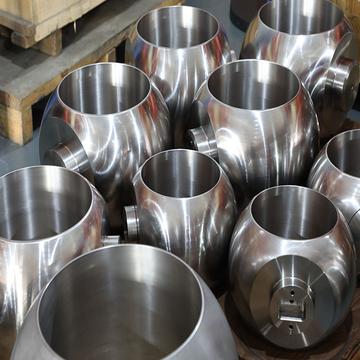
The General “Ball Valve” baseline: When engineers talk about a standard, high-pressure industrial ball valve, they are usually referring to a trunnion design. In this standard setup, the heavy metal sphere is locked onto a permanent vertical axis with top and bottom shafts. It cannot budge left, right, forward, or backward; it can only spin perfectly on its center line.
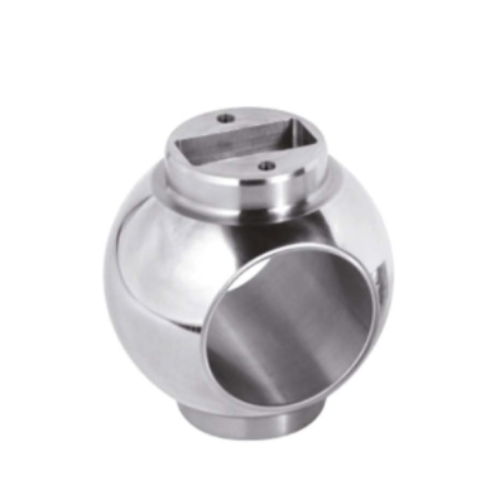
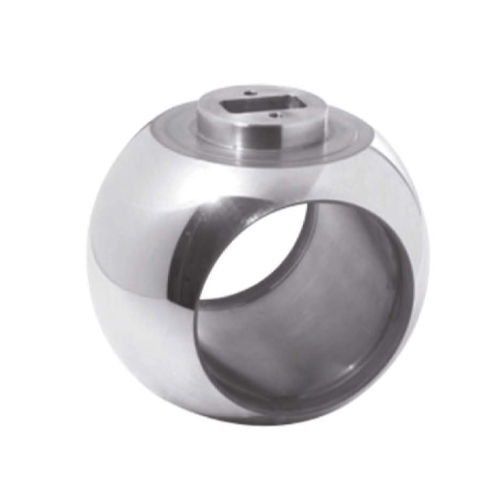
The “Floating” Evolution: A true floating ball valve throws away the bottom anchor. The sphere sits suspended inside the valve housing, held in place entirely by the tight squeeze of two opposing soft or metal sealing rings. It has just enough mechanical play to shift or “ride” along the line of the pipe.
The Forward Flow Advantage: Under everyday forward flow, the floating version uses line pressure to its advantage. The upstream fluid pushes the ball forward, jamming it tight into the downstream seat to stop the flow. This simple, elegant design makes it incredibly cost-effective for smaller pipelines, which is why it is the most common type of ball valve on the market.
This is where the massive divergence in the floating ball valve vs ball valve comparison happens. When fluid forces travel backward from the downstream side against a closed valve, a floating system behaves entirely differently than a standard fixed-axis valve.
Reversing the Ball Shift: In a standard fixed valve, backpressure does nothing to the ball because it is anchored down. But in a floating ball valve, intense backpressure physically lifts the sphere away from its primary downstream seat and shoves it backward toward the upstream side.
The Unexpected Seat Squeeze: The ball is now forced to seal against the upstream seat pocket. The problem? The upstream seat ring was never designed to take the brunt of the sealing force. As the ball gets rammed backward, it crushes the upstream seat material into its machined pocket, causing it to lose its original shape.
The Trapped Cavity Risk: As the ball moves backward, a tiny gap opens up on the downstream side. High-pressure fluid rushes into the stagnant dead zone inside the Ball Valve Body, spiking the cavity pressure and putting immense structural strain on the outer seals.
When a floating valve is forced to seal backward under heavy loads, it is only a matter of time before the system experiences an internal bypass. The structural limitations of a floating design make it highly vulnerable to reverse flow anomalies compared to a standard fixed-axis valve.
Uneven Seat Compression: Because the sphere is free to move, backpressure often pushes it back at a slight angle rather than a straight line. This creates an uneven “squish” on the upstream seat ring, leaving a microscopic gap where fluid can bypass.
The Polymer Tear: If your valve uses soft materials like PTFE, the reverse pressure can actually force the plastic to stretch and flow like putty. Once the seat deforms out of its machined pocket, it can never form a tight seal again, guaranteeing chronic ball valve leakage.
Protecting the Interface: To prevent this type of failure under high-velocity flow, it is critical to understand the limits of your material by reviewing the different types of ball valve seats. For heavy backpressure, upgrading to a precision-lapped Metal Seated Valve Ball and Seat assembly is the best defense, as the rigid metal interface won’t warp or cold-flow when the ball shifts backward.
Use this clear structural scorecard to see how a standard floating valve behaves compared to a fixed-axis ball valve when fluid travels backward.
| Performance Metric | Floating Ball Valve Design | Standard Fixed Ball Valve Design |
| Ball Behavior Under Backpressure | Shifts backward into the upstream seat | Stays perfectly centered on its vertical axis |
| Sealing Area Under Reverse Flow | Upstream seat ring bears the full load | Spring-loaded seats push uniformly against the ball |
| Torque Spike Risk | High (Ball jams tightly into the seat face) | Low (Torque stays smooth and balanced) |
| Stem Deflection Risk | Elevated (Ball puts lateral bending force on stem) | Zero (Trunnion bearings absorb the side-load) |
| Best Suited For | Economy lines with predictable forward flow | High-pressure pipelines with backpressure risks |
Why Does Reverse Pressure Overload the Ball Valve Stem
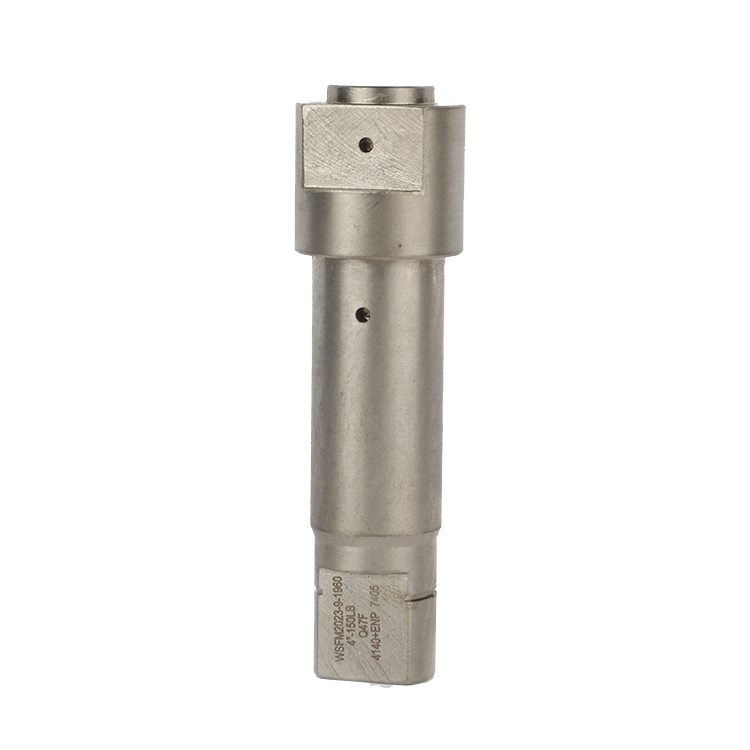
We often focus entirely on the seats, but the ball valve stem is the component that bears the brunt of the mechanical leverage when fluid travels backward in a floating system.
The Lateral Bending Force: As backpressure forces the sphere toward the upstream side, it exerts a massive side-load on the stem. Since the stem is slotted into the top of the ball, this movement physically tries to bend the shaft.
Torque Spikes: A bent or heavily loaded stem increases the internal friction dramatically. When your automated actuator or field technician tries to turn the handle, the operating torque will spike, risking a snapped stem or a stalled actuator.
Packing Distortion: When the stem tilts under backpressure, it pushes unevenly against the top stem packing. This opens up a clear path for fugitive emissions, leaking hazardous fluid into the atmosphere.
The relationship between fluid velocity, backpressure, and internal wear creates a destructive cycle inside the valve body that can quickly destroy your pipeline components.
The Reverse Nozzle Effect: When backpressure begins to slip past a displaced floating ball, it forces fluid through a tiny micro-gap. Just like putting your thumb over a garden hose, this restriction causes the fluid velocity to skyrocket, creating a localized high-speed jet.
Accelerated Wire-Drawing: This high-velocity reverse stream acts like a liquid saw, carving permanent grooves into the seat faces. As detailed in our study on how bore size impacts ball and seat wear, restricting the flow path concentrates the dirty jet stream right onto the sealing faces, compounding erosion.
Grit Entrapment: This fast, turbulent reverse flow stirs up loose pipe scale and sediment trapped in the bottom of the valve cavity, swirling it around the sphere and scratching the polished surfaces every time the valve is cycled.
Can a standard floating ball valve seal effectively against backpressure?
Yes, but only at low pressures; high backpressure deforms the upstream seat and causes internal leaks.
Why does backpressure make a floating ball valve harder to turn?
The reverse force jams the ball tightly against the upstream seat, creating massive friction that increases operating torque.
How does a metal seated valve ball and seat handle reverse flow?
Rigid metal components resist the crushing forces of reverse flow without warping, maintaining a tight mechanical seal.
Does backpressure cause external packing leaks around the stem?
Yes. The backward shift of the ball tilts the stem, distorting the packing seals and allowing fluid to escape.
Choosing between a floating ball valve vs ball valve of fixed design requires a deep look at your pipeline’s flow reality. While floating valves are fantastic, highly economical choices for standard forward-flow applications, high backpressure environments demand heavy-duty, precision engineering to prevent internal bypass. Contact GOTEB today to talk with our technical staff about securing the right valve components for your system.


 Optimized by Seraphinite Accelerator