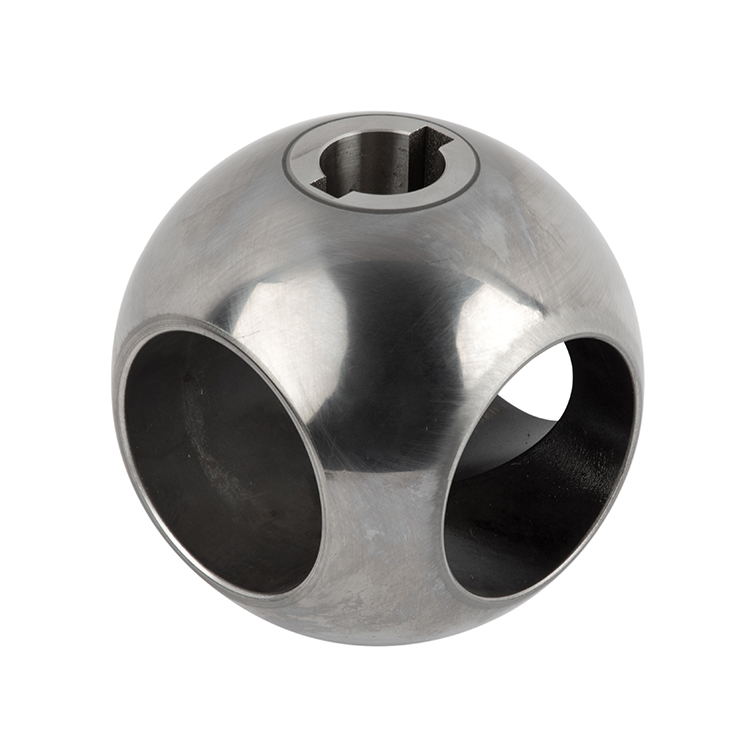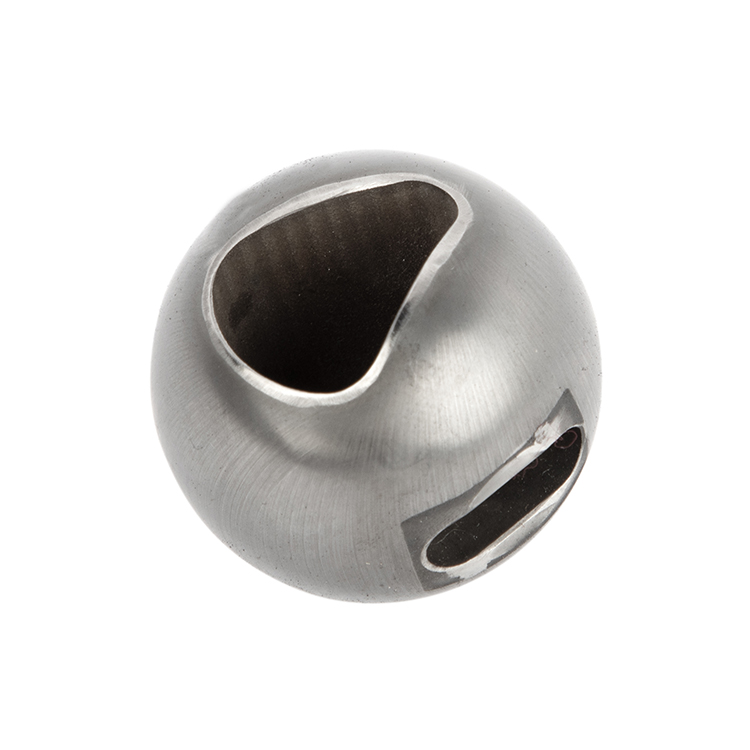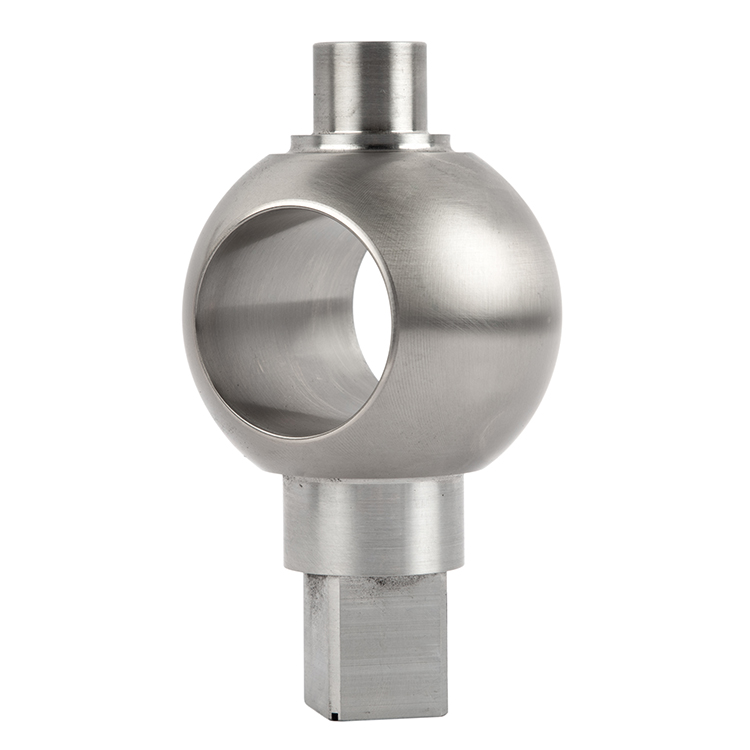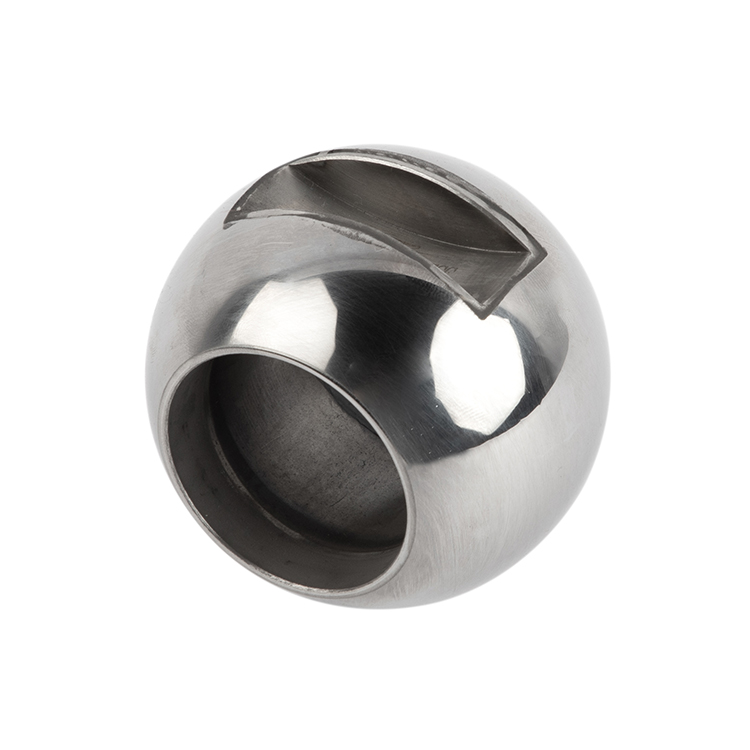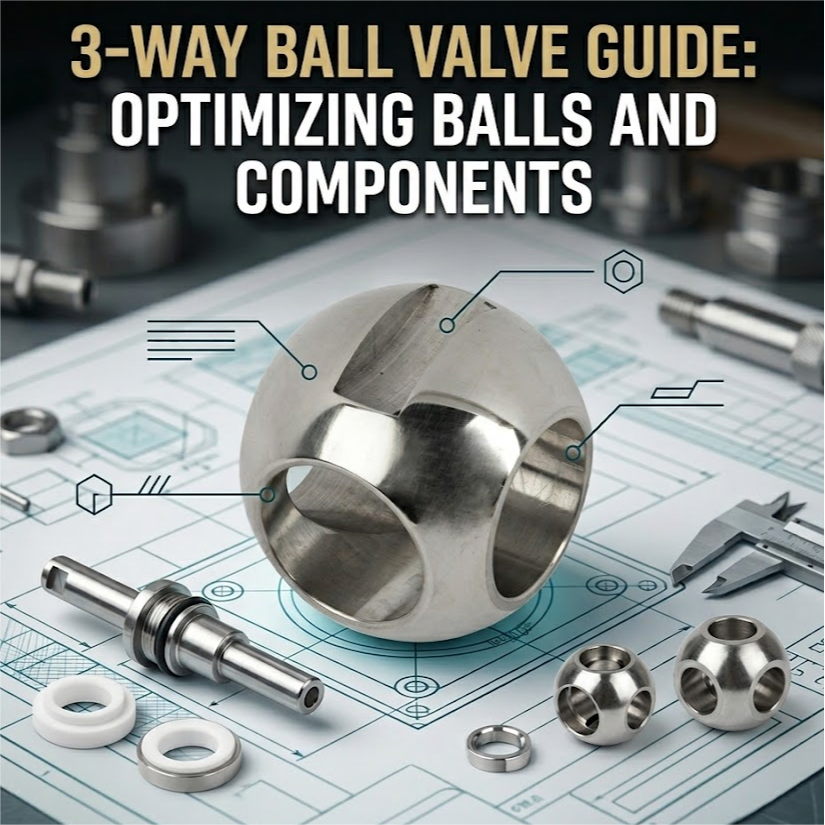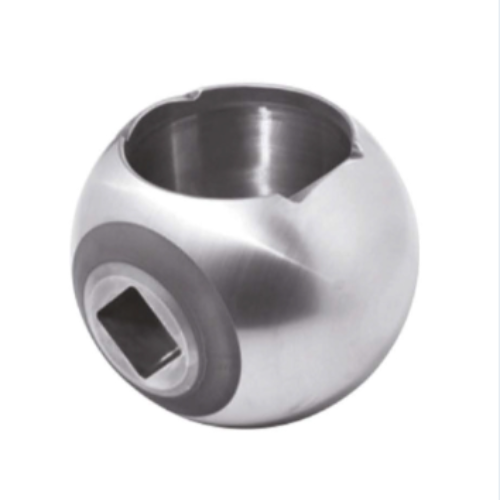


A customized ball valve ball is a precision component that needs to meet specific dimensional, material, surface finish, and design requirements. Unlike standard valve balls manufactured according to fixed specifications, customized ball valve balls are produced according to customer drawings, samples, technical requirements, or application conditions.
The manufacturing process can involve several stages, including material preparation, precision machining, port processing, grinding, polishing, inspection, and final quality control. Each stage can influence the dimensional accuracy, surface quality, compatibility, and performance of the finished ball.
For valve manufacturers, distributors, and industrial buyers, understanding how customized ball valve balls are manufactured can help them evaluate suppliers and communicate technical requirements more effectively.
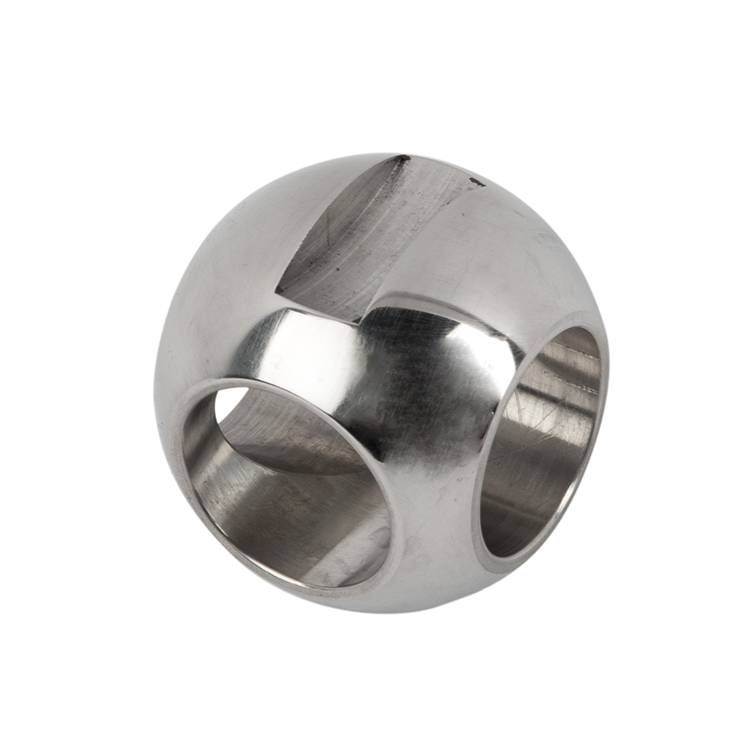
A customized ball valve ball is a spherical valve component manufactured according to specific customer requirements. Depending on the valve design, customization may include the ball diameter, bore size, port configuration, stem connection, material, surface finish, and dimensional tolerances.
The finished ball is installed inside the valve body and works with the valve seats and stem to control the flow of liquids or gases. Because the ball must fit accurately with these components, precision manufacturing is important throughout the production process.
The manufacturing process normally begins with a review of the customer’s technical requirements. These requirements may be provided through engineering drawings, physical samples, CAD files, specifications, or detailed measurements.
The manufacturer needs to confirm important information such as ball diameter, bore dimensions, port configuration, stem connection, material, tolerances, and surface finish.
Application information can also be useful. Operating pressure, temperature, medium, and expected operating frequency may affect the recommended material and manufacturing specifications.
Before production begins, the manufacturer should confirm critical dimensions and technical requirements to minimize misunderstandings during machining.
After the design requirements are confirmed, the appropriate raw material is selected. Common options include stainless steel, carbon steel, and alloy steel, while specialized applications may require other materials.
Material selection depends on the valve’s operating environment. Corrosion resistance, mechanical strength, temperature performance, wear resistance, and compatibility with the operating medium should all be considered.
The selected material should also be suitable for the required machining and finishing processes. For customized production, material certificates or other documentation may be requested depending on the application and quality requirements.
The selected material is prepared into an appropriate blank for machining. The starting form and dimensions depend on the ball design, production method, material, and required finished dimensions.
Proper material preparation provides sufficient machining allowance for subsequent turning, drilling, grinding, and polishing operations.
For repeat production, controlling the quality and consistency of incoming material can help maintain stable manufacturing results from batch to batch.
Precision machining is used to create the basic spherical shape and critical dimensions of the ball.
CNC turning and related machining operations allow the manufacturer to control the outside diameter and other important geometric features according to the technical drawing.
For customized components, machining parameters need to be adjusted according to the material and required tolerances. Accurate machining at this stage provides the foundation for later grinding and polishing processes.
The flow passage through the ball is another critical feature. Depending on the design, the ball may require a full-port, reduced-port, or other customized configuration.
CNC drilling, milling, or other precision machining processes can be used to create the required opening. The port diameter, geometry, position, and alignment must meet the specified requirements.
Accurate port machining is important because the flow passage directly affects how the ball functions when installed inside the valve.
The ball needs to connect securely with the valve stem so that rotational movement can be transferred effectively.
Different valve designs can use different stem connection configurations. The connection can therefore be customized according to the customer’s valve design.
Critical dimensions and alignment should be controlled carefully because an incorrect stem connection can make installation difficult or affect valve operation.
After initial machining, precision grinding may be used to improve the ball’s dimensional accuracy and spherical geometry.
Grinding can remove small machining variations and help achieve the required surface condition. This stage can be particularly important for applications requiring close tolerances and smooth interaction between the ball and valve seats.
The grinding process should be controlled carefully to maintain the specified ball diameter and geometry without creating unwanted dimensional deviations.
Polishing can be used to improve the surface finish of the customized ball valve ball. A smooth and consistent surface can support proper interaction with the valve seats and help maintain smooth rotation.
The required surface finish depends on the valve design, ball material, seat material, sealing requirements, and operating conditions.
Not every application requires the same level of polishing. The manufacturer should therefore follow the specified surface finish rather than applying a single finishing standard to every customized component.
Some customized ball valve balls may require additional surface treatment or coating. Depending on the application, treatment can be used to improve characteristics such as wear resistance, hardness, or corrosion protection.
The selection of a surface treatment depends on the base material and intended operating conditions. It should also be compatible with the valve seats and other internal components.
For demanding applications, surface treatment requirements should be specified before production so that the appropriate manufacturing process can be planned.
Dimensional inspection is an important part of customized ball valve ball manufacturing. The finished component needs to conform to the dimensions and tolerances specified by the customer.
Critical measurements may include outside diameter, bore diameter, stem connection dimensions, port position, and other design features.
Precision measuring equipment can be used to verify the dimensions. The exact inspection method depends on the component design and required accuracy.
In addition to dimensional measurements, the ball can be inspected for surface quality and visible defects.
Inspectors may check for scratches, machining marks, pits, uneven polishing, surface damage, or other imperfections that could affect the intended application.
For valve balls with demanding sealing requirements, surface condition can be particularly important because the ball works directly with the valve seats.
Depending on customer requirements, material verification may be performed to confirm that the supplied material corresponds to the specified grade.
Quality documentation may include material certificates, dimensional inspection reports, production records, or other documents required by the customer.
For industrial valve components, clear documentation can help manufacturers and buyers maintain traceability and quality control throughout the supply chain.
For a new customized ball valve ball, a sample or prototype may be produced before mass production.
The sample can be checked against the customer’s drawing and tested for physical compatibility with the valve body, seats, and stem. Any dimensional or functional issues can then be identified before larger quantities are manufactured.
Sample approval can be particularly useful for non-standard components, new valve designs, and replacement parts where the original specifications may be incomplete.
After the design and sample have been approved, the manufacturer can proceed with batch production.
Maintaining consistency is important for customized components because every ball should meet the same critical specifications. Production parameters, tooling, machining processes, and inspection procedures should be controlled to reduce variation between batches.
For long-term customers, consistent manufacturing can make repeat orders easier and help ensure compatibility with the same valve assembly.
The production process for a customized ball valve ball can vary depending on several factors. Material type, ball diameter, port configuration, dimensional tolerances, surface finish, production volume, and application requirements can all influence the manufacturing method.
A simple standard-shaped component may require fewer machining and finishing operations, while a complex or high-precision ball may require additional CNC machining, grinding, polishing, and inspection.
Production volume can also affect the manufacturing approach. Prototype orders, small batches, and high-volume production may require different process planning to balance precision, efficiency, and cost.
Precision is particularly important because the ball needs to work together with the valve body, seats, and stem. Dimensional errors can lead to poor fit, increased friction, leakage, or inconsistent operation.
The spherical geometry and surface finish are also important for the sealing interface. A properly manufactured ball can help maintain the intended relationship between the ball and valve seats during repeated opening and closing cycles.
For customized components, manufacturing precision should therefore be considered alongside material selection and overall valve design.
When selecting a manufacturer, buyers should evaluate more than the supplier’s ability to provide the required material. Precision machining capabilities, grinding and polishing equipment, quality inspection procedures, engineering support, and experience with customized valve components are also important considerations.
A capable manufacturer should be able to understand technical drawings, work with customer samples, control critical dimensions, and maintain consistent quality during repeat production.
Buyers may also want to confirm the manufacturer’s ability to provide inspection reports, material documentation, prototypes, and other quality records when required.
The manufacturing process for a customized ball valve ball can involve multiple stages, from technical review and material selection to precision machining, port processing, grinding, polishing, inspection, and final quality control.
Each stage contributes to the dimensional accuracy, surface condition, compatibility, and reliability of the finished component. The exact production process depends on the material, design complexity, tolerances, surface finish, production volume, and intended application.
For valve manufacturers and industrial buyers, providing accurate drawings, samples, material requirements, and operating information can help the manufacturer develop an appropriate production process. Working with a supplier that has precision machining and inspection capabilities can also support consistent quality for both prototype and volume production.
1. How are customized ball valve balls manufactured?
Customized ball valve balls are typically manufactured through several stages, including technical drawing review, material selection, raw material preparation, CNC machining, port and stem connection machining, precision grinding, polishing, inspection, and final quality control.
2. What machining processes are used for customized ball valve balls?
Common processes include CNC turning, drilling, milling, precision grinding, and polishing. The exact process depends on the ball’s material, dimensions, port configuration, surface finish, and tolerance requirements.
3. Can customized ball valve balls be manufactured according to customer drawings?
Yes. Manufacturers can produce customized ball valve balls according to technical drawings, CAD files, specifications, or physical samples. Drawings should clearly define critical dimensions, tolerances, materials, and surface finish requirements.
4. Why is CNC machining used for ball valve balls?
CNC machining allows manufacturers to control critical dimensions and produce customized geometries with consistent accuracy. It can be used for spherical machining, port processing, stem connections, and other features.
5. Why is precision grinding used on ball valve balls?
Precision grinding can improve dimensional accuracy, spherical geometry, and surface quality after initial machining. It is particularly useful when the ball requires close tolerances or a smooth sealing surface.
6. Does a customized ball valve ball need to be polished?
The required polishing level depends on the valve design and application. Polishing can improve surface smoothness and support proper interaction between the ball and valve seats, but the required finish should be determined according to the technical specifications.


 Optimized by Seraphinite Accelerator