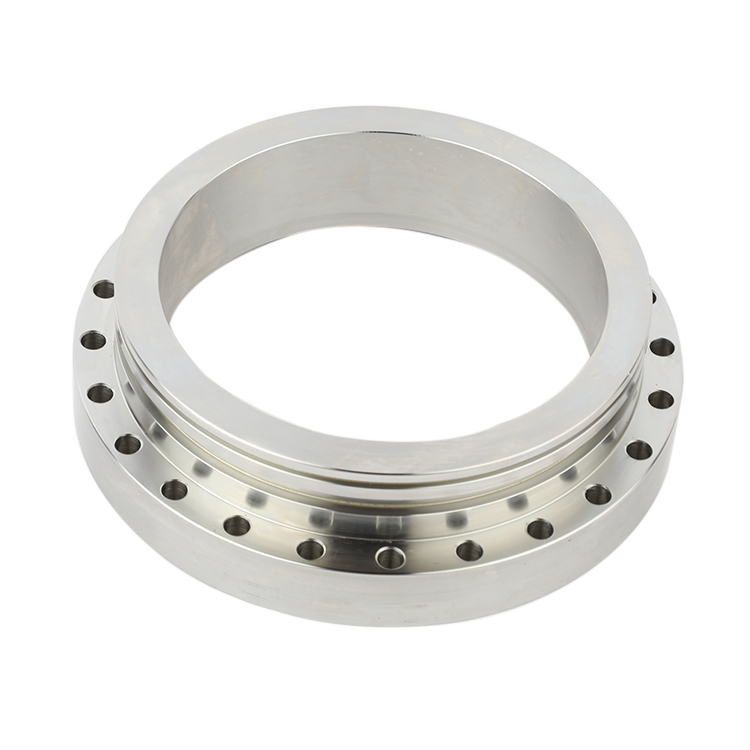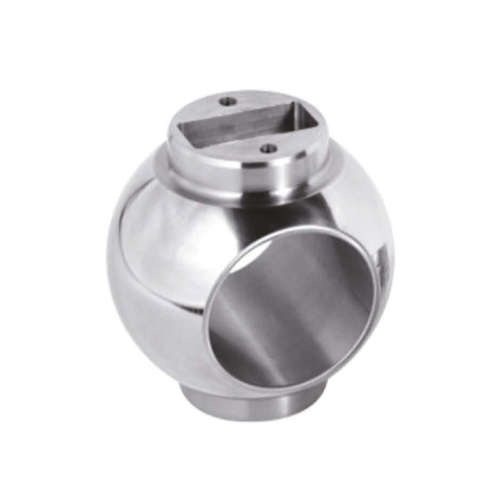


The most common ball valve body corrosion problems are chloride pitting and crevice attack on 300-series stainless steel, galvanic corrosion at dissimilar-metal joints, erosion-corrosion in high-velocity lines, stress corrosion cracking in hot chloride service, and CO2/H2S attack in oil and gas duty. They are prevented by matching the alloy to the actual chemistry and temperature, eliminating crevices and dead zones in the body design, controlling surface finish and passivation, and applying a barrier coating where the base metal cannot carry the duty alone.
Corrosion is rarely a material failure in the abstract. It is a specific mechanism acting on a specific surface: a gasket groove, a seat pocket, a threaded port, a weld repair, or the low-flow cavity behind the ball. Understanding which mechanism is active is what separates a body that lasts fifteen years from one that pits through in eighteen months.

Most field failures fall into one of these categories. Identifying the mechanism first prevents the expensive mistake of upgrading the alloy when the real problem was a crevice or a velocity profile.
| Mechanism | Where it appears on a valve body | Typical service |
|---|---|---|
| Chloride pitting | Bore, seat pockets, stagnant cavity behind the ball | Seawater, brine, cooling water, coastal atmospheres |
| Crevice corrosion | Gasket grooves, body joint faces, thread roots, under deposits | Any chloride service with static joints |
| Galvanic corrosion | Flange faces, bolting, dissimilar internals | Stainless body with carbon steel pipe, or bronze trim |
| Erosion-corrosion | Bore downstream of the seat, body cavity at part-open position | Slurries, high-velocity steam, flashing condensate |
| Chloride stress corrosion cracking | Hot spots, welded repairs, residual stress zones | 316 stainless above roughly 60 °C with chlorides present |
| Sour service (H2S / CO2) | Full wetted surface, especially at hardness peaks | Oil and gas production, wet gas, multiphase flow |
A valve body is not a straight run of pipe. It has a cavity, a seat pocket, a body joint and a stem bore — four places where flow slows down, deposits settle and oxygen concentration drops. That geometry is why the body often fails before the line it is installed in.
The cavity behind the ball is the worst offender. In the closed position, the upstream half of the cavity holds stagnant medium; in the open position, it becomes a dead zone with low velocity. Chlorides concentrate there, deposits form, and crevice corrosion starts under the deposit where oxygen cannot reach. By the time the pitting is visible from outside, the wall may already be below the minimum calculated thickness.
Body joints in split body designs add a second crevice: the gap between the two halves around the gasket. Even a well-machined joint has a micro-crevice at its edge, and that is where pitting initiates on stainless bodies in chloride service. This is one reason top entry designs are sometimes preferred in aggressive media — one body joint instead of two.
Cast surfaces introduce their own risk. As-cast skin has a different microstructure from the machined bore, and it is rougher, which means it holds moisture and deposits. If the casting was not properly cleaned and passivated after shot blasting, iron contamination left on the surface becomes the starting point for rust blooms that look like a material failure but are really a surface preparation failure.
Selecting “stainless steel” is not a corrosion strategy. The grade, its molybdenum content and its PREN value decide which environments it can survive. PREN (Pitting Resistance Equivalent Number) is calculated as Cr + 3.3 × Mo + 16 × N; higher numbers indicate better resistance to chloride pitting.
| Environment | Recommended body material | Notes |
|---|---|---|
| Dry gas, oil, non-corrosive hydrocarbons | A105, LF2 carbon steel | Add corrosion allowance; coat internally for wet duty |
| Water, mild chemicals, food and pharma | F304 / F316 / F316L | 316L preferred for welded bodies; passivate per ASTM A967 |
| Seawater, brine, high chloride cooling water | Duplex F51 (2205), Super Duplex F55 | Duplex also resists chloride SCC where 316 cracks |
| Wet CO2, mild sour service | F51, F53, 17-4PH (with hardness control) | Comply with NACE MR0175 / ISO 15156 hardness limits |
| Severe sour, high chloride, high temperature | Inconel 625 / 718 / 825, Monel 400 / 500 | Nickel alloys resist both SCC and reducing acid attack |
| Abrasive slurry with corrosive carryover | Carbon steel or duplex with carbide coating | TCC or CCC overlay on wetted surfaces, not paint |
Two selection rules save most projects from premature failure. First, if the operating temperature exceeds about 60 °C and chlorides are present, do not specify 304 or 316 for a pressure boundary that cannot be inspected internally — move to duplex or a nickel alloy. Second, if the medium is wet and the line is intermittent, assume stagnant conditions in the body cavity and design for them, because that is where the corrosion will start.
For a deeper comparison of body manufacturing routes in aggressive service, see cast vs forged ball valve body. The full grade-by-grade selection logic is covered in our ball valve body material selection guide.

When the base metal is adequate for strength but marginal for corrosion, a barrier coating is often cheaper than a full alloy upgrade. It only works if the coating is specified for the right mechanism.
Electroless nickel phosphorus (ENP). A uniform, pore-free barrier that suits carbon and low-alloy bodies in water, brine and many chemicals. High-phosphorus ENP (10–13% P) gives the best corrosion resistance; it is not a cure for high-chloride pitting on stainless.
Hard chrome plating (HCR). Wear resistance with moderate corrosion resistance, commonly used in the bore and on stem surfaces. Thin chromium layers are porous unless specified correctly, so thickness and post-treatment matter.
Tungsten carbide (TCC) and chromium carbide (CCC) overlays. Applied where erosion-corrosion dominates — slurry, catalyst carryover, high-velocity flashing service. These are wear barriers first and corrosion barriers second.
Plasma nitriding and NI60/NI55 nickel-based overlays. Surface hardening for seat pockets and sealing faces that see abrasive particles.
Passivation. Not a coating but a required post-machining step for stainless bodies: removes free iron and restores the chromium oxide layer. Skipping it is one of the most common causes of “new valve rusting in the warehouse.”
Coating selection for the ball follows the same logic and is covered in what surface treatments are available for customized ball valve balls.
Not sure which alloy survives your medium?
Tell us the medium, chloride level, operating temperature and pressure class. We will recommend a body material and surface treatment combination from A105, LF2, F304, F316, F51/F53/F55, F60, 17-4PH, Inconel 625/718/825 and Monel 400/500, with the corrosion allowance and coating thickness stated in the quotation.
Material choice gets the attention, but design details and operating discipline prevent more failures than alloy upgrades do.
Eliminate dead zones where possible. Specify a body design with a reduced cavity, or a drain port, so the medium does not sit stagnant behind the ball.
Control crevices at joints. Use a gasket that fills the groove, machine joint faces flat, and avoid wrapped gaskets that leave an exposed edge.
Specify internal coating for wet carbon steel service. An uncoated carbon steel body in intermittent wet duty will corrode from the cavity outward.
Keep velocity inside the alloy’s limit. Duplex and stainless bodies have erosion thresholds; running a partially open ball valve as a throttle creates local velocities that strip the passive layer.
Drain and dry after hydrostatic testing. Test water left in the cavity is one of the most common causes of pitting found at commissioning.
Insulate for corrosion under insulation, not just for heat loss. Use closed-cell insulation with a CUI-rated coating system on carbon steel bodies in cycling temperature service.
Control water chemistry. Chlorine dosing, dissolved oxygen and pH all shift the corrosion rate; a body that survives 200 ppm chloride will not survive 2,000 ppm.
Inspect on a schedule. Ultrasonic wall thickness at fixed points on the cavity and bore gives a corrosion rate in millimetres per year, which is the number that actually drives replacement planning.
Visual inspection catches late-stage damage only. These checks find corrosion while the body is still serviceable:
Ultrasonic wall thickness mapping at the cavity, bore and body joint, compared against the minimum calculated thickness for the pressure class.
Borescope inspection of the cavity and seat pockets through the bore, looking for pitting, deposits and crevice attack under gaskets.
Dye penetrant testing on suspect areas after cleaning, to distinguish surface staining from cracking.
Hardness checks after weld repairs on sour service bodies, to confirm compliance with NACE hardness limits.
Water analysis at the same interval — corrosion rate without chemistry data is a number without a cause.

Why does a stainless steel ball valve body rust?
Almost always because of free iron contamination on the surface, not because the alloy failed. Machining tools, shot blasting media and handling can embed iron particles that rust while the stainless beneath is intact. Proper passivation after machining removes that contamination. If the rust returns in service, the cause is usually chlorides combined with a stagnant cavity.
Is 316 stainless suitable for seawater service?
Not for a pressure boundary. 316 resists pitting in seawater only under low velocity and low temperature, and it is vulnerable to crevice corrosion at gasket joints and to chloride stress corrosion cracking above about 60 °C. Duplex 2205 (F51) or Super Duplex (F55) is the usual minimum for seawater, with nickel alloys for severe duty.
What is the most common cause of ball valve body corrosion in water systems?
Stagnant water in the body cavity combined with residual chlorine depletion. When flow stops, chlorine is consumed, oxygen drops, and the environment inside the cavity becomes aggressive to stainless steel. Intermittent operation and oversized bodies make it worse because the cavity never fully flushes.
Does a coating replace the need for a corrosion-resistant alloy?
No. A coating is a barrier, and barriers have defects: pores, scratches from assembly, and damaged edges at flange faces. Coatings are appropriate when the base metal has adequate strength and the mechanism is general corrosion or erosion. They are a poor choice when pitting or stress corrosion cracking is likely, because a single coating defect becomes the initiation point.
How much corrosion allowance should a carbon steel body have?
It depends on the calculated corrosion rate and design life, but 3 mm is a common starting point for wet hydrocarbon and water service, with the body design checked against the minimum wall thickness required by ASME B16.34 for the pressure class. For high-rate or unknown chemistry, specify a coated body or an alloy instead of adding thickness.
Can a corroded ball valve body be repaired?
Surface staining and light pitting outside the sealing areas can sometimes be blended out and the body re-passivated. Pitting that reduces wall thickness below the calculated minimum, or any cracking, means replacement. Weld repairs on pressure boundaries require a qualified procedure and NDT after welding — a repair that is not documented should not be accepted.


 Optimized by Seraphinite Accelerator