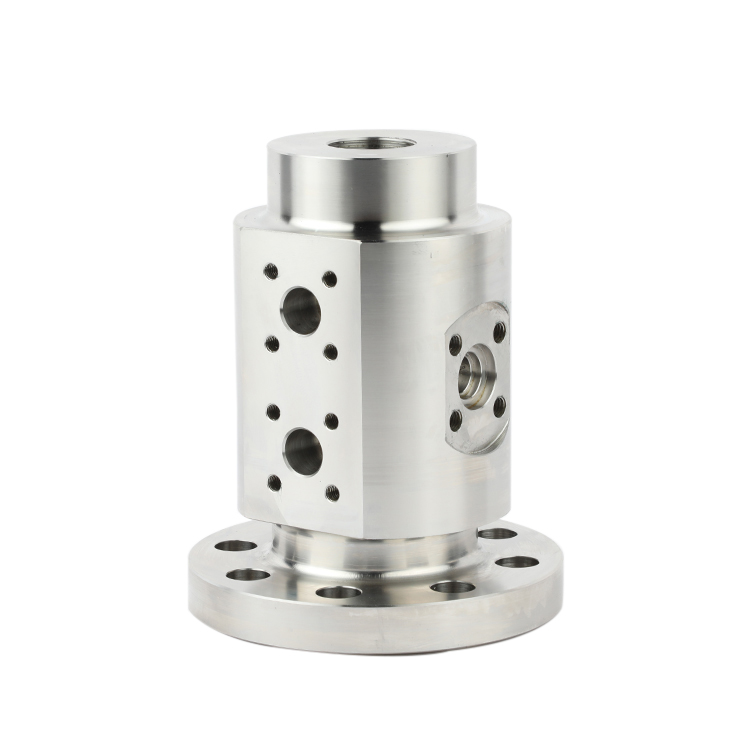


A split body ball valve is built from two or three bolted sections with a gasket at each body joint, while a top entry valve has a single body with a bolted bonnet on top. Split body designs are cheaper to machine and are the standard choice for general process duty; top entry designs cost more but allow the ball, seats and seals to be serviced without removing the body from the pipeline, and they remove one pressure-containing joint. The right choice depends on line criticality, size, pressure class and how often the valve will be opened.
Both designs are legitimate. The mistake is choosing on price alone and then discovering, three years later, that a maintenance task which should have taken four hours requires a crane and a shutdown.

A split body valve is made of a body and one or two end caps, bolted together with a gasket between the faces. The ball and seats are captured between the sections, so the body joint sits directly in the pressure boundary. In a two-piece design the joint is on one side of the ball; in a three-piece design there are two joints, one on each side, with the center section holding the ball and seats.
A top entry valve has a single-piece body with a large opening at the top, closed by a bonnet that carries the stem and the upper trunnion. The ball, seats and seals are installed through that opening. The only pressure-containing joint is between the bonnet and the body, plus the stem sealing arrangement.
That structural difference drives everything else: cost, maintenance strategy, pressure capability, weight and the number of leak paths you have to manage.
| Criterion | Split body | Top entry |
|---|---|---|
| Pressure-containing joints | One or two body joints plus the bonnet joint | Bonnet joint only |
| In-line repair | Usually requires removing the valve from the line (three-piece designs allow center-section removal) | Internals removed from the top with the body left in the pipeline |
| Machining cost | Lower — smaller castings, easier access to seat pockets | Higher — one large body with deep internal bores |
| Weight at large sizes | Lower, easier to handle during installation | Higher, may require structural support |
| Typical size range | Small to very large; economical from NPS 2 upward | Most common from NPS 6 upward, where in-line service matters |
| Pressure class | Class 150–2500 with suitable joint design | Class 150–2500, preferred above Class 900 for large sizes |
| Leak paths to manage | Body joint gasket plus stem packing | Bonnet gasket plus stem packing |
| Fugitive emissions | More sealing interfaces to qualify and monitor | Fewer interfaces, easier to certify to ISO 15848 |
| Typical applications | General process, water, HVAC, small and medium lines, skids | Pipelines, critical isolation, large sizes, hard-to-access locations |
If a valve will be opened once in its life, split body is almost always the better buy. If it will be opened every turnaround — or if the line cannot be taken out of service — top entry pays for itself the first time it is serviced.
Consider a Class 600, NPS 16 trunnion valve on a main line. Servicing a split body unit means isolating the line, draining it, unbolting both flanges, lifting the valve out with a crane, replacing the body joint gaskets, and reinstalling with new flange gaskets and correct bolt torque. That is a planned shutdown activity with NDT and leak testing afterwards.
The same valve in top entry form is serviced by unbolting the bonnet, lifting out the bonnet-and-stem assembly, and removing the ball and seats through the top opening. The body never leaves the line, the flange joints are never broken, and the work can be done by a maintenance crew with a small hoist. The valve still has to be isolated and drained, but the scope is a fraction of the split body job.

From a manufacturing standpoint, the two designs place different demands on the body machining, and those demands show up in reliability.
In a split body valve, each section is machined separately and then bolted together. The seat pocket in each half must be concentric with the pocket in the other half, and the joint faces must be flat and square to the bore. If those conditions are not met, the ball sits off-center, torque rises, and the body joint gaskets are loaded unevenly. This is why split body quality depends heavily on machining discipline rather than on the design itself.
In a top entry valve, both seat pockets are machined in a single body from the same datum. Concentricity is built into the setup rather than assembled from two parts. The trade-off is that the internal bore is deep and relatively blind, so the machining requires long boring bars, careful chip evacuation and in-process measurement. When a top entry body is machined well, the geometry is inherently more consistent than a split body assembly.
Either way, the ball and seats are the parts that determine sealing performance, and they are shared between designs. Matching ball sphericity to seat geometry matters more than the body style. See how structure impacts ball valve leakage and the guide to trunnion ball valve design for that side of the selection.

The body joint is the defining feature of a split body valve, and the gasket is the part most likely to cause trouble. Three factors decide whether it holds:
Joint face flatness. A dished or tapered face compresses the gasket unevenly, and the low-load side leaks at pressure.
Gasket type. Spiral wound gaskets suit high pressure and temperature; PTFE or elastomer O-rings suit lower ratings and are easier to replace. The choice must match the fire-safe requirement.
Bolt torque and sequence. Uneven bolt load is the most common installation error, and it shows up as a joint that weeps only at rated pressure or only after the first thermal cycle.
A top entry valve eliminates the body joint but replaces it with a bonnet gasket of similar design, so the discipline is not removed — it is just concentrated in one place, which is easier to control and easier to certify for fugitive emissions.
Choosing between split body and top entry for a live project?
Send us the line size, pressure class, medium and maintenance philosophy. We will tell you which body style fits, what the in-line service scope looks like for each, and where the cost actually sits over a ten-year horizon. Bodies are available from NPS 2 to NPS 40, Class 150 to 2500, in carbon steel, stainless, duplex and nickel alloys.
The purchase price difference between the two designs is real, and at small sizes it can be 20–40% in favour of split body. That difference is usually recovered or lost in maintenance.
Build a simple comparison for your own case: number of expected service events over the design life, downtime cost per event, crane and scaffolding cost, replacement gasket and bolt cost, and the NDT and leak test required after reassembly. In most large-line, critical-isolation applications, top entry wins on that calculation within one or two service cycles. In small utility lines that are replaced rather than repaired, split body wins because the maintenance scenario never happens.
Two secondary factors are worth adding: spare parts inventory (split body needs body joint gaskets in stock, top entry does not) and the risk of a body joint leak in a location where access is difficult.
Can the line be taken out of service for a full day without penalty? If no, choose top entry.
Is the valve NPS 6 or larger? If yes, weigh top entry more heavily.
Is the pressure class Class 900 or above at a large size? Top entry usually has the advantage in joint integrity.
Is fugitive emissions certification (ISO 15848, API 641) required? Fewer sealing interfaces simplifies compliance.
Is the service prone to gasket crevice corrosion (chlorides, wet sour)? One joint instead of two reduces risk.
Is the line small, non-critical, or likely to be replaced rather than repaired? Split body is the economical choice.
Will the valve be welded into the line? Top entry is far easier to service afterwards.
What is the main difference between a split body and a top entry ball valve?
A split body valve is assembled from two or three bolted sections with gasketed body joints, so the ball and seats are captured between the sections. A top entry valve has a single-piece body with a bolted bonnet on top, and the internals are installed and removed through that opening. The practical difference is maintenance: top entry can be serviced with the body still in the pipeline.
Which is better for high pressure, split body or top entry?
Both are made to Class 2500, but at large sizes top entry is generally preferred because it has one pressure-containing joint instead of two and the body is a single casting or forging. Above Class 900 and NPS 12, the joint integrity and bolting load distribution favour top entry.
Can a split body ball valve be repaired in line?
A three-piece split body valve can sometimes have its center section removed while the end caps stay in the line, which allows seat and ball replacement without cutting the pipe. A two-piece split body generally has to be removed from the line for internal service, because the body joint is on one side and the assembly cannot be opened in place.
Why is top entry more expensive?
The body is a single large component with deep internal bores that must be machined from one datum, and the bonnet carries the stem and upper trunnion with tight alignment requirements. The casting or forging is heavier, machining time is longer, and the bonnet bolting is more substantial. The premium buys in-line serviceability and one less pressure boundary.
Is a top entry valve better for fugitive emissions?
It has fewer pressure-containing joints, which makes certification to ISO 15848 and compliance with emissions regulations easier to demonstrate. The stem sealing arrangement is the dominant factor in fugitive emissions for either design, so the packing system still has to be specified correctly.
Which design is better for corrosive service?
Top entry usually wins because there is one body joint rather than two, which halves the number of crevices where chloride pitting can start. Material selection still matters more than body style; a split body in Super Duplex will outperform a top entry in 316 in most aggressive media.


 Optimized by Seraphinite Accelerator