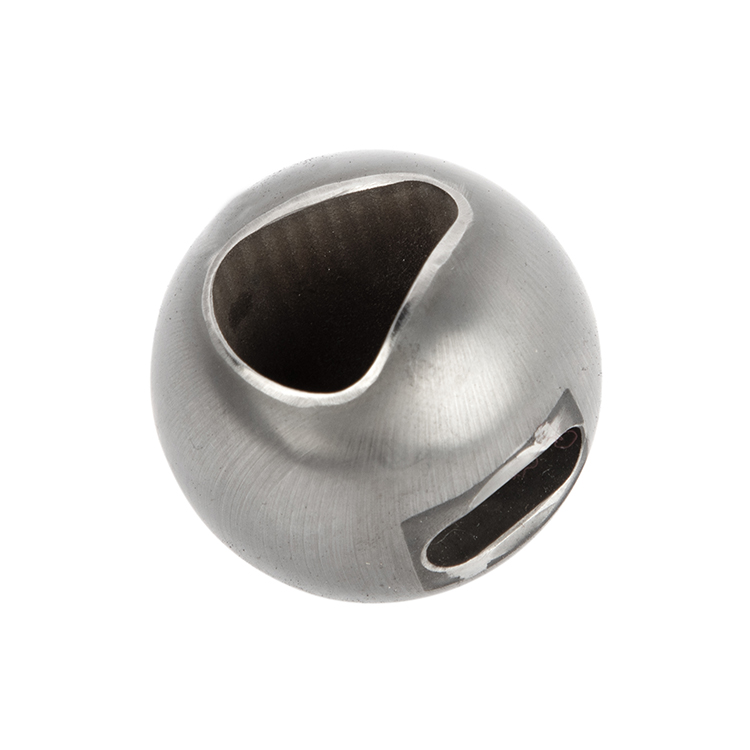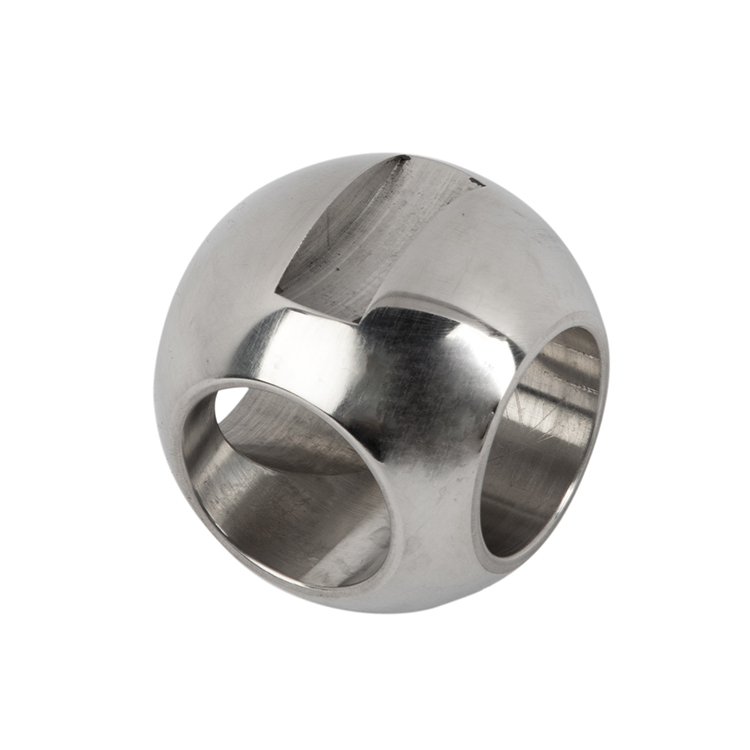

Standard valve spheres work well in many pipelines, but they often fall short when the duty involves unusual port geometry, tight sealing, aggressive media, or a non-standard size and pressure class. In those cases, a Customized Ball Valve Ball is not a luxury—it is the part that determines whether the finished valve will seal, cycle, and last in service.
Ordering a custom ball is more than sending a nominal diameter and asking for a quote. The manufacturer needs a clear picture of the operating conditions, the design type, the material and coating, the tolerances, and the documents you expect with the shipment. Missing any of these details usually leads to longer lead times, extra machining, or a ball that does not fit the seat and stem in your valve.

Start with the duty, not the drawing. Temperature, pressure, and the process medium decide material, hard facing, and even whether a hollow or solid ball is appropriate. A ball specified for clean water at ambient temperature will not perform the same way in high-pressure oil and gas service, in a chemical line with chlorides, or in a high-temperature steam application.
Write down the design and operating pressure and temperature, the media (including any H₂S, CO₂, solids, or chlorides), the expected cycling frequency, and the industry standard your project follows. If the valve must work in sour service, cryogenic conditions, or a highly corrosive environment, say so in the inquiry. These conditions drive alloy selection and coating choice, and they are difficult to correct after the ball has been machined.
A Customized Ball Valve Ball must match the valve’s size and pressure class, not just a nominal diameter that looks close enough. State the NPS or DN size, the pressure class (custom balls are commonly specified from Class 150 to Class 2500 / 150LB to 2500LB), and whether the valve is full bore or reduced bore. Bore size affects flow, pressure drop, and how the ball wears against the seat.
If the ball is for a floating or trunnion-mounted valve, include that as well. The support method changes the load path, the stem connection, and the sealing approach. For large-diameter or high-pressure valves, a trunnion-style ball is often the safer path; for smaller sizes, a floating design may be sufficient. Clear size and class data let the manufacturer check machining allowance, port wall thickness, and whether your pressure class is within the production range.
Material selection is one of the most important decisions in a custom order. Carbon steels such as A105 or low-temperature LF2 are common for general service. Stainless grades such as F304, F316, and F321, along with 13Cr alloys (0Cr13, 1Cr13, 2Cr13), are typical when corrosion resistance matters. Duplex and super duplex grades (F51, F53, F55, F60, F44), 17-4PH, and nickel alloys such as Inconel 625, 718, and 825 or Monel 400 and 500 are used when the medium is more aggressive or the temperature and pressure are more severe.
Do not default to the most expensive alloy. Over-specifying raises cost and lead time without improving performance if a mid-range stainless or duplex already meets the duty. Under-specifying is worse: the wrong material can pit, gall, or crack in service. Give your supplier the medium, temperature, and any required material standard, and ask them to confirm a grade that can be machined and hard-faced to your drawing.
Many custom orders are not standard round-port spheres. If your valve needs characterized flow, a V-segment (V-port) ball may be required. Three-way balls, integral valve-ball-with-stem designs, hollow balls, and plate balls are also common custom types. Each geometry changes how the ball is machined, how it seals, and what information must appear on the drawing.
Send a 2D drawing as a minimum, and a 3D model when the port shape, stem slot, or trunnion features are not obvious. Mark the port angle, keyways, stem connection type, and any special cavities. If you are replacing a worn ball, a sample or a detailed inspection report of the existing part is often more useful than a rough sketch. Ambiguous geometry is the most common reason a first article does not fit.
For a custom ball, tight geometry is as important as material. A typical precision requirement is a dimensional tolerance controlled within ±0.01 mm, which helps the ball sit evenly against the seats and reduces leakage paths. Sphericity, port alignment, and stem-slot accuracy should be stated on the drawing rather than left as “standard commercial tolerance.”
Also specify the surface roughness you need on the sealing spherical surface. A ball that is dimensionally correct but too rough will wear the seat; one that is too smooth for a metal-seated pair may not bed in as expected. If your valve manufacturer already has a roughness and sphericity standard, put those values in the purchase order so the machining and lapping process can be planned from the start.
Bare metal is not always enough. Abrasion, erosion, and repeated cycling often require a hard facing or a corrosion-resistant coating on the ball surface. Common options include electroless nickel (ENP), tungsten carbide (TCC), Stellite (STL), chromium carbide (CCC), plasma nitriding, hard chromium (HCR), and nickel-based overlays such as NI60 or NI55.
Match the coating to the failure mode you are trying to prevent. Carbide coatings are typically chosen for wear and erosion. Stellite is often considered for high temperature and metal-to-metal seating. ENP is widely used when corrosion protection and a uniform layer are the priority. State the required hardness, coating thickness, and coverage area (full sphere, sealing band, or port edges). If the ball will be paired with a metal seat, confirm that the coating on the ball and the facing on the seat are compatible.
A custom ball does not work in isolation. Soft seats such as PTFE or reinforced PTFE / PPL need a different surface and roundness strategy than metal seats with hard facing. The stem connection—whether the ball is supplied with an integral stem or machined for a separate stem—must match the torque, alignment, and anti-blowout features of your valve design.
When you request a quote, include the seat material, the stem type, and any relevant body or bonnet constraints. If the manufacturer will also supply the seat or stem, say so, so the ball, seat, and stem can be machined and inspected as a set. A ball that meets its own drawing but does not seal against the seat will still fail in the hydrostatic or seat leakage test.
A complete inquiry package shortens the back-and-forth and protects you at receiving inspection. At minimum, provide:
Dimensioned drawings (and a 3D file if available)
Material grade and applicable specifications
Pressure class, size, and valve type
Coating or hard-facing requirements
Tolerance, sphericity, and surface-finish limits
Quantity, target delivery date, and any marking or packaging rules
Ask the manufacturer to confirm which international standards they will follow and which documents will ship with the goods: material certificates, dimensional inspection reports, hardness or coating reports, and, where the project requires it, compliance with standards such as ISO, API, or NACE MR0175. For a first-time Customized Ball Valve Ball, a prototype or first-article inspection is often worth the extra time. If a custom mold or fixture is needed, agree on tooling ownership and lead time before production starts.
Ordering a Customized Ball Valve Ball is a specification task, not a catalog click. The orders that arrive on time and pass testing are the ones that already define service conditions, size and pressure class, material, geometry, tolerance, coating, and the inspection documents that prove the part matches the drawing.
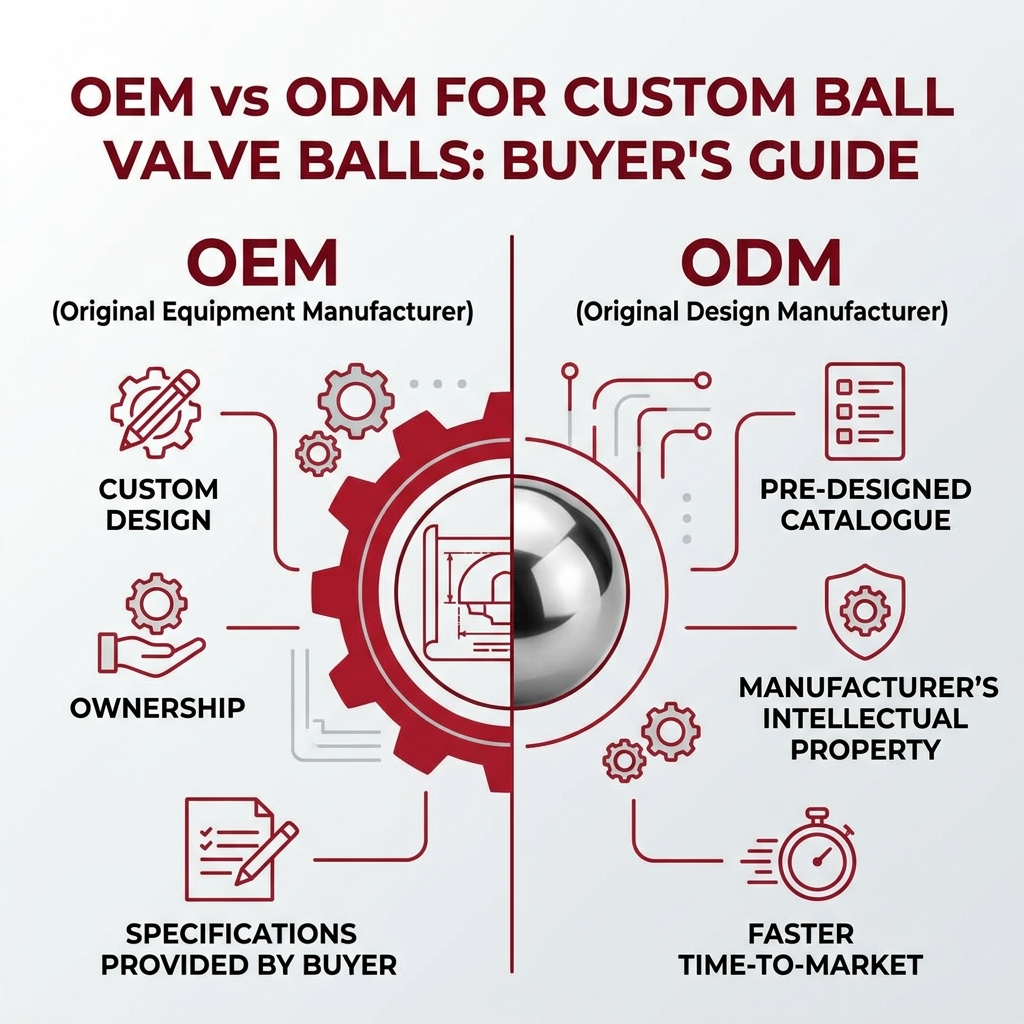
If you gather those details before you request a quote, your OEM supplier can recommend a practical design instead of guessing. For project-specific balls—including special port shapes, tight ±0.01 mm tolerances, and pressure classes from 150LB to 2500LB—share your drawings and duty data with a manufacturer that produces custom balls as a core product, such as the customized ball valve balls available from GOTEB, and review a first article before you release the full quantity.
Provide the valve size and pressure class, operating medium, temperature and pressure, material grade, ball type (floating, trunnion, V-segment, three-way, or ball with stem), coating requirements, tolerances, and dimensioned drawings. The more complete this package is, the fewer manufacturing clarifications you will need.
A tight dimensional tolerance helps the spherical surface seal evenly against the seats and keeps the port and stem features aligned. Loose tolerance is a common cause of leakage, high operating torque, and premature seat wear.
Yes. Custom balls are commonly specified up to Class 2500 and can be produced in stainless, duplex, and nickel alloys, with hard facing or coatings selected for high temperature, high pressure, or corrosive media. The key is to state those conditions in the order, not after production has started.
Whenever possible, yes. Matching the ball to the seat material and the stem connection reduces fit-up problems during assembly and testing. If the ball uses an integral stem, that interface should be defined on the same drawing.
Choose the coating based on the wear or corrosion mechanism in your line. TCC or similar carbides are often used for abrasion, Stellite for high-temperature metal seating, and ENP for corrosion protection. Confirm hardness, thickness, and compatibility with the seat before you approve the process.


 Optimized by Seraphinite Accelerator