

Ball valve accessories play an important role in improving valve performance, ensuring reliable operation, and maintaining process safety across industrial applications. In industries such as oil and gas, chemical processing, and water treatment, ball valves must operate under different pressure levels, temperature conditions, and fluid characteristics. Selecting suitable accessories helps improve sealing performance, enhance operational efficiency, and extend the service life of the valve assembly.
From valve actuators and mounting brackets to position indicators, limit switches, and sealing components, each accessory serves a specific function in supporting ball valve operation. Understanding the requirements of different industries enables engineers, distributors, and purchasing professionals to choose compatible components for their systems.
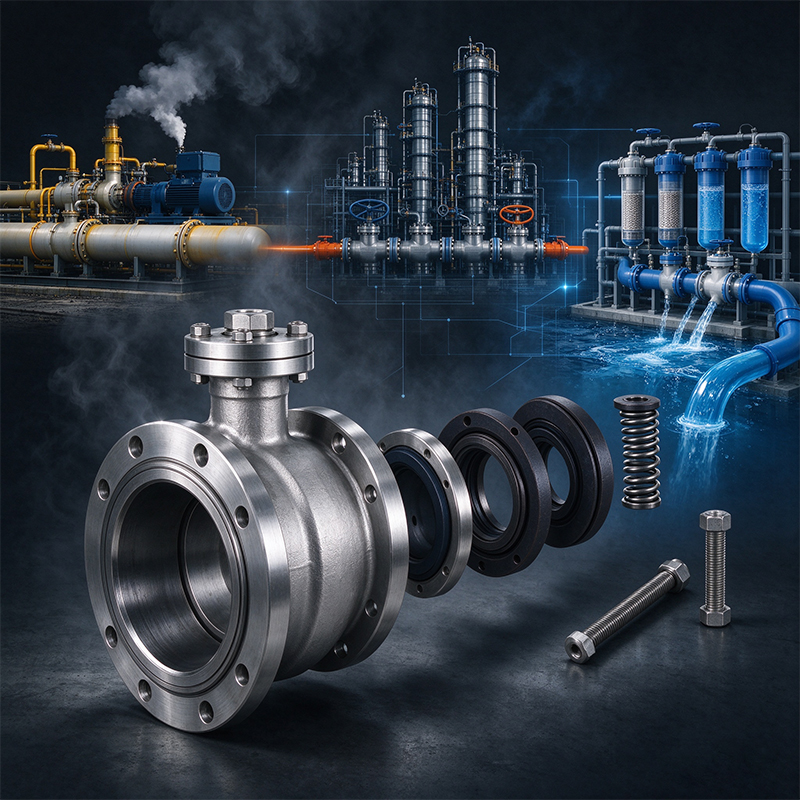
Ball valve accessories support valve operation, automation, sealing, and monitoring. The appropriate combination depends on the valve design, operating environment, and process requirements.
Valve Actuators
Valve actuators enable automatic or remote operation of ball valves. Pneumatic actuators use compressed air, while electric actuators rely on electrical power to control valve opening and closing. These accessories are particularly useful in automated process lines, remote installations, and systems requiring frequent operation.
Mounting Brackets and Couplings
Mounting brackets and couplings connect actuators to ball valves and help maintain proper alignment between the valve stem and actuator output. Correct mounting is essential for reliable torque transmission and consistent operation, particularly in automated industrial systems.
Position Indicators and Limit Switches
Position indicators provide visual confirmation of whether a valve is open or closed. Limit switches can transmit valve position signals to control systems, allowing operators to monitor equipment status remotely. These accessories are valuable in facilities where process monitoring and automated control are essential.
Sealing Components
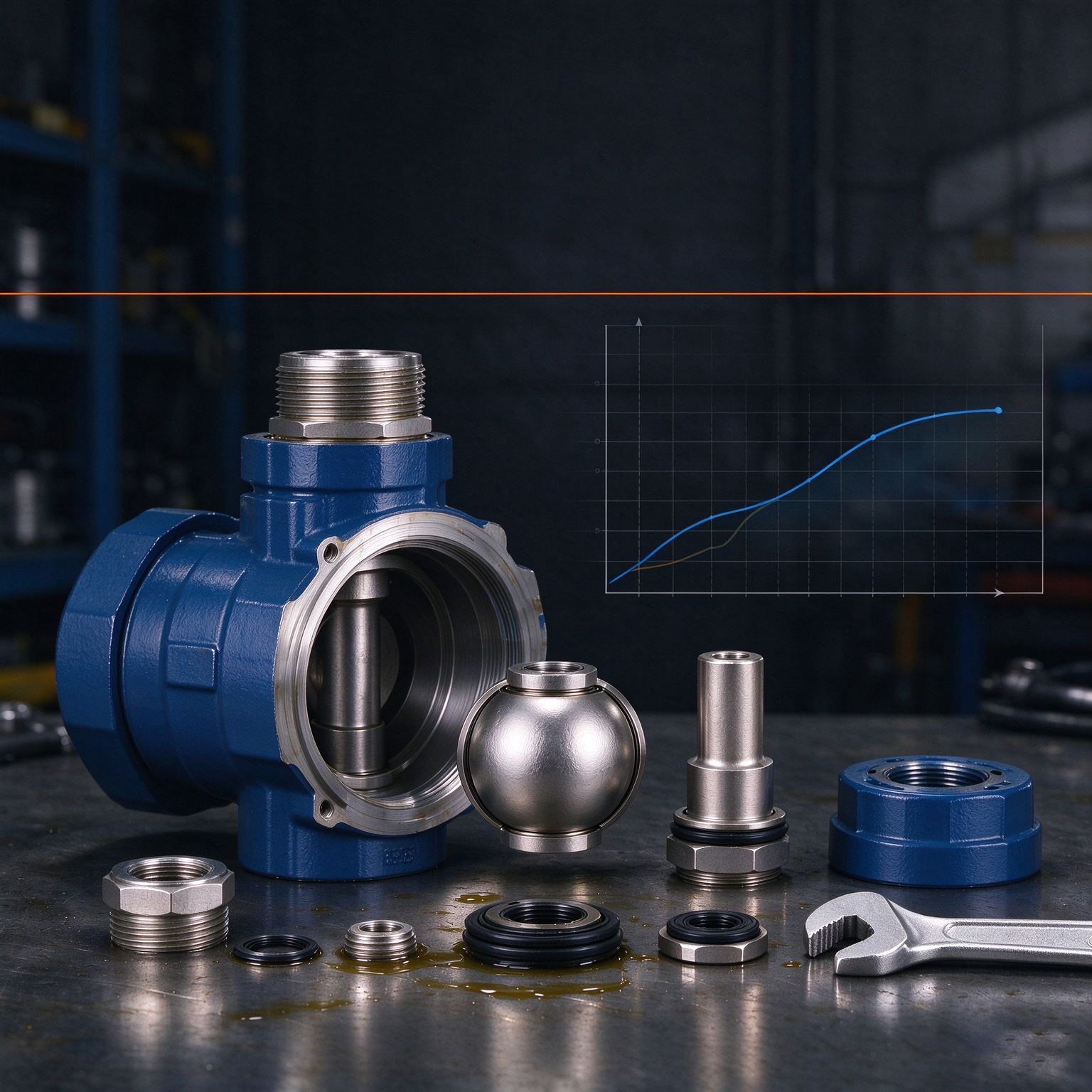
Valve seats, stem seals, and O-rings help prevent fluid leakage and maintain reliable sealing performance. Material selection is especially important when valves handle corrosive chemicals, high-temperature media, or fluids containing suspended particles.
Solenoid Valves and Control Accessories
Solenoid valves control the air supply to pneumatic actuators, supporting automated valve switching. Depending on system requirements, additional control accessories may include positioners, air filter regulators, and other pneumatic control components.
Oil and gas facilities often operate under demanding conditions, including high pressure, temperature fluctuations, vibration, and exposure to hydrocarbons. Ball valve accessories must therefore support dependable operation and meet the requirements of the specific process.
Supporting High-Pressure and High-Temperature Applications
In upstream production, midstream transportation, and downstream refining, ball valves may control crude oil, natural gas, refined fuels, and other process media. Actuators and mounting components must provide sufficient operating torque and remain compatible with the valve’s pressure and temperature ratings.
Sealing materials must also be selected according to the fluid composition, operating temperature, and pressure conditions. For critical applications, engineers should evaluate material compatibility, leakage requirements, and applicable industry standards.
Improving Remote Operation and Automation
Oil and gas facilities may include pipelines, pumping stations, storage terminals, and equipment installed in locations that are difficult to access. Pneumatic or electric actuators, limit switches, and position indicators can support remote monitoring and automated operation.
For emergency shutdown or other safety-critical applications, accessory selection should account for the required fail-safe behavior, response time, environmental conditions, and relevant safety standards. Standard actuators should not be assumed to provide emergency shutdown functionality without the necessary design and certification.
Managing Harsh Environmental Conditions
Outdoor oil and gas installations may expose accessories to rain, dust, salt spray, temperature extremes, and potentially explosive atmospheres. Buyers should verify enclosure protection, corrosion resistance, hazardous-area certification, and material suitability for the installation location.
Chemical processing facilities handle a wide variety of liquids and gases, including corrosive acids, alkalis, solvents, and specialized process chemicals. The compatibility of ball valve accessories with the process medium is therefore a major consideration.
Selecting Chemically Compatible Sealing Materials
Valve seats, O-rings, and stem packing must withstand the chemicals they contact. PTFE is commonly used for its broad chemical resistance, while other materials may be appropriate for specific temperature, pressure, and mechanical requirements.
However, no single sealing material is suitable for every chemical application. Engineers should confirm compatibility based on the chemical concentration, temperature, pressure, and exposure conditions. Where necessary, they should consult material compatibility data and the component manufacturer’s technical documentation.
Maintaining Reliable Automated Control
Chemical production lines often require accurate sequencing, repeatable valve operation, and integration with distributed control systems or programmable logic controllers. Actuators, solenoid valves, position indicators, and limit switches can support these requirements.
The selected accessories should match the valve’s operating torque, switching frequency, control signals, and required operating speed. In processes involving hazardous chemicals, the complete valve assembly should also satisfy the applicable containment and safety requirements.
Reducing Corrosion and Maintenance Risks
Chemical environments can accelerate the deterioration of unsuitable metals, coatings, and elastomers. Stainless steel, corrosion-resistant alloys, and suitable protective finishes may be required depending on the installation environment.
Regular inspection of sealing components, actuator connections, and electrical or pneumatic accessories helps identify wear and corrosion before they affect process reliability.
Water treatment systems use ball valves in filtration, chemical dosing, distribution, wastewater handling, and other fluid control processes. Although operating conditions vary, reliability, corrosion resistance, and ease of maintenance are common priorities.
Supporting Water Distribution and Filtration
Ball valves are used to isolate equipment, control flow paths, and support maintenance in water treatment plants. Manual handles may be sufficient for simple isolation duties, while automated actuators are useful where valves must operate according to system conditions or remote commands.
Actuator sizing should consider valve torque, operating frequency, and the effects of pressure differentials across the valve.
Handling Wastewater and Chemical Dosing
Wastewater may contain suspended solids, abrasive particles, or chemically aggressive substances. Chemical dosing systems may also involve chlorine-based compounds, acids, alkalis, and treatment additives.
For these applications, buyers should assess the compatibility of valve seats, seals, valve bodies, and accessory materials with the actual process medium. Wastewater containing solids may also require additional consideration of valve design, blockage risks, and maintenance access.
Improving Monitoring and Operational Efficiency
Position indicators, limit switches, and electric or pneumatic actuators can be integrated into plant automation systems. These accessories help operators verify valve status, coordinate process sequences, and reduce the need for manual intervention.
For outdoor or humid installations, appropriate enclosure protection and corrosion resistance are important. Where valves are installed in potable water systems, wetted materials and the complete assembly should meet the relevant local requirements for drinking-water contact.
Choosing the right ball valve accessories requires more than checking component dimensions. Buyers should evaluate the entire operating environment and confirm that the selected accessories are compatible with the valve and process system.
Operating Pressure and Temperature
The operating pressure and temperature determine the suitability of valve seals, actuator components, and other accessories. Buyers should review the allowable operating limits of the complete assembly rather than relying on the rating of a single component.
Fluid Compatibility
The process medium affects material selection and expected service life. Hydrocarbons, corrosive chemicals, treated water, and wastewater can create different requirements for metals, elastomers, and sealing materials.
Valve Type and Connection Compatibility
Accessories must match the valve model, stem dimensions, mounting interface, and connection configuration. For automated applications, actuator torque and mounting standards should be verified before ordering.
Automation and Control Requirements
Buyers should determine whether manual operation, on-off control, or modulating control is required. Electrical supply, control signals, communication interfaces, switching frequency, and fail-safe requirements should be specified where applicable.
Environmental and Certification Requirements
Indoor installations, outdoor pipelines, corrosive environments, and hazardous areas may require different protection levels and certifications. Confirm the applicable requirements before selecting actuators, switches, solenoid valves, and electrical enclosures.
Maintenance and Total Cost of Ownership
A lower initial purchase price does not always result in lower operating costs. Buyers should consider component durability, spare-part availability, inspection requirements, installation complexity, and replacement intervals when comparing accessory options.
Incorrect accessory selection can lead to operational problems, unexpected maintenance, and reduced valve reliability.
Actuator torque mismatch: An undersized actuator may fail to operate the valve reliably, while an unsuitable oversized actuator may create unnecessary costs or excessive mechanical loads. Confirm the required operating torque, including appropriate design margins.
Seal degradation: Incompatible sealing materials may swell, harden, crack, or lose their sealing ability. Verify chemical compatibility and temperature limits before purchasing replacement seals.
Incorrect mounting dimensions: Incompatible brackets or couplings can cause misalignment and unreliable operation. Confirm the valve and actuator interface dimensions and applicable mounting standards.
Insufficient environmental protection: Accessories exposed to moisture, dust, corrosive atmospheres, or hazardous locations may fail prematurely if their protection is inadequate. Specify the actual installation conditions during the procurement process.
Inadequate maintenance: Even suitable accessories require periodic inspection. Follow the manufacturer’s instructions for checking seals, mounting bolts, actuator performance, electrical connections, and pneumatic supply components.
A reliable supplier helps buyers select compatible accessories for their valve assemblies and industrial operating conditions. Technical support is particularly valuable when an application involves special materials, automation requirements, unusual mounting interfaces, or demanding environmental conditions.
When evaluating a supplier, buyers should review product specifications, material documentation, dimensional drawings, quality-control procedures, and relevant certifications. The supplier should also be able to clarify actuator compatibility, sealing options, operating limits, and customization possibilities.
For OEM projects and industrial equipment manufacturers, consistent product quality, clear technical communication, stable lead times, and dependable spare-part support can contribute to smoother procurement and long-term equipment reliability.
Ball valve accessories are essential for reliable valve operation in oil and gas, chemical processing, and water treatment applications. Actuators, mounting brackets, position indicators, limit switches, solenoid valves, and sealing components each contribute to operational performance, process control, and maintenance efficiency.
The best selection depends on the process medium, operating pressure and temperature, valve configuration, automation requirements, and installation environment. By verifying compatibility and working with a technically capable supplier, industrial buyers can reduce selection errors, improve system reliability, and achieve better long-term performance from their ball valve assemblies.
1. What are the most common ball valve accessories used in industrial applications?
Common ball valve accessories include pneumatic and electric actuators, mounting brackets, couplings, position indicators, limit switches, solenoid valves, and sealing components. These accessories support valve operation, automation, position monitoring, and leak prevention.
2. Which ball valve accessories are suitable for the oil and gas industry?
Oil and gas applications commonly use actuators, limit switches, position indicators, and specialized sealing components designed for demanding pressure, temperature, and environmental conditions. Accessories installed in hazardous areas may require appropriate explosion-protection certifications and environmental protection ratings.
3. How do I select ball valve accessories for chemical processing?
Consider the chemical composition, concentration, operating temperature, pressure, and potential corrosive effects of the process medium. Select compatible sealing and structural materials, verify actuator torque requirements, and ensure that the accessories meet applicable safety and industry standards.
4. What ball valve accessories are commonly used in water treatment systems?
Water treatment systems frequently use electric or pneumatic actuators, position indicators, limit switches, solenoid valves, and suitable sealing components. Material compatibility, corrosion resistance, enclosure protection, and maintenance accessibility are important selection factors.
5. What is the difference between pneumatic and electric ball valve actuators?
Pneumatic actuators use compressed air to operate the valve and are often suitable for rapid on-off control. Electric actuators use electrical power and can offer convenient integration with automated control systems. The best option depends on available utilities, operating frequency, torque requirements, control functions, and installation conditions.


 Optimized by Seraphinite Accelerator