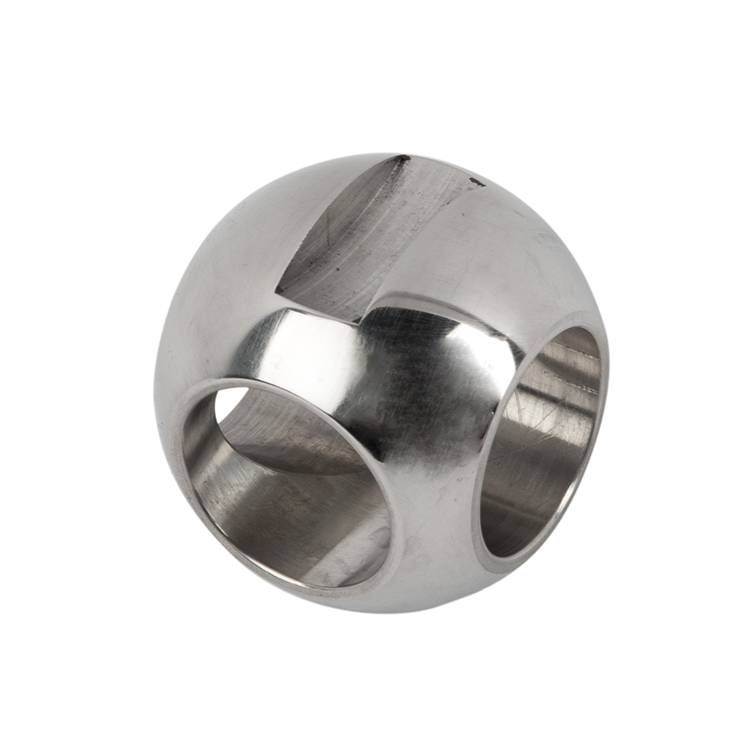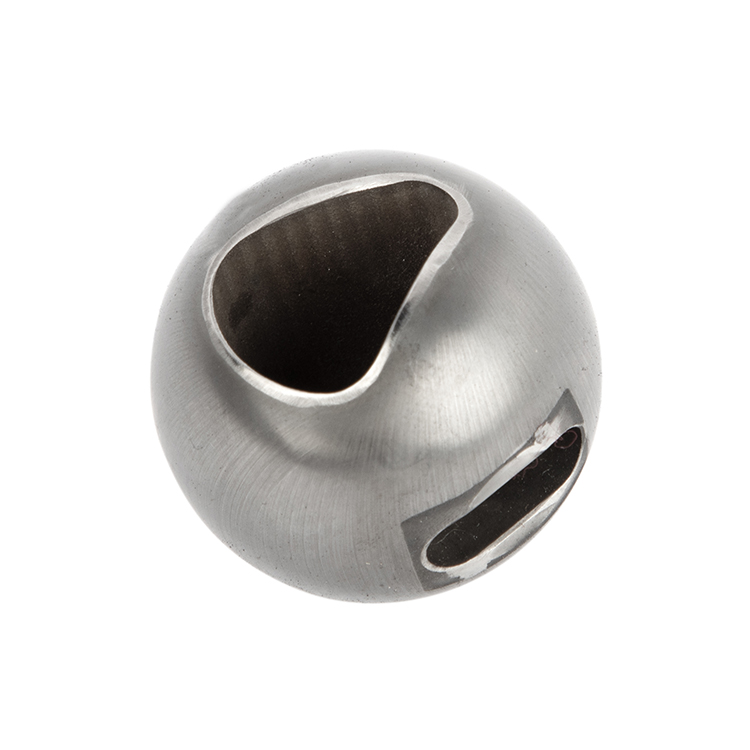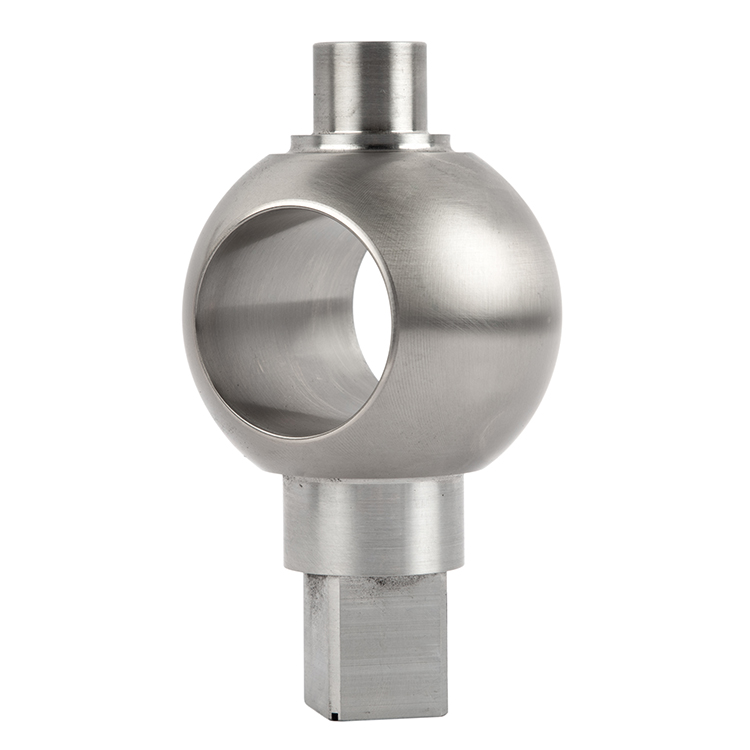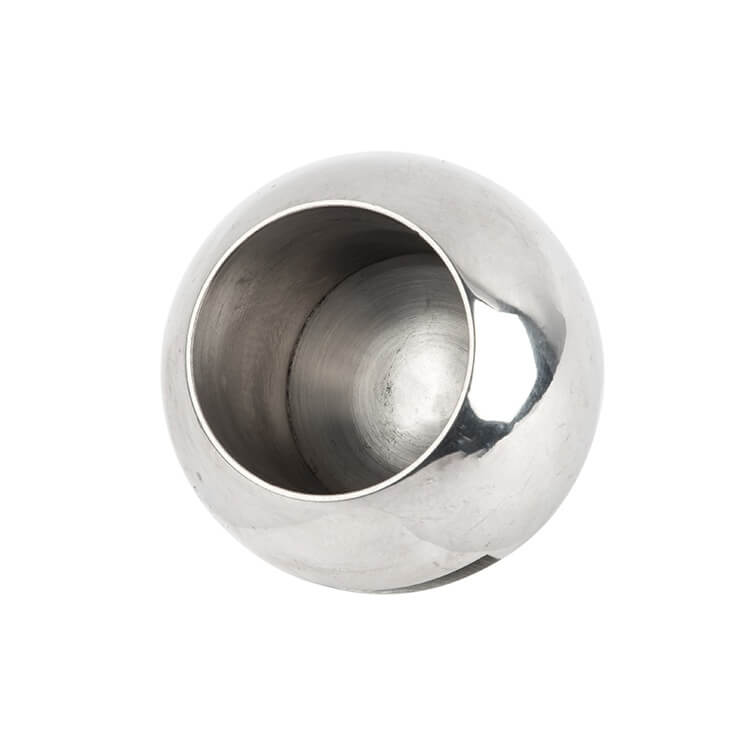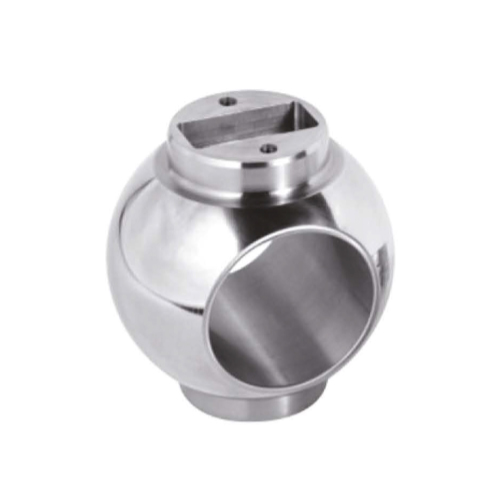


Material selection is one of the most important considerations when manufacturing a customized ball valve ball. The ball is a critical internal component of a ball valve and is exposed directly to the medium flowing through the valve. Its material can influence corrosion resistance, mechanical strength, wear resistance, temperature performance, sealing compatibility, and service life.
Different industrial applications have different operating requirements. Water treatment systems, chemical processing equipment, oil and gas pipelines, food processing systems, and general industrial piping may require different ball materials depending on the medium and working conditions.
For valve manufacturers, distributors, and industrial buyers, understanding the characteristics of common ball valve ball materials can help them specify a suitable customized component.
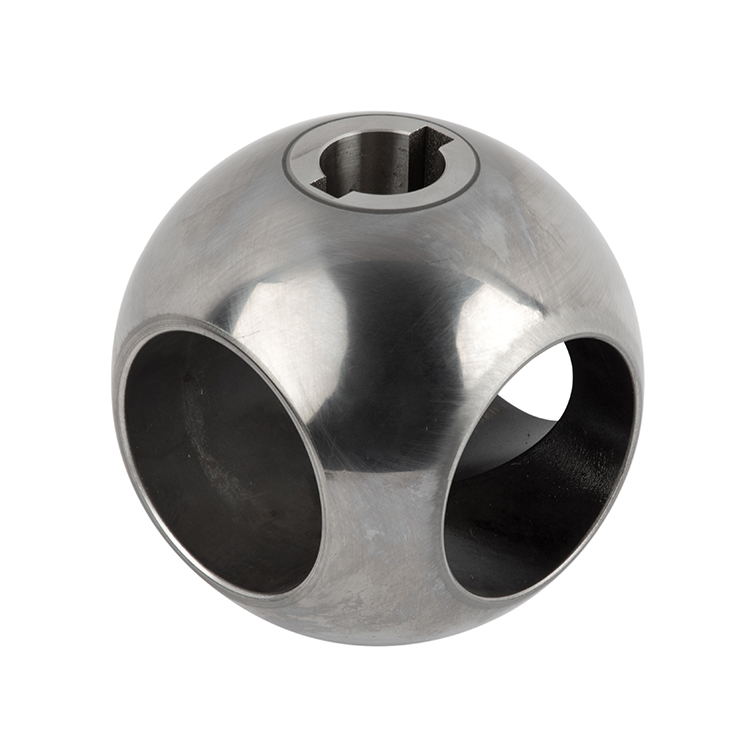
A ball valve ball rotates inside the valve body and works closely with the valve seats to control and shut off flow. During operation, it can be exposed to pressure, temperature changes, corrosive media, mechanical friction, and repeated cycling.
If the selected material is not suitable for the application, the ball may experience corrosion, surface damage, dimensional changes, or premature wear. These issues can affect sealing performance and the operation of the complete valve.
For customized ball valve balls, material selection should therefore be considered together with valve design, seat material, operating pressure, temperature, medium, and expected service conditions.
Stainless steel is one of the most commonly considered materials for customized ball valve balls. It offers a combination of corrosion resistance, mechanical strength, durability, and machinability that makes it suitable for many industrial applications.
Different stainless steel grades provide different properties. For example, commonly used grades may be selected according to the required corrosion resistance and mechanical performance.
Stainless steel customized ball valve balls can be used in applications such as water treatment, chemical processing, food and beverage equipment, pharmaceutical systems, and general industrial piping, provided that the selected grade is compatible with the actual operating environment.
304 stainless steel is widely used for general corrosion-resistant applications. It offers good corrosion resistance and mechanical properties and can be machined and finished to the required dimensions.
Customized 304 stainless steel ball valve balls may be suitable for general industrial applications, water-related systems, and certain food processing or equipment applications.
However, material selection should always be based on the actual medium and environment. More aggressive chloride-containing or corrosive conditions may require a different stainless steel grade.
316 stainless steel contains molybdenum, which generally provides improved resistance to certain forms of corrosion compared with 304 stainless steel.
Because of this characteristic, 316 stainless steel may be considered for applications involving more demanding corrosive environments, marine-related conditions, chemical processing, and other applications where enhanced corrosion resistance is required.
For customized ball valve balls, 316 stainless steel can be selected when the application requires a combination of corrosion resistance, durability, and precision machining.
Carbon steel is another material option for customized ball valve balls. It can provide good mechanical strength and may be considered for industrial applications where corrosion conditions are controlled or additional surface protection is used.
Compared with stainless steel, carbon steel generally provides less inherent corrosion resistance. As a result, the operating medium, environmental conditions, coating requirements, and maintenance conditions should be evaluated before selecting carbon steel.
Carbon steel can be a practical option when mechanical requirements and production cost are important considerations.
Alloy steel contains additional alloying elements that can be used to achieve specific mechanical properties. Depending on the grade, alloy steel can provide characteristics such as increased strength, hardness, wear resistance, or temperature performance.
Customized alloy steel ball valve balls may be considered for demanding industrial applications where standard carbon steel or stainless steel does not provide the required combination of properties.
The specific alloy should be selected according to the operating conditions rather than simply choosing an alloy steel designation based on strength alone.
In specialized valve applications, other metal materials or engineered materials may also be considered. The appropriate choice depends on the valve structure, operating medium, temperature, pressure, corrosion conditions, and required performance.
Some applications may also require surface coatings or treatments instead of changing the base material. These treatments can be used to improve wear resistance, corrosion protection, hardness, or surface characteristics.
Because material and surface treatment affect the complete valve system, they should be selected according to the actual engineering requirements.
The type of medium is an important factor when selecting a customized ball valve ball material.
For clean water and general-purpose fluids, common stainless steel grades may provide suitable corrosion resistance depending on the conditions. Chemical applications require more careful evaluation because different chemicals can have significantly different effects on metals.
Oil and gas applications may involve pressure, temperature, corrosion, and mechanical requirements that need to be considered together. Food and pharmaceutical applications may place additional emphasis on material compatibility and surface condition.
The ball material should therefore be evaluated against the actual medium rather than selected solely according to the industry name.
Operating temperature can affect material strength, dimensional stability, and the performance of the valve sealing system.
For high-temperature applications, the material should maintain appropriate mechanical properties at the expected working temperature. Low-temperature applications may also require consideration of material toughness and performance under cold conditions.
When ordering a customized ball valve ball, buyers should provide both normal and maximum or minimum operating temperatures where relevant. This allows the manufacturer to evaluate the material requirements more accurately.
Pressure is another important factor in ball valve design. The ball must maintain its required mechanical properties while operating inside the valve body under the specified pressure conditions.
High-pressure applications may require materials with appropriate strength and hardness, but material selection should not be based on strength alone. The valve body, seats, stem, ball, and other components must be designed as a complete pressure-containing system.
For customized components, providing the valve pressure rating and actual operating pressure can help the manufacturer determine appropriate material and dimensional specifications.
Ball valve balls may experience repeated contact and sliding against the valve seats. Frequent cycling or demanding media can increase wear on the ball surface.
In applications where wear resistance is particularly important, material hardness and surface treatment may need to be considered. Depending on the design, heat treatment, coating, or specialized surface finishing may be used to improve surface performance.
However, excessive hardness is not automatically better. The ball material and surface characteristics need to be compatible with the valve seats to maintain appropriate sealing and operating torque.
Selecting the ball material independently from the valve seat can lead to performance issues. The two components work together during opening and closing, so their material characteristics and surface conditions should be considered as a pair.
Differences in hardness, surface finish, thermal expansion, and chemical compatibility can influence friction, wear, and sealing behavior.
For customized ball valve balls, providing information about the valve seat material can therefore help the manufacturer recommend an appropriate ball material and surface finish.
Material selection can also affect the manufacturing process. Customized ball valve balls often require turning, drilling, grinding, polishing, and other precision machining operations.
Some materials are easier to machine than others, while harder materials may require specialized tooling and additional finishing processes. The manufacturer should consider the relationship between material properties, dimensional tolerances, production volume, and required surface finish.
For precision components, the ability to maintain consistent dimensions throughout the machining and finishing process is particularly important.
In some applications, the required performance can be achieved by combining a suitable base material with an appropriate surface treatment.
Depending on the valve design, treatments may be used to improve hardness, wear resistance, corrosion protection, or surface characteristics. The selection depends on the medium, operating temperature, pressure, valve seat material, and expected service conditions.
Surface treatment should not be viewed as a replacement for proper base-material selection. Both factors should be evaluated together.
There is no single material that is suitable for every ball valve application. The selection should be based on the complete operating environment.
Buyers should consider the type of medium, operating pressure, temperature range, corrosion conditions, frequency of operation, expected service life, valve seat material, required surface finish, and manufacturing requirements.
Providing these details to the manufacturer can help determine whether stainless steel, carbon steel, alloy steel, or another material is appropriate for the customized ball valve ball.
One common mistake is choosing a material based only on price. A lower-cost material may not provide the required corrosion resistance, wear resistance, or operating performance for a demanding application.
Another mistake is selecting the material based solely on valve size or pressure rating. Material compatibility with the medium and operating temperature is equally important.
Buyers should also avoid assuming that one stainless steel grade is suitable for every application. Different environments can require different grades and surface treatments.
The materials used for customized ball valve balls can include stainless steel, carbon steel, alloy steel, and other specialized options depending on the application. Stainless steel grades such as 304 and 316 are commonly considered where corrosion resistance is important, while carbon steel and alloy steel may be selected according to specific mechanical and operating requirements.
The right material should be determined by considering the medium, pressure, temperature, corrosion conditions, wear requirements, valve seat compatibility, and manufacturing process. Surface treatment and finishing may also be used to achieve additional performance characteristics.
For valve manufacturers and industrial buyers, providing complete application information and technical specifications is essential when selecting a customized ball valve ball material. A properly selected material can help the ball work reliably with the other valve components and support consistent valve performance.
1. What materials are commonly used for customized ball valve balls?
Common materials include stainless steel, carbon steel, and alloy steel. The appropriate material depends on the valve’s operating pressure, temperature, medium, corrosion conditions, and mechanical requirements.
2. Is stainless steel suitable for customized ball valve balls?
Yes. Stainless steel is widely used for customized ball valve balls because it can provide good corrosion resistance, mechanical strength, durability, and machinability. The appropriate stainless steel grade should be selected according to the specific application.
3. What is the difference between 304 and 316 stainless steel ball valve balls?
Both 304 and 316 stainless steel can be used for industrial valve components. 316 stainless steel contains molybdenum and generally provides better resistance to certain corrosive environments than 304 stainless steel. The choice depends on the medium and operating conditions.
4. Can carbon steel be used for customized ball valve balls?
Yes. Carbon steel can be used when suitable mechanical strength is required and the operating environment does not demand the corrosion resistance of stainless steel. Surface treatment or coating may also be considered for additional protection.
5. When should alloy steel be used for a ball valve ball?
Alloy steel may be considered for applications requiring specific combinations of strength, hardness, wear resistance, or temperature performance. The specific alloy should be selected according to the actual operating conditions.


 Optimized by Seraphinite Accelerator