

In severe industrial pipelines, achieving a perfect, zero-leakage shutoff is not just an engineering goal—it is a critical safety requirement. While a trunnion mounted ball valve is built to handle extreme pressures, its internal sealing barrier is constantly under attack. This guide breaks down the critical hidden mechanical, chemical, and operational factors that directly alter the trunnion ball valve sealing performance, helping your business prevent internal bypass and expensive pipeline downtime.
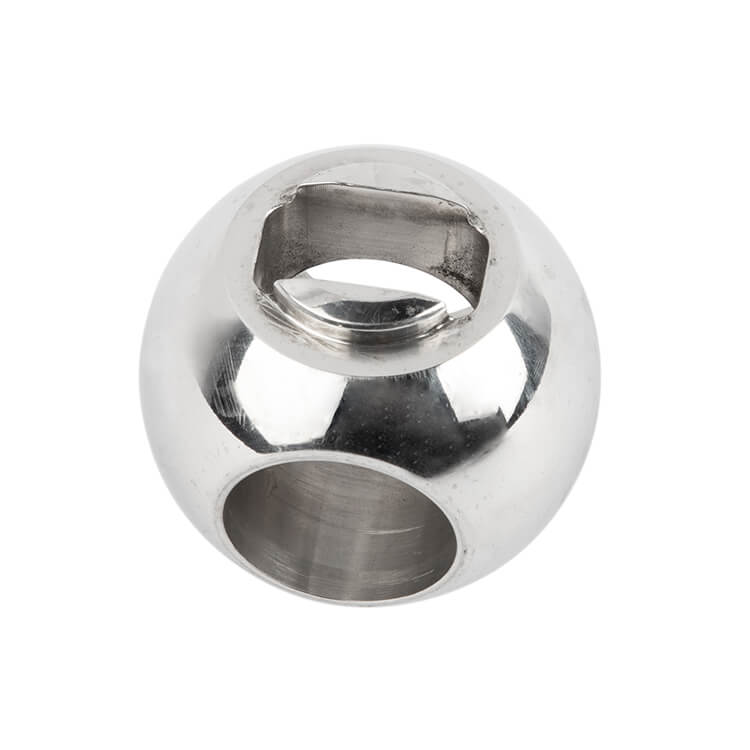
The sealing interface of a high-pressure valve is incredibly narrow. At a microscopic level, any geometric wave or misalignment on the metal surfaces will create an immediate path for volatile fluids to escape.
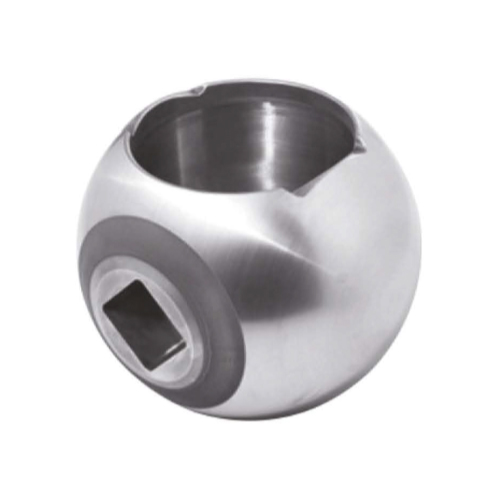
The Sphericity Battle: The trunnion valve ball inside a precision valve housing must be ground to near-perfect roundness, often with a tolerance measured in microns. If the ball is even slightly oval-shaped or out-of-round, it will apply uneven pressure to the sealing rings during its 90-degree rotation.
Micro-Channel Formation: This uneven contact leaves tiny, invisible gaps between the metal ball and the seat. High-velocity fluid will instantly find these gaps, creating micro-channels that rapidly wash out your seals and cause a permanent internal bypass.
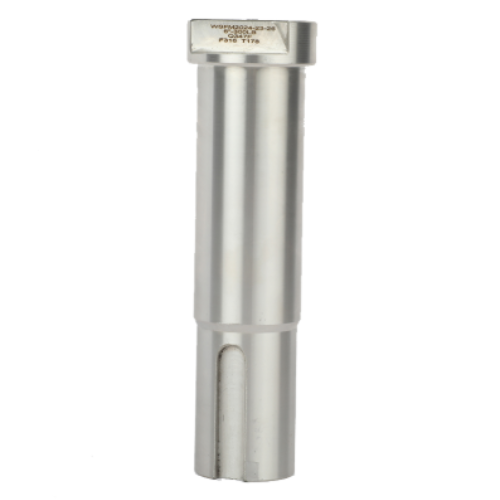
Structural Shaft Deflection: If the top and bottom journals (the trunnion shafts) are machined even a fraction of a degree out of alignment with the vertical center line, the sphere will rotate at a slight wobble. This uneven tracking guarantees chronic internal leakage and causes torque profile spikes that can stall out automated actuators.
Unlike smaller floating valves that use pipeline pressure to push the ball into the downstream seat, a heavy-duty trunnion ball valve relies on moving, spring-loaded seat rings that press against a fixed-axis sphere.
The Low-Pressure Vulnerability: At low operational pressures, there is not enough fluid force to jam the seat against the ball face. To combat this, manufacturers embed miniature wave springs or coil springs behind the seat rings to supply a continuous mechanical squeeze.
The Fatigue Factor: Over thousands of operational cycles or exposure to rapid thermal expansions, these small springs can experience mechanical fatigue and lose their elasticity. Once the spring pre-load tension drops, the seat rings will relax, leaving a hair-thin gap where fluid can weep past at low line pressures.
The Debris Jam: If your pipeline carries sticky resins or calcifying scale, these solids can slip past the boundary seals and pack into the tight spring pockets. This completely locks the springs in place, stopping the seat from sliding forward to maintain its flat sealing tracking.
| Operational Symptom | Primary Sealing Component Hit | Root Cause of Sealing Leakage | Proactive Engineering Solution |
| Leakage at Low Pressure Only | Seat Pocket Springs | Spring fatigue or debris packing locking the seat ring | Upgrading to Inconel springs or adding protective seals |
| Leakage at High Pressure Only | Polymer Seat Insert | Material cold flow / plastic deformation under massive load | Transitioning to high-strength PEEK or Nylon |
| Chronic Leakage After Cycling | Trunnion Valve Ball Face | Out-of-roundness or shaft wobble causing uneven tracking | Precision diamond-grinding to sub-micron sphericity |
| Sudden Sealing Washout | Seat Rings & Ball Ports | Extreme velocity turbulence carving permanent grooves | Reviewing the precise impact of full vs. reduced bore sizing |
The internal flow profile of your pipeline creates a massive kinetic force that directly dictates how long your sealing surfaces survive before experiencing an internal bypass.
The Turbulence Vortex: When a valve transitions from fully open to fully closed, the fluid path is choked. This restriction creates a massive pressure drop and causes local fluid velocities to skyrocket right at the edge of the seat face.
The High-Velocity Liquid Saw: This high-speed stream acts like a physical blade, carving deep grooves into the seat faces—a destructive phenomenon known as wire-drawing. As detailed in our comprehensive study on how bore size impacts ball and seat wear, restricting the flow path through a reduced-bore layout drastically alters turbulence profiles, concentrating abrasive grit right onto the critical sealing boundaries.
Managing Particle Momentum: If your fluid contains catalytic dust, frac sand, or pipeline scale, the kinetic energy of these solids will chip away at soft plastic seats, requiring an immediate transition to hard-faced components.
Technical buyers often match their valve choices purely to pipeline dimensions, forgetting that the molecular boundaries of the chosen seat material change drastically under continuous mechanical load.
The Creep Phenomenon: Soft plastics like virgin PTFE are incredibly popular due to their low friction coefficient and cheap production costs. However, when subjected to Class 300 or Class 600 pressure differentials, these polymers will slowly deform and flow like putty out of their machined grooves, ruining the flat sealing face.
The High-Strength Upgrade: To withstand intense mechanical squeezing forces without sacrificing chemical inertness, heavy-duty applications require a transition to reinforced thermoplastics like Devlon, Nylon, or specialized PEEK.
The Fixed Axis Defense: To prevent these high-strength plastics from cracking under massive pressure shifts, keeping the sphere completely stabilized is non-negotiable. Reviewing the mechanical layout of a comprehensive trunnion ball valve design reveals that anchoring the ball with top and bottom shafts eliminates the shifting forces that push soft seat materials past their physical yield points.
The sealing performance of a valve does not stop at the ball and seats; it is heavily influenced by how rotational torque is delivered through the drive stem.
The Side-Loading Attack: If an automated pneumatic actuator or heavy gear box is mounted poorly, it can apply an uneven side-load to the top drive shaft. This lateral force tries to tilt the stem within its housing.
Packing Distortion: Even a microscopic tilt of the drive stem pushes unevenly against the chevron packing rings inside the stuffing box. This opens up a clear leak path to the atmosphere, triggering fugitive emissions compliance failures.
The Trunnion Advantage: Because the internal sphere is locked onto its vertical axis, the stem only has to deliver pure rotational torque to spin the ball. This independent movement shields the top packing seals from the intense line pressures slamming into the face of the valve.
Why does my trunnion ball valve leak at low pressure but seal perfectly at high pressure?
This is a classic symptom of spring fatigue or blocked seat pockets. The internal springs lack the pre-load tension to push the seats against the ball, but high line pressure successfully forces the seat forward to seal.
Can chemical swelling ruin the sealing face of a trunnion valve?
Yes. If the process fluid is incompatible with your seat material, the polymer will absorb chemicals and swell, causing operating torque to spike and tearing the seal face during cycling.
When should I choose a metal seated valve ball and seat over a soft polymer?
When your pipeline operating temperatures exceed 260°C (500°F) or when the process fluid contains abrasive solids, sand, or heavy slurry scale.
How do double piston effect (DPE) seats alter sealing reliability?
DPE seats utilize line fluid pressure from either the pipeline or the internal body cavity to force the seat tighter against the ball, providing an absolute redundant dual-barrier seal.
Maintaining long-term trunnion ball valve sealing performance requires balancing spring pre-load mechanics, micron-level machining roundness, and robust material selection. Sourcing components built to withstand extreme flow velocities and heavy mechanical loads is the only way to protect your automated packages from early failure. Contact GOTEB today to discuss your zero-leakage technical specifications with our engineering team or to source high-tolerance replacement components built for severe industrial lines.


 Optimized by Seraphinite Accelerator